Category: History Publisher: Westholme Publishing
ISBN-10: 1594160554
Type: Non-Fiction
Pages: 408
Copyright: January 2008
ISBN-13: 9781594160554
Relates American officers' constant struggle to keep up the morale of their troops, while highlighting British efforts to exploit this potentially fatal flaw.
Identifies 30 spies some for the first time identified anywhere.
Mutiny has always been a threat to the integrity of armies, particularly under trying circumstances, and since Concord and Lexington, mutiny had been the Continental Army's constant traveling companion. It was not because the soldiers lacked resolve to overturn British rule or had a lack of faith in their commanders. It was the scarcity of food—during winter months it was not uncommon for soldiers to subsist on a soup of melted snow, a few peas, and a scrap of fat—money, clothing, and proper shelter, that forced soldiers to desert or organize resistance.
Excerpt
"It gives me great pain to be obliged to solicit the attention of the honorable Congress to the state of the army...the greater part of the army is in a state not far from mutiny...I know not to whom to impute this failure, but I am of the opinion, if the evil is not immediately remedied and more punctuality observed in future, the army must absolutely break up." - George Washington, September 1775
Want to review or comment on this book?
Need a FREE Reader Membership?
Reviews for "Rebellion in the Ranks Mutinies of the American Revolution"
Reviewed by alex dihes (алик дайхес)
8/8/2008
i might scan your book some time. you see, i'm from russia and know a lot about the intelligence and counter-intelligence, on the basis of the knowledge i'm very sceptical, to make in soft, on american ability in the field. russian spy gordievski addmited that to set a spy and get him work successfully in the usa was easy like, a russan vulgar expression, to piss your two fingers.
my review is not about your book, yet it was provoked by the idea of your book. thae your write about the revolution time. this should be different. the topic interests me.
325 letters my father wrote to my mother during his time in World War II.
Woven together in a timeline of events of three of his brothers, 5 brothers-in-law, and one cousin, all 10 of them were in WWII at the same time.
The Borderline Anti-Memory PastBook asks questions a diary does not ask and raises the questions to dialectics and answers them in a way a memory work does not answer questions.
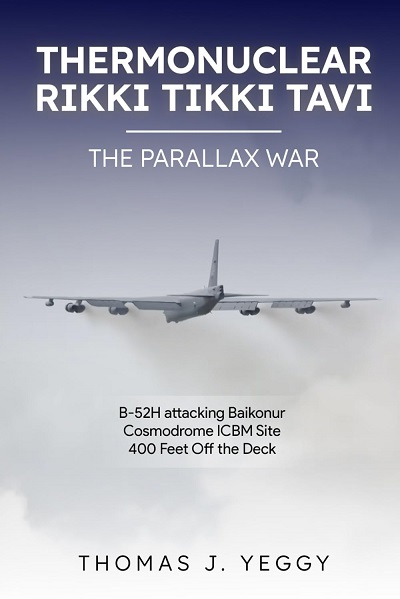
This book explores how U.S. presidents Dwight D. Eisenhower and John F. Kennedy failed to stand up to Soviet aggression during the early Cold War—despite America's overwhelming nuclear advantage.