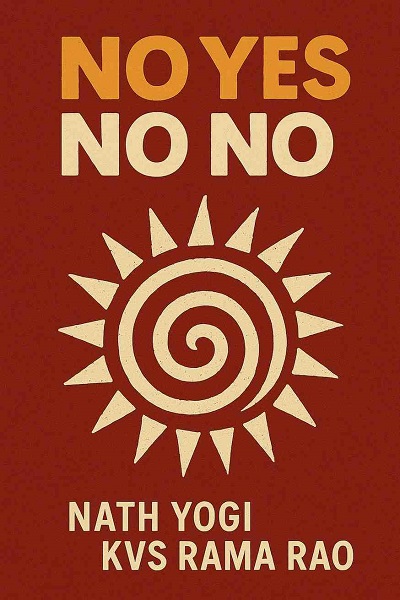
No Yes No No is a scripture of dissolution — a movement from seeking to stillness, from thought to Awareness, from Guru to Self. Across five sections and 540 sutra-verses, the text unthreads ego, logic, pride, lineage, and illusion until only the Silent One remains.
The early parts establish the core vision: Guru as flame, Niguru as shadow. The Guru liberates through presence and silence, while Niguru binds through concept, echo, pride and borrowed lore. Crowds chase sound; Truth shines in stillness. Maya is shown as colour and lure, masking the Real in play, yet every illusion falls when touched by the lotus feet. Each verse presses inward — away from book, doctrine, argument and pride — toward surrender, humility and the inward cave.
As the book deepens, thought loses its throne. Debate collapses. Scripture melts. The seeker dissolves. Verses turn increasingly short, sharp and seed-like — mantras that cut rather than explain. The heart becomes the teaching.
In Part-5 does the work turn to the domain of “Is / Is-Not / Both / Neither,” revealing where reason ends and Being begins. The fourfold logic is shown as the mind’s last cage. Even paradox cannot hold Truth. When Guru burns the net of thought, the One is seen — and at that moment even One becomes None.
In the closing verses, seeker and seeking fall away. No gain, no loss; no yes, no no. Guru remains as core. Truth stands bare, wordless, whole.
Silence completes what speech began.
None forever, ever One.