Category: Native American Publisher: rENEGADE pLANETS pUBLISHING
ISBN-10: 0965492192
Type: Fiction
Pages: 272
Copyright: August 2003
The novel resonates with infl uences from Faulkner, Flannery O’Connor,
and T. R. Pearson to Louise Erdrich and Leslie Silko. There might even be
a little Toni Morrison in here. The milieu of this novel is the south, but
it’s an Indian south, an Irish south, an African American South-even a
Dutch south-in short, a mixed south where everything but nothing is
changing. It is a south where no one is perfect and every character is
human-no heroes or heroines, no protagonists and antagonists here, just
people-a south where tragedy and happiness are so intertwined and
families are so dysfunctional despite love that they must seem real-a south
where the supernatural is natural and Cherokees sound like Cherokees,
not mystic nature-loving, crystal wavers.”
- American Indian Quarterly
Excerpt
Life
"It's not easy for any of us women. Not pretty most of the time, either. But God implants something inside people like you and me, those who have it so rough, something way down deep inside, which allows us to hang on. Some call it hope; hope for a better life. I call it an inner knowing. Knowing that everything will turn around one day. Those who have hurt us will suffer. Those whom we have hurt will forgive us. An inner knowing that we are all here for some reason or other, even if at times it seems like we don't belong on this earth at all."
Professional Reviews
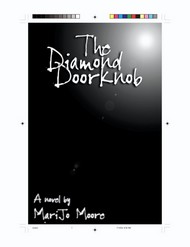
MariJo Moore’s The Diamond Doorknob
MariJo Moore’s The Diamond Doorknob
a book review by byron ballard
I first met the writer MariJo Moore in her delicious little book Crow Quotes and I followed her career as a columnist in the Asheville Citizen-Times. She is a vibrant wordsmith who documents the little-publicized lives of non-reservation American Indians (a term she prefers to “Native Americans”). Her work encompasses women’s issues, substance abuse and recovery, physical and sexual abuse, family dynamics and a deeply felt spiritual practice.
Oh, did I mention she’s funny?
Her most recent book is The Diamond Doorknob, published in paperback by Renegade Planets Publishing. According to Moore, this occasionally autobiographical novel has been twenty years a-birthing, and it’s often been heavy labor. But the result of all that blood, sweat and tears is a novel unlike any I’ve read.
It begins with an act so repellent that the quality of writing alone is what propelled me forward. Moore has some of the quirkiest characters you’re likely to encounter—her short stories (which I also recommend) are peopled with folks who stand on the bridge between myth and modern life. I am often fooled by her characters, rushing to judgment early on only to find there was more to them than met the eye. I was fooled this way by a couple of the characters in The Diamond Doorknob (will I never learn?), disappointed that they seemed two-dimensional, only to have them blossom out a few pages later. This was true of Willie Dee and again of Levi. These characters—so flawed, so expertly drawn—capture the imagination.
And there’s one scene that I replay in my head as though watching a play. Cloud, the young woman whose life we follow through he course of the book, visits her mother and grandmother in Lauderdale County after a terrible fire. It’s straight out of the world of Greek tragedy. Look here—
Cloud walked into the bedroom that was tinted orange from the glow of the glass front of a small pot-bellied stove in the corner. The room was so hot, Cloud felt faint but steadied herself. The old woman looked asleep. breathing deeply, making a wheezing sound that filled the room. Her face looked much smaller than Cloud remembered. Her long thick silver hair was spread out on the pillows. Madi whispered softly to her sister, “Kilo tsatvhido hedoha. Someone is here to visit you.”... She kissed her grandmother again, and then gave Madi a hug.
“Hiyvwiya. You are Indian,” Madi whispered into Cloud’s ear. “Holiga. You know this.” Cloud smiled at Madi in answer.
The Diamond Doorknob ends with Cloud coming to the highlands of her ancestors, coming home to her heritage, still following the spiritual calling that has led her this far. I invite you to pick up a copy of this book at your local bookseller and enter this hard and beautiful world.
Western North Carolina Women
The Diamond Doorknob (Asheville Citizen Times)
MariJo Moore's debut novel, "The Diamond Doorknob," is a powerful wish placed against a desperate reality. Moore, author of inspirational poems and of "red woman with backward eyes," a collection of short stories, steps up to the novel form to tell the tale of Cloud, a mixed-race Cherokee girl who draws on spiritual resources to surmount poverty, prejudice, abuse and depravity.
"The Diamond Doorknob" sings in a way that some may consider melodramatic and others poignantly expressive. It is a testament of spirit rather than an exploration of experience.
If the novel were one of experience, then we would come to understand in commonplace ways how a child of misfortune manages to prevail while her equals fall by the wayside. Cloud is not common. She has inherited both vision and character from her Cherokee ancestors. That which would tend to destroy her ends up tempering and strengthening her.
By the time she has reached a safe home, halfway through the novel, a transformational message reaches Cloud. A Russian Jewish woman with a history and ability similar to hers reveals, "When you are abused, your inner self is opened up even deeper to the other side." Cloud then recalls, "how she would seemingly float out of her body when Hatchet (her stepfather) was on top of her."
Traumatic experiences may have galvanized Cloud's sensitivities, but she had not come into this world without a spiritual inheritance. Chief among her influences was her granddaddy, Spooner, a psychic whose business one entered via a "diamond doorknob." The doorknob, made of cut glass, not only symbolized Cloud's quest and figured in the life of a man whom Cloud would come to love, but it also contained magic. To those with powers, its facets projected distant events.
Readers will feel either that the magical elements of Moore's story touch an undercurrent in natural experience or that they compose a kind of fairy tale. It's a subtle distinction. Vision is an important part of American Indian religion; fairy tales are European.
In one way, "The Diamond Doorknob" has a kinship with the Hans Christian Anderson tale, "The Ugly Duckling." Among a number of ugly-acting characters that trumpet their superiority, a spurned character with unrevealed virtues learns to love herself. Although Cloud finds a number of kind souls on her path to self-realization, many of the people who populate her world are horrid.
In fact, reading "The Diamond Doorknob" is quite an impressive journey into the lower depths. Cloud's first husband, Edgar O'Shea, to whom her stepfather had traded her for a poker debt, is the story's leading spite-filled sad sack.
At one point, Edgar points a gun at a bartender to get him to buy the gun with a bottle of whiskey. Then, driving away, drinking, Edgar forgets his car has no brakes and ditches out, letting his car crash. He staggers to his mother's grave and collapses, discovering, with anguish, that he has gotten her headstone all bloody.
"He took another long, slow swig from the bottle," Moore writes, "emptied it, and then threw it into a grove of trees nearby. A chorus of crows screamed at him."
Another time, Edgar is in jail, telling his jailmates a story about his old drinking buddy, Roscoe. They had been driving down the road, drinking, Edgar relates. Roscoe threw an empty into the truck bed and conked a stray dog they had found and picked up. The dog fell off the truck and got hit by the car behind them.
"Roscoe slammed on his brakes," Edgar recounts, "jumped outta his truck, ran back to the car, jerked open the door and said, `D-n man, ye done killed my favorite huntin' dog.' I swear, Roscoe had that man so shook up and scared, he offered to pay Roscoe for the dog."
These last two passages reveal an aspect of Moore's story that she used as a counterpoint to her heroine's saga. Standing alone, the episodes hint at something else - a kind of seedy streets B'rer Rabbit chronicle, in which even the meanest elements of society are sympathetic for their degree of bad luck and for their place in some kind of human family.
Ultimately, reading "The Diamond Doorknob," we don't come to terms with the downtrodden. Instead, like Cloud, we witness their falling behind. In order for Cloud to survive, she must shed her past. There are even parts of her past - such as the secret of her paternity - that Cloud, thankfully, never gets to know.
Making her break, Cloud, like other characters, engages in internalized conversations, which Moore represents as sentences in bold italics, such as when Cloud muses, "A lifetime of living for others, being used by others, and being who they wanted me to be."
Who does Cloud want to be? Explaining herself to one of her lovers, she says, "I am still the young Indian girl I always was, just with an outer shell covering me. I want a stronger underpinnin' so that if the shell ever does need to break, I'll still know who I am underneath."
Rob Neufeld writes about books for the Citizen-Times. His "Choice Books" column runs in the Sunday Living section. Contact him at 768-BOOK or RNeufeld@charter.net.
Reprinted with permission: Citizen-Times
RR BOWKER SELECTED BOOKS
MariJo Moore, of Cherokee/Irish/Dutch descent, is an award winning,
prolifi c writer. The Diamond Doorknob is her novel debut. Set in the
1940’s South, Cloud, a young woman of Cherokee/German blood, faces
incest, poverty and racism. She embarks on a quest short in miles but
long in spiritual challenges, searching inside herself for the strength to
overcome her situation. The book explores conditions of the human
experience often neglected by other writers who have attempted to capture
those hidden southern nuances so easily explored by Ms. Moore. She
offers characters cloaked in realism rather than dressed awkwardly in
stereotypes or clichés.
- Selected books by RR Bowker & Co.
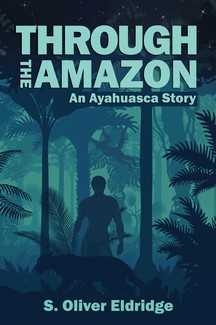
The drug called "The Shari" has been used for vision quests over many years. But, when all the rivers start drying up, the tribe must send a young hunter named Tomás on a much more important trip through the Amazon.
The drug called "The Shari" has been used for vision quests over many years. But, when all the rivers start drying up, the tribe must send a young hunter named Tomás on a much more important trip through the Amazon.
The drug called "The Shari" has been used for vision quests over many years. But, when all the rivers start drying up, the tribe must send a young hunter named Tomás on a much more important trip through the Amazon.