Category: History Publisher: Maui Island Press
ISBN-10: 0976513625
Type: Non-Fiction
Pages: 177
Copyright: 2012
ISBN-13: 9780976513629
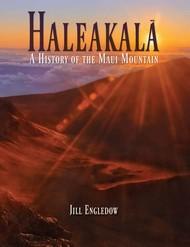
Haleakala: A History of the Maui Mountain shares rich historical accounts and vintage photographs documenting the geology, ancient myths, silversword and nene, Depression-era building projects and the community effort that created Haleakala National Park.
Haleakala: A History of the Maui Mountain is a collection of stories and images of the mountain that makes up more than half of the island of Maui, Hawaii. Visitors flock to Haleakala National Park by the thousands every year to watch sunrise at the summit or play in the oceanside pools at Kipahulu. Beyond the popular attractions, there is much to learn about Haleakala, and this book shares facts, forgotten photos and historical accounts in a beautifully designed format.
Excerpt
Haleakalä is a wahi pana: a legendary or celebrated place, the backdrop for tales of ancient gods and goddesses, chiefs and priests, nature and humankind. The tales, or mo‘olelo, of olden days are often part fact, part fiction. Like the tales of many native peoples who live close to the land, some mo‘olelo add personality and plot to the play of natural forces. Some turn ancient ancestors into gods. In Hawai‘i, the gods can take many forms, known as kino lau, appearing as a plant, animal, insect or even as an otherwise inanimate object. The volcano goddess Pele might appear as fire and lava, or as a woman—sometimes young and lovely, sometimes old and haggard, always a character to be treated with caution and respect.
Retold through generations, some of these stories are rooted in the time before the Polynesian people settled Hawai‘i. The demigod Mäui, for example, is well-known throughout the Pacific. He may be a deified ancestor, someone who was once a real person of such energy and vibrancy that his descendants told stories of him for generations after he was gone.
This is the story of the author’s great great grandparents, Edward Lewis and Sarah Crosby, who were convicts transported to Van Diemen’s Land in the 1840s. It is told from the perspective of a detective agency searching for what happened to Edward, w
325 letters my father wrote to my mother during his time in World War II.
Woven together in a timeline of events of three of his brothers, 5 brothers-in-law, and one cousin, all 10 of them were in WWII at the same time.
A work in American history and existentialism Which is an Invitation to connect and create the dots in your life to other revolutions like the Cuban Revolution.