Amazon
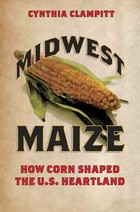
Midwest Maize
Category:
History
Publisher: University of Illinois Press
ISBN-10: 0252080572
Type: Non-Fiction
Pages: 296
Copyright: February 15, 2015
ISBN-13: 9780252080579
Price: $19.95 (eBook)
Corn (maize) fed Native Americans, saved early settlers, and then went on to transform the world. Thanks to corn, the Midwest was settled faster than any other region in history and wove itself into the fabric of our nation.
From the Oaxaca region in Mexico, a grain arose that was to become one of the most important foods on the planet. It would spread across the Americas and then, in time, span the globe. However, nowhere was its impact greater than in the region that would come to bear its name: the Corn Belt. As corn made it possible to build the Midwest, it also became part of the sweeping saga of the transformation of everything from agriculture to home cooking. Learn how the rise of corn is connected to vampires, the Chicago Bears, Abraham Lincoln, and time zones. Find out how breakfast cereal and snack foods were created. Discover the cultural connections that shaped the foodways of the Midwest, from the Great Migration of African Americans to the influx of Mexicans, which started in the late 1800s, to the many Asian and European groups who adopted corn once they arrived. In addition to fascinating history, there are also recipes for historic foods that nourished the pioneers and early settlers. And last but not least, learn why knowing about corn is so important, as we try to feed the world's growing population and consider issues from making ethanol to genetically modifying foods.
Excerpt
Today, more corn is grown and harvested in the United States than wheat and rice combined—nearly 73 million acres are dedicated to the growing of corn. As it had done for the Maya, so corn did for the United States: it enabled a few to feed the many, so that endeavors other than agriculture might flourish. The Maya owed their mathematics, astronomy, and architecture more to Zea mays than to anything else. For us, it offered not only the freedom to pursue other things, but also the inspiration and even the raw materials for developing far beyond the almost entirely agricultural societies from which the country’s population emigrated. As Margaret Visser noted in her classic work Much Depends on Dinner, “Without corn, North America —and most particularly modern, technological North America—is inconceivable.” Corn has an impact on almost everyone. Life would be completely different—and a lot more expensive—without it.
-from the Introduction
|