Cheaper Than Therapy: How to Keep Life's Small Problems from Becoming Big Ones is the first in a series of inspirational and motivational gift books that uses inanimate objects as metaphors for enhancing the way we live.
In this lighthearted look at personal problem-solving patterns, Cheaper Than Therapy: How to Keep Life's Small Problems from Becoming Big Ones illustrates The Lesson of the Paper Clips. Gina Greenlee uses playful images of pliant paper clips to show how choosing what seems to be the easy way out of life's small problems often results in bigger, more overwhelming ones.
When paper clips hook onto each other and wind up tangled on our desks, Gina invites us to examine our interaction with these modest fragments of wire to uncover the metaphor for transforming how we live.
Cheaper Than Therapy: How to Keep Life's Small Problems from Becoming Big Ones is a whimisical yet thought-provoking handbook for everyone who wants to become more skilled at handling whatever life brings their way.
Excerpt
Introduction
Paper clips can help me have fewer problems in life? You've got to be kidding.
No, I'm not. In this book, paper clips are a symbol for behavior.
Why paper clips? Because they're everywhere – the office, school, library, copy center, and at home. If we examine how we interact with paper clips, we can alter our lives.
I once had a part-time job where all I did for 20 hours a week was paper clip printouts of computer screens. By the end of a two-year stint, I had gone through cartons of paper clips.
I never bothered plucking the clips from their tiny boxes. I preferred a more preschool approach and dumped them on my desk to form a shiny paper clip volcano.
On occasion, I'd reach for a clip that had hitched a ride with one, two, sometimes three other clips and, in frustration, fling the clingy bunch across my desk. After a week, a new pile formed, entirely of bunched clips. I’d created for myself a second, even less exciting, job.
Without pay.
This happened repeatedly. Then one day I learned my lesson: Two or three tangled clips were a signal to stop what I was doing and deal with the pesky pieces of wire rather than letting them accumulate for a week. I didn't like having to disrupt my daily workflow to occasionally untangle clips, but I liked having to unknot a week's worth a whole lot less.
The day I learned my paper clips lesson – small problems become big problems when I ignore them – was the day I realized I behaved this way in other areas of my life, whether it was procrastination in bringing my writing ideas to the marketplace, managing debt, or hanging on to relationships that had stopped working long ago. The choices I made when interacting with paper clips were a metaphor for how I lived.
Is it just me? How do other people react to this same fork in the road? Do they say "the heck with it" and toss the tangled paper clips aside to reach for the single one? Or, do they make a choice that's a little uncomfortable at first but pays off down the road? What other options exist? Suppose people viewed their interactions with paper clips as a metaphor? How would that affect them?
These questions form the heart of Cheaper Than Therapy, presented for you to explore and answer for your own life.
The Lesson of the Paper Clips is an opportunity to observe and learn from personal problem-solving patterns and, should we choose, transform how we live.
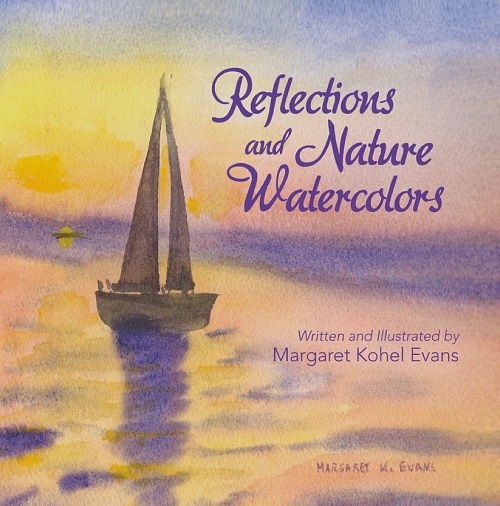
Reflections and Nature Watercolors is a collection of Margaret's spontaneous positive thoughts in celebrating and reflecting on life and her nature watercolors.
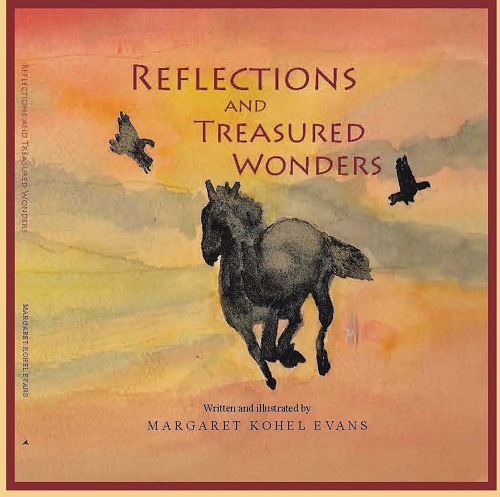
From the Caribbean Sea to Machu Picchu in Peru, and from birds to flowers and butterflies, Reflections and Treasured Wonders offers a collection of images gathered from around the world.