Kindle Edition
Audiobook
Amazon
Category:
Historical Fiction
Publisher: Dancaster Creative
ISBN-10: B0C1JK83VK
Type: Fiction
Pages: 269
Copyright: April 6, 2023
ISBN-13: 9798390729014
Price: $4.99 (eBook)
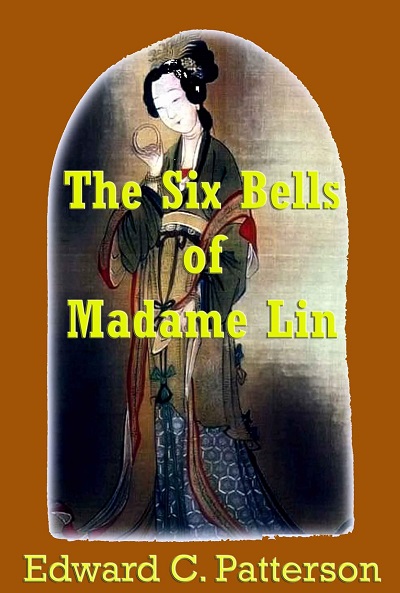
The Six Bells of Madame Lin is the first book in The Witch of Marigold Hall Trilogy, a fictionalized account of the struggles of Lin Mang, a blind woman who manages to navigate the world during the Mongol conquest of China in the 13th Century. Without sight, she is a legend in her province, excelling as a seamstress who embroiders using a unique stitch which sighted craft folk find impossible to master. Reliant on her remaining four senses and a penchant for cleverness, this blind girl becomes a force, forging her way through difficult times and winning a place in the conquerors’ hearts.
Lin Mang, blinded by proximity to her father's lacquerware factory, manages her own industry — a seamstress, who amazes her neighbors by producing unparalleled embroidery in a long-lost style passed to her through the women of her clan. Lin Mang's world is dark, yet she navigates it as if nothing is amiss. Then the world changes. Invaders stalk the land; and her cottage industry is disrupted by the ravages of war. Lin Mang, however, is above such inconveniences. There is always a path to survival and, with the aid of an unusual collection of companions, she moves forward — one bell ring' one tongue click at a time. The swept of change defeats many, but some are born to ride the tide to shore.
The Six Bells of Madame Lin is the first book in The Witch of Marigold Hall Trilogy, a fictionalized account of the struggles of Lin Mang, a blind woman who manages to navigate the world during the Mongol conquest of China in the 13th Century. Without sight, she is a legend in her province, excelling as a seamstress who embroiders using a unique stitch which sighted craft folk find impossible to master. Reliant on her remaining four senses and a penchant for cleverness, this blind girl becomes a force, forging her way through difficult times and winning a place in the conquerors’ hearts. Some would profit from her industry while others would marvel at her skills. Some would call her a leader. Some would call her a witch — the witch of Marigold Hall. Come follow the sound of her bell and the click of her tongue as she leads you through the darkness and light of her tale.
Excerpt
Chapter One
Yi-du
1
As a storyteller, I can tell a tale — a tale filled with fact and fiction blended so you would not know where one began and the other ended. A tale filled with the wonders of the times — of plunder and lust, of change and stability — when every farmer sought cover from the armies of the west and the north and south, but still extended their hand for an errant cash to fill their empty rice bowls. I can weave a story of high-minded men who managed low thoughts on a moment’s spur; and of foreign lords who trampled our land and made it their own, but who also pounded our world into dust and raised palaces where none had been. Yes, I can tell a story. Stories are my trade — my merchandise from lip to ear, and into my coffers you would spare a copper. But for this tale, I would expect silver ingots. Such is the way with storytellers who know when the truth is more worthy than lies to make your eyes open in wonder.
I might lose my rantings in time, but never the golden skein spun by the poor blind girl who kept my attention for nearly fifty years. It was hard for most to stay upright and outside their tombs during this time, but she thrived despite the depravity of men and the chicanery of women — the brutishness of warriors and the pomposity of emperors. Above it all, she reigned. But I am getting ahead of myself. After all, I must coax a story from my throat like the fine songs of Su-chou or the aged wine of Ji-nan. Far be it from me to let you see the dragon before you hear its roar. Far be it from me.
2
The sea breeze had more than fish and oyster stink wafting across Yi-du village in the year the Jin lords stumbled. The fisher folk went about their business without hesitation, neither nets nor tackle bothered by rumors in the air — rumors the emperor in his capital trembled before a new invader, one who struck fear into the hearts of those who believed the tales. But fisher folk tend to their catch; and gossip only occupied a pause in the quaff of harsh rice wine and the munch on stale rice balls with their fellow fisher folk. Perhaps more intent on rumors were the town merchants, who listened to the passing wagoner when he halted to buy a moon cake or to haggle over the price of a lacquer bowl or fine embroidery. To him, moon cakes, lacquerware, and embroidery had more in common with silvery carp and netted oysters. Still, gossip is gossip and rumor is rumor — nothing more than a passing tale from lips to wind. Surer than this was the sound of a bell — a small tinkle portending the approach of a blind girl. It did not speak of fish nor foretold destruction. No rumor about this; just a herald as sure as a dog’s bark or an ox’s low. All Yi-du folk knew the blind girl’s bell — the bell of the lacquer merchant’s daughter, Lin Mang.
Along Yi-du’s brine-soaked streets, Lin Mang came tapping her carved willow staff on the cobblestones, each tap ringing the small bell attached by a crimson cord near the top. Before her, her younger brother Lin Cheng trudged; and behind her, her little sister Lin Tze-ying sauntered, both children giggling, forming an odd caravan with Lin Mang at its center. Lin Cheng toted a bundle on his back, while Lin Tze-ying carried two sacks, one in each hand.
Lin Mang, taller than both, marched assuredly following the sound of her bell, its discourse telling her much about the surroundings. She still could see shadows, but had ceased to rely upon them, her ears and nose better judges of distance than the tattered remains of her sight. The bell alerted the passersby to clear the way. They bowed to the daughter of the House of Lin — she an oddity renown throughout the town — the county even, for her abilities.
At eighteen, Lin Mang had stood up to her blindness like a warrior to an enemy, enlisting unlikely allies to overcome battle challenges, in this case daily living. While most blind folk tripped and stumbled, Lin Mang walked in triumph along the streets of Yi-du. She could have enlisted a sedan chair if the family could afford the extravagance, which it could, but Lin Mang preferred to test her prowess with her other senses, navigating the way to the cloth and thread merchant; her siblings carrying the bundles. Lin Mang’s confidence amazed all who encountered her. Only stray dogs and chickens ignored the accomplishment.
It was not always this way. When Lin Mang’s sight failed at age twelve, she hid in a corner, not even her mother able to coax her out. Lin Mang crawled about, banging into tables and chairs, wailing to the servants of Lin House. She cursed the lacquer craftsmen in the adjoining manufactory where her father oversaw the lacquer craft — the application of the vermillion. She cursed it because the vermillion — the ch’en-sha had stolen her sight. The same substance gave her mother the shakes and her father coughing bouts. But who could curse the source of the House of Lin’s income?
Then, when pity and sadness grew old and tiresome — a wanton source of useless annoyance, especially to Lin Mang, she returned to her craft; her true art and love — embroidery.
“Let me help you hold the needle,” her mother would say; and Lin Mang allowed this aid through tears and sobs. Both mother and daughter excelled at this special skill — a craft taught to generations of Southern women by ancestors from Su-chou. Now brought to the North — to Shan-tung and Yi-du village, the su-xiu double stitch method created embroidery much in demand, and adding significantly to the Lin household’s income. But the ch’en-sha also had affected Lin Mang’s mother, Tu Xing. Her hands shook, the needle unsure even in the threading. So, using the last vestiges of her sight, Lin Mang retaught herself to embroider using the su-xiu stitch.
As her sight faded into shadows, Lin Mang overcame this burden, soon producing saleable goods. The more she practiced, the better the work became and by eighteen she had surpassed her sighted self, creating the finest embroidery pieces in the district. Word went out that a blind girl created wonders — storks and peacocks, pine trees and peony blossoms, and these in the su-xiu style — two-sided works, each side with its own design. Now when Lin Mang walked the streets of Yi-du, passersby cleared the way, raised their clasped hands to their foreheads and bowed. They whispered, there goes the lacquer merchant’s blind daughter, who can create su-xiu pieces like those you never had seen unless you have seen her work. They might also wonder why their own daughters, although marriageable, could scarcely play the pi-pa or sew monkey faces on children’s slippers.
“Keep to the street,” Lin Mang called to her brother. “You waver. I can tell it.”
“You can always tell,” Lin Cheng muttered. “You don’t carry a heavy bundle.”
“Give it here, if you’re too weak to do it.”
“Never mind,” Lin Cheng grumbled. “You need to ring your bell.”
Lin Mang gave her staff a shake, the bell telling her its tale. Her little sister was trailing too far behind.
“Lin Tze-ying,” Lin Mang called.
“I am coming,” Tze-ying replied. “It is warm today, and we have been walking for some time.”
“Not long at all,” Lin Mang said.
She slowed to let her sister catch up. The warm air brought mixed aromas — the pervasive tinge of oyster stink, a touch of carp from the boats and a unique blend from the fishmongers, but also the velvety kiss of peaches and pomegranates. The sweet aromas were not fresh, but heat-worn and tasty. Beneath her feet, Lin Mang felt a pattern change — the cobblestones giving way to a bare slick of mud. She halted.
“Gao-dian,” she announced.
Lin Cheng turned, Lin Mang told by a slight breeze and a shift in her brother’s distinctive smell — garlic (which had been in his morning meal).
“Can we, sister?” he asked.
The caravan stood beside a sweet pastry shop, a wonderland for any child, and many adults indeed. Lin Mang grinned. The children should have a reward, but she craved an almond bun, the aroma of which tantalized her from the street.
“We shall not pause long,” Lin Mang replied. “Am I aligned to the doorway?”
“You are,” Lin Tze-ying announced, taking her sister’s hand.
But Lin Mang released it.
“No need,” she said. “I can manage.”
The children knew to stand aside and let their sister pad forward. Lin Mang shuffled, and then clicked her tongue, as she often did, to augment the effects of her bell. Once clear of the mud, the cobble returning, Lin Mang kicked forward to a single stair, hopping up like a jumping stork. Three brief steps, another kick on the high threshold, and she was over and into the shop.
Lin Mang knew this shop well and, if Yu Bo-fang, the baker, had not shifted the barrels about, she could count the eight steps to the counter. But the baker met her, grasping her arm. As unwanted as the act was, Lin Mang nodded, smiled, and greeted the pastry man.
“Master Yu,” she said. “I smell a fresh batch of almond buns.”
“True, true,” Yu Bo-fang replied. “And moon cakes, cherry dimples and pork wraps.”
“Ah, yes,” Lin Mang said. “But the almond buns attract my attention. The ones on the right side, beside the moon cakes. I believe you have seven large almond buns and two small ones.”
The children giggled.
“You amaze me,” the baker said. “Nothing escapes your eyes.”
“Everything escapes my eyes,” Lin Mang said. “But nothing escapes my nose.” She clicked. “But where have you gone?” The baker had disappeared. She turned to her brother. “Ah, he has gone to the back to bring more sweets to our attention.”
“He has, sister.”
“But he has returned.”
“I also have another treat for you to sample,” the baker said, holding out a small dish. “Can you guess what it is?”
The children plucked up a piece each and munched.
“Do not tell me,” Lin Mang chided. “Yu Bo-fang means to challenge me.”
“I have many times over the years, and you have never failed. But this time I believe you shall.”
Lin Mang heard the gentle, satisfactory sighs of her siblings. Whatever the delectable was, it pleased them, no doubt. She reached, her hand dipping onto the plate, finding the sweet in question — a flat, spongy morsel, damp but fragrant.
“I detect roses,” she said, raising the piece to her nose. She then popped it into her mouth and chewed, grinning as the flavor released. “It is unusual. Crisp and sweet. I fear I have never encountered this flavor.”
“It is Ye-tze, mistress,” Yu Bo-fang said, laughing. “A large brown nut, hard and difficult to penetrate. But once done, releases milky liquor which I have mixed with rose water. I have soaked the meat inside the nut overnight.”
“Ye-tze?” Lin Mang said, taking another piece. “Can you take credit for baking such a thing?”
“I can take credit for opening it and preparing it correctly. It is a rarity from the South — from Guang Province.”
“Sung?” she mused. “And how did you come by such a nut?”
“There has been much coming and going lately,” Yu replied. “Sung traveling merchants, and even those from Min. This Ye-tze came from a fugitive fleeing to the northern border. Said he had opportunities there with the . . .”
“Do not say their name, Yu Bo-fang,” Lin Mang muttered. “It will befoul the children’s ears.”
“In any case, mistress, he had much to tell.”
“Best left unsaid,” Lin Mang replied. “Now sell me the buns.”
3
The transaction completed, Lin Mang amazed Yu Bo-fang yet again by knowing the size of each bun and directing him to choose only the largest. She carefully withdrew a string of cash from her satchel, untying the string as nimbly as if she could see. She counted out nine iron cash into her hand and placed them on the counter. Then she added five more.
“Moon cakes for my brother and sister,” she announced. She added another cash, “And wrap five Ye-tze pieces for me . . . for later. I need to commit their taste to memory.”
“Only to memory,” Yu replied, laughing, “And they are dear at the price you pay.”
She slipped two more cash into her palm, and then slid them to the counter.
“As you do not sell this as daily fare, you are guessing at the price.”
“I set prices in this shop,” Yu said, sternly. “But I believe you have met the price.”
Lin Cheng, moon cake in hand, took the pastries, tucking them at the top of his bundle.
“I shall have mine,” Lin Tze-ying protested.
“When we go outside,” Lin Cheng replied.
Lin Mang would not intervene. She needed her wits to leave the shop and avoid a nasty fall over the threshold. Threshold navigated, she counted three steps, but halted. The air had changed. The oyster stink still prevailed, but a rumbling rolled across her skin. She heard the galloping of horses.
“Halt,” she said to Lin Cheng. She reached to grasp her sister’s shoulder. “Stay. Something is amiss. Something is coming.”
“I see dust,” Lin Cheng remarked.
“Hush.”
Dust rose. Lin Mang tasted it in her throat, overcoming the sweet taste of the Ye-tze. Suddenly fearful, she lost her bearings, nearly missing the top step. Lin Cheng steadied her.
“Leave me be, Lin Cheng. Take your sister inside. Do not return until I tell you.”
“But what will you do?” her brother asked, panic in his voice.
“I do not know.” She rattled her bell. “But it will be fine.”
Lin Mang, assured the children had returned to Yu Bo-fang’s care, although she was sure the pastry man hid under his counter, stood tall while the rumbling increased, and then it slowed. Horsemen, she thought. How many she could not tell, but the equine smell mixed in the dust, trumped the oyster stink.
The horses halted on the street. A solitary beast, man included, approached Lin Mang. She heard the horse’s snort and the rider’s heavy breathing.
“Is this Wei-fang?” he asked curtly.
Fear gripped Lin Mang, but she had lived in daily fear since the age of twelve and knew how to overcome it. She tightened her grip on the staff, and then clicked. She determined the rider was astride an enormous beast — a war horse no doubt; no cart animal this. Soldiers. Passing through, she hoped. She clicked again to estimate the distance. The horseman drew closer.
“Witless bitch,” he spat. “Didn’t you hear me? Is this Wei-fang?”
“No,” Lin Mang said. “This is Yi-du.”
“Yi-du, she says,” he replied, laughing. His companions grumbled and cursed. “Have we missed the mark? I don’t remember hearing of a place called Yi-du.”
“We are inconsequential, sir,” Lin Mang said. “Wei-fang is twelve li east. They have a yamen and a superintendent. They afford us only a sheriff and da-lu.”
“Twelve li. Are you certain? Have you traveled there yourself?”
“No, sir. My father has told me this. I believe him.”
“Oh, a dutiful daughter,” the soldier said, laughing. “But a brazen one. Perhaps we will visit your father and partake of his hospitality.”
“He is the lacquer merchant, Lin P’ai.”
“Yes, brazen girl,” he said. “The villagers saw us coming and ran before us, seeking their houses, as if that would keep them safe. Yet here you are, standing in the road inviting us to whatever good fortune hides beneath your robe.” He roared, his companion echoing the sentiment. “Your face is muddled, but faces do not concern hungry men. And yet, you stand fast.”
“My face is rough, sir. It is true. They make lacquerware with vermillion. The fumes impair the skin and . . .” Lin Mang shook her staff, the bell ringing. “. . . and steal the sight.”
The soldier coughed. Lin Mang felt his retreat.
“She is blind,” he said to his companions.
“Still, I can sense your sudden concern,” Lin Mang said. “Even your beast finds me less appealing, although I admire his sleek black coat and gray mane. The blue saddle cloth is worn, but I am sure you can find someone in Wei-fang to mend it. In fact, I am a seamstress. If you stop at my father’s house, I will soon be along and could take my needle to the hem and even repair that hole in your britches.”
“And how did you . . .” The warrior stirred in his saddle, probably examining the knee hole in his trousers, which Lin Mang assessed correctly, having whiffed the scab beneath it and assuming the rest. “Are you a witch?”
“A seamstress.”
“A blind seamstress?” He laughed nervously. “I don’t think we’ll be stopping in a house which vents poison or harbors witches.” He turned to his crew. “To Wei-fang, twelve li away, if this witch is correct.”
Lin Mang remained steadfast as the soldiers left, the dust heavier in their wake. Her display of courage was not real. She risked their ire and knew it well. Soon her brother and sister were at her side, shaking with more fear than she had exhibited.
“They could have killed you, mistress,” Yu Bo-fang said. “Soldiers can take liberties.”
“They can, and they could have, but assaulting a blind woman brings Heaven’s misfortune.”
“Do not rely upon it.”
“Sister,” Lin Cheng asked. “Will they return?”
“The future has no sound, sense, taste, nor smell. As such, I cannot say until it is no longer the future. And Lin Tze-ying, stop weeping. It cures nothing. Master Yu, were these the emperor’s soldiers?”
“No,” Yu replied. “They were Sung.”
“Sung?”
“Yes, what I have heard must be true.” He paused. “Word comes the capital is besieged.”
“By the Sung?”
“No. Meng-ke-ren.”
The children murmured, gathering closer to their sister,
“Do not alarm them, Yu Bo-fang.”
“I merely say what I have been told . . . by that vagabond with the Ye-tze nuts. He said the Meng-ke have surrounded K’ai-feng, and the armies of Sung have struck a bargain to help them rid the land of our Jin overlords. Even the Jin armies divide and draw up sides and . . .”
“Enough,” Lin Mang snapped. “You bake buns and I embroider silk. What is war to us?”
“Except, you have just stood up to a Sung Captain — a rough man in thick leather and an iron helmet and . . .”
“A hole in his britches. Yes.” She clicked her tongue, banged her staff, ringing the bell. “It is time to return home. Thank you, Yu Bo-fang, for the Ye-tze and the gossip. May a fair breeze guide the balance of your day. Lin Cheng. Lin Tze-ying. Home.”
“But if they should return,” Lin Tze-ying protested.
“Home.”
Although there were embroidery orders to fulfill and Ye-tze to enjoy, Lin Mang could not taste or smell the future, but somehow, she knew the soldiers would return. Gossip was gossip, but she smelled the knee scab of a warrior — a badge of battle not easily dismissed. But Lin Mang could only live one step, one tongue click, and one bell ring at a time.
Chapter Two
The House of Veils and Bonnets
1
In those days, it was difficult to tell if soldiers swore allegiance to a particular general or to themselves. Turmoil ruled and blurred the paths of obedience. The Meng-ke-ren had invaded the Jin lands several times, the worst in the decade before my tale begins. In that foray they overran the western counties, leaving most towns in ruins. Great was the wailing from the west. But then, the Meng-ke-ren stopped, or rather paused. Several of their lords squatted on the land, mostly to bleed it dry, except for one prince, who, although he was as ruthless as his brethren, disliked destroying pretty-things. He studied the ways of Han and spared the towns he seized if they cooperated with his will and terms. If not, they suffered the same fate as the western counties — total obliteration. Fortunately, word had circulated that this prince — Lord Kublai, brother to the Meng-ke-ren ruler, liked pretty things. So, most of his counties surrendered peacefully, allowing him to gather his booty in relative tranquility, avoiding his more ruthless promise.
During the pause in the invasion, the people licked their wounds, but they were deep wounds with little chance for recovery. Then the fierce soldiers returned, compounded by Jin collaborators and fickle Sung allies from the south. The sea rovers, always a threat, took advantage of the chaos, attacking coastal villages and towns. The Jin Emperor, such as he was, retreated with his court, such as it was, to the old capital at K’ai-feng, such as it stood — ruined through the ages and now surrounded by Meng-ke-ren. Like a whore on a porch, the city which had been taken again and again, now fell to the barbaric ruler — the one who detested pretty things.
In this pitiable time, the blind girl plied her craft, sniffing, and guessing at the events around her. As I have said, this is a tale without parallel in all my bags of bragging.
2
The House of Lin, an engine of activity, was the commercial hub of Yi-du. Carts entered through its gates, night and day, delivering demijohns of pigment and finishes, the essence of making lacquerware; and the raw base materials — objects to be articulated into highly prized craft. From wooden beams to horsehair cords, the materials rolled into the central courtyard to be unloaded for use. Finished works exchanged places with unprocessed grist, the oxen eating and shitting in place while robust and hooded workers piled scads of bowls and utensils and tables and cabinets into the carts for hauling over the hill country to the canal docks at Ji-nan. From there, the crafts of the House of Lin traversed to marketplaces throughout the Jin Empire and beyond — to the Southern Sung and north of the Long Wall. The trademark of the house blossomed across the land, although Yi-du was better regarded for its fish.
Despite the trade’s prosperity, the carters purchased the lacquerware directly because they assumed the transportation risks — the maintenance of wagons and oxen, the dangers of bandits and pirates, and the whims of local officials and contesting armies. A finely crafted Buddha or a detailed lacquer chest of drawers might fetch a princely sum in K’ai-feng or Khanbalik; but Lin P’ai, the master of the House of Lin, might see only a few silver ingots for one or several strings of cash for the other.
Within its walls, dust and fumes trumped the House of Lin. The lacquer works spread toward the bay — a long chancel of workbenches and slurry pits. Water, distilled at the distant end, gave workers a basis for their craft as they squatted along the pit over low tables. Here they applied vermilion and a catalog of other finishes, layer after layer, until surfaces shone far above their original aspects. When they could see their toothless smiles on bowls and plates; when peacocks emblazoned cabinets with the sun’s fire, these lacquer craftsmen could enjoy the satisfaction of a copper cash and a bowl of noodles; and perhaps a sip of acidic wine. Still, it was better than if they toiled on the sea and harvested fish, which would accord them far less. Here the lacquer folk toiled, shielded from the ch’en-sha poison by veils and bonnets; here they labored, so landed officials could sip the best wine from exquisite bowls — bowls born in the House of Lin.
Unlike this industry, the fabled embroidery from Lin Mang’s hands brought in more per piece than the lacquerware. Gentry and officials commissioned works, paying a portion in advance. The daughter of the lacquer merchant kept her own quarters just beyond the heart of the main household. While the family’s living quarters were colorful — bright green roofs, cheery red walls and cascading blue balustrades, Lin Mang needed no such visual wonders. She insisted on a scented garden and carved walls for tensile pleasure, but her roof could have been gray or black. She would not know the difference. It was, in fact, as blue as the main house. Her needs settled on a cool place to embroider, away from the bustle and fumes of the lacquer factory, fumes which already had done her their worst.
Fierce independence lived in Lin Mang’s spleen. Still, counting steps, clicking the tongue and listening to the bell could become wearisome. Sniffing for every assurance of safety, and feeling for shifts in the breeze, became an effort. So, Lin P’ai provided his eldest daughter with two servants, Kai Lu, a sturdy boy, a factory worker’s son, who fetched and carried; and Peony, a diligent maiden, who helped Lin Mang with her toilet. Both were company, silent mostly so as not to interfere with Lin Mang’s listening. Still, they became as valuable to the seamstress as her bell and thimble.
Attached to the family’s main hall, a series of small courtyards, each leading to ke-tings and utility rooms, drifted lazily through a bamboo grove. Having the courtesy not to inflict the factory’s dangers on his neighbor’s daughters, Lin P’ai had taken only one wife, Tu Xing, who kept her quarters apart, living with Lin Tze-ying. Lin Cheng, old enough for his own courtyard, kept a small room adjoining a larger hall, which had once belonged to his grandfather, now deceased. A small temple memorialized the grandfather’s passing. The hall, now empty, once occupied by Lin P’ai’s younger brother, Lin Gao. But he had departed, first to run the family warehouse at Ji-nan, and then sailing south into the Sung provinces, never to be heard from again. Since Lin Cheng had reached marriageable age and the matchmaker sought candidates on his behalf, Lin P’ai promised his eldest son the vacant house once a dowry was settled and a bride’s price paid.
From sunrise to sunset, the House of Lin swarmed with industry. Lin P’ai had a good head for business, knowing any ill wind could mean disaster. Nothing taken for granted, he marshaled his inventory carefully and constantly lorded over factory affairs. Tu Xing did her best with the embroidery, but her hands shook, so the Su-xiu stitch had flown from her skill. She could still muster decent, saleable work and inspected her eldest daughter’s finished pieces when prospective clients came to buy. But it was Lin P’ai’s diligence which kept the House of Lin a going concern.
3
Lin P’ai, diligent and respected by his workers, marched through the courtyard to inspect the latest shipment still hitched to its cart, the ox straw-fed and farting. Lin P’ai slapped a long beam, which protruded from the wagon.
“Too green for use,” he remarked. The carter ignored him. “I said, this is too green for use.”
“I heard you, Master Lin,” the carter replied, also slapping the beam. “It will ripen.”
“Yes, when my ass falls off, it will.” Lin P’ai passed on to a square unfinished ash block. “This is better.”
“So you’ll pay.”
“I’ll have Fa Lin inspect and assess it.” He waved across the courtyard to a stubby man who wore a thick green bonnet with a black veil. “Come look this over, Fa Lin, so this bastard doesn’t rob me blind.”
“Like your daughter,” the carter said.
Lin P’ai frowned.
“I have two daughters, sir,” Lin P’ai scoffed. “The youngest sees very little with both eyes. The eldest sees everything with no eyes. I’m sure if either were here, they would take no notice of you or your baggage. Take care with your tongue or your return trip will carry only your ox’s farts.”
The carter laughed.
“I doubt if any will buy and carry now,” he replied. “Now that the soldiers are afoot in every town and village.”
“Truly?” Lin P’ai said. “I thought I heard horses galloping past my gates.”
Fa Lin uncovered his face — a twisted face heavily ravaged by his profession.
“How can you deliver and then not buy?” Fa Lin snapped.
“Supply is not in your favor,” the carter remarked. “And who are you to lecture me, you ugly cur? Finish your assessment and be about your business.”
Lin P’ai clapped. Fa Lin replaced his veil and continued to inspect the materials.
“I’m sorry for any discourtesy,” Lin P’ai said. “I know the way of these things. The comings and goings of soldiers will pass. Your heart will change on your next visit, I’m sure of it.”
“We shall see,” the carter said. “The roads are dangerous, more so than ever. They say the battle flows east, now that the Meng-ke-ren besiege K’ai-feng.”
“I have heard such rumors,” Lin P’ai said. “How can we know the truth?”
“By the soldier’s banners. Many bear western marks; and I have seen at least one Sung patrol on my journey.”
Lin P’ai snorted, and then turned to Fa Lin.
“Stop the assessment.”
“But master . . .”
“We are intruding on a long-standing courtesy.” He bowed to the carter. “Tell me your price and you shall have it.”
Suddenly, through the gate came three sedan chairs — each finished in lacquer, no doubt from the House of Lin. They bore the insignia of the Yi-du da-lu. Lin P’ai broke off his business, going to greet the sedan, bowing as he went.
“Master Lo,” he said as the porters set the three chairs in the courtyard. “What brings you to my door today?”
Sheriff Lo Ti-tao did not stir at first, his face grimacing from the fumes, no doubt. But since he had an investment in the factory and a share of the profits, the odor should not have surprised him. In the other sedans were his wife, Lo Yo-min, and his eldest daughter, Lo Jin-ta.
The sheriff stood, and then stepped from the chair.
“I am here to see if the soldiers occupied your house, Master Lin.”
“They did not. They passed my door. Perhaps the aromas of industry were not to their liking.”
“Perhaps, but I am glad they have not invaded your precincts.” He looked toward his womenfolk. “My wife and daughter are here on other business.”
“All are welcome,” Lin P’ai said, bowing again. “Come have tea with me, Lo Ti-tao. And my wife shall gladly entertain your wife and daughter while we thank the war god for ignoring this poor craftsman and his workshop.”
Lo Yo-min and Lo Jin-ta both stood, and then descended. A frothy pair, prepared for the environment with broad blue bonnets and brown veils, they followed the sheriff out of the courtyard and through the garden gates toward the main hall. Oddly, Lin P’ai watched them, only to follow behind, turning to observe Fa Lin paying the carter.
4
Lin Mang sat on her porch, Peony assembling a table before her. Scarcely a sound filled the air, but Lin Mang knew guests had arrived and, from the shuffling of twelve feet, she assessed two sedan chairs had entered. She heard her father’s greeting and the words other business. She knew the women had come for her services. Thus, Peony set the embroidery table before her mistress and began laying three thread hanks in designated piles — the needle box set to the side and a silk cloth stretched taut at one end of the table.
“Will that suffice, mistress?” Peony asked.
“Hush,” Lin Mang said, cocking her head. “I would hear the sheriff’s words.”
“Yes, mistress,”
“Be at hand, for I will require finished work to show our guests . . . when they drift into my courtyard.”
“Yes, mistress.”
“And have Kai Lu nearby in case . . .”
Lin Mang did not need to say more, but cocked her ear toward the distant courtyard gate and listened to her father’s conversation.
“The carters have told me K’ai-feng is under siege,” Lin P’ai asked Lo Ti-tao. “Is it true or is this another excuse for a new tax? I remember when the Meng-ke-ren first breached our borders. The tales of ruination poured across the land, and yet I never saw a single warlord or a bloody battle.”
“It was a time of great suffering in the West, Lin P’ai,” the sheriff replied. “And years have made us forget just how murderous these invaders can be.”
“The Jin lords were a blight also when they came,” Lin P’ai said. “I was just a boy, but I remember. But things settled down. Old ways returned. The Jin took Han ways and rule us now as of old. I know they’re foreigners and are above us, but they still need cabinets, tables and chairs. They still eat from vermilion plates and shiny bowls.” He laughed, raising a smile on Lin Mang’s lips, her father always seeing the bright side in every black cloud. “If these Meng-ke-ren replace the Jin lords, I’m sure they’ll still need pretty things.”
“They are men of limited needs,” Lo Ti-tao replied. “They live in round tents and seldom leave their horses’ backs. They will not accept surrender on easy terms. I have heard they destroy whole towns and catapult their victim’s heads upon the walls of the next town on their course. They are scourges. Savages.”
“You have seen these things?”
“No. But in Wei-fang there is talk among the gentry and officials. We cannot take the threat lightly. It is said several Jin generals have turned on their masters and aid the Meng-ke-ren. And the Sung have struck a bargain with the invader, eager to reclaim some of their lost territory.”
“But surely a small place like Yi-du need not fear,” Lin P’ai said. “We are too insignificant.”
“But the House of Lin . . . it depends on peace, does it not? And as the highest official in Yi-du, your trade is my trade. We must be vigilant.”
Lin Mang bowed her head. We must be vigilant. Would her father sit and wait for the arrows to come over the walls? Would they need to warehouse their finished works and wait until the disturbance passes? Whatever came, Lin Mang could only click her tongue, ring her bell and retreat with the help of her two servants.
Suddenly, Lin Mang heard the twitter of women. No matter how hard she tried, she could never concentrate on two conversations at once, despite the distance. Too distracting. But now, the women were coming; and her mother’s voice overtook her father’s. The pitch was familiar. My daughter will know and guide your decision. She can tell you what you need along those lines. You shall be satisfied at what you see. I am sure.
Tu Xing entered her daughter’s courtyard followed by the sheriff’s wife and daughter. Lin Mang respected her mother but had regrets she had allowed her eldest daughter to play too freely near the ch’en-sha poisons. Lin Mang never wore a veil or bonnet while growing up, a precaution exercised by her brother and sister. Whether her mother did not care or did not know, always gnawed at Lin Mang’s soul. Mother and daughter had built a wall between them, especially in the early years when Lin Mang’s anger prevailed. But now the necessity of commerce healed the wound like a scab. As her mother approached, Lin Mang reached for her needle and thread. Industry always impressed a potential buyer and, in Lin Mang’s case, diligence conquered all.
|