The dynsfunctional Kantro family manages to turn out two criminals and two geniuses. The geniuses have saved themselves through loyalty to their creative muses.
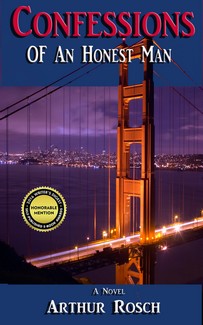
CONFESSIONS OF AN HONEST MAN is a story of the way family violence can produce a strong and creative person. Growing up with a cruel parent can take a brutal toll on a child’s future. Emerging from these shadows into a thriving adulthood can be a long struggle. The novel begins in a suburb in the late fifties and carries the reader to the present time. My protagonist wants to be a jazz drummer. His mother seems to have one purpose in life: to stop him from getting what he wants. Music is a waste of time! Fooling around with instruments won’t get him into medical school. Mom will force him, for his own good, to be something alien to his nature. She is a skilled calibrator of violence.
CONFESSIONS OF AN HONEST MAN takes the hero from the agonies of high school to a battlefield epiphany in Afghanistan. The protagonist has a mentor, a successful jazz musician. During a comic vignette the saxophonist sees trouble in his young friend’s future. He gives the only advice he will ever give: when you hit bottom, don’t be too proud to ask for help. My character laughs. His future is glorious! When he’s in deep trouble, he will remember his teacher’s words. He will find the means and the courage to overcome his demons.
Excerpt
September, 1967. Detroit, Michigan
Aaron Kantro follows his colleagues through the labyrinth of the nightclub’s kitchen and out the back door. A waft of cool air hits his face as he steps onto the concrete platform next to the loading dock. His sweat instantly begins to dry and he can see steam misting from the other musicians’ tuxedos. It’s the band’s third break. They will play one more set of forty five minutes. Then their work for the night is done.
There are nine or ten people gathered around the rear entrance to the club. They are either jazz fans who want to hang out or they are so loaded they don’t know how they got there.
A man with his shirtails dangling from his suit stumbles into Aaron. “I wan’ shake your hand,” he announces. He extends his unkempt digits and then pulls his hand away as if to recalibrate his arm’s trajectory. Aaron, when he puts his hand out to respond, feels like an idiot. He puts his hands in his pockets and hopes the man will go away.
“I tell you somethin’“, the man says. “You play some drums for a white boy. Some fuckin’ drums. I close my eyes, can’t tell the diff’rence. Sound jus’ like a real drummer.” He tries again to extend his hand and stumbles across his own feet.
“Excuse me”, a young lady says as she passes between Aaron and the drunk. She wants an autograph from the legendary saxophonist, Zoot Prestige. Aaron’s boss transfers a cheroot from his hand to his mouth. He leans down to inscribe his signature into the lady’s little book, while trying to keep his eyes averted from the cleavage that is so conspicuously thrust into his face. Aaron notes this little drama and loses his anger. Zoot Prestige is just too funny. Aaron quietly moves behind the imposing figure of his boss. The drunk rambles away, talking to himself.
Aaron is the only white person beneath the scalloped awning. There are perhaps ten white people in the club. It bothers him more than he likes to admit that he longs to see other white faces. It has been his decision to play jazz, and his brand of jazz carries him to black clubs in black neighborhoods. Sometimes, the moment he walks into a place, he feels the air freeze with racial tension. Sometimes he is scared. The only way through it is to play the music.
As the little throng disperses, Zoot butts his smoke in the sand of an ashtray. He steps off the concrete pad and walks across the lot towards his car.
After waiting about thirty seconds, the group’s organist, Tyrone Terry, follows the lanky figure of his boss. Aaron waits another thirty seconds and follows his colleagues to the cream-colored Continental. This precaution seems a little silly but there are probably narcs in the club and Aaron has to admit that it is pretty obvious what’s happening when three jazz musicians get into a car and don’t go anywhere.
Soon the men are engrossed in the ritual of the pipe: lighting, inhaling, holding breath, exhaling. It’s cozy in the Continental’s plush interior. Air comes sighing through the upholstery’s leather seams as the musicians’ weight compresses the seat cushions. Zoot and his side-men are settling down, recharging their nerves for the next set, the last set. It is one o’clock in the morning.
“She wanted you to look at ‘em,” Tyrone says to his employer.
“I know,” responds Zoot, “but it seems so...I don’t know...un-chivalrous to put my nose right into a lady’s cleavage. Besides, it’s redundant. I seen titties before. Wan’t nothin’ special about hers...they’s just....”
BANG! There is a huge sound, an explosion. The men’s bodies react instinctively. They duck, and their arms rise to cover their heads.
The car lurches as a man dives across the hood, holding a pistol in his right hand. His legs swim wildly as he fights to stop his momentum. Whatever tactic he has in mind, it isn’t working. The car’s sheen and finish turn the hood into a sliding board.
“Jesus fucking Christ!” In the back seat Aaron curses loudly without thinking. He has never before heard a gun shot. In spite of this fact, he recognizes the sound. It is rounder, weightier, and more final than the sound of a firecracker.
The man on the car’s hood waves the pistol frantically. Slithering to get his balance, he clutches at the windshield wipers and misses. Gravity and car wax slide him across the polished metal until he lands on the ground. The pistol fires as he hits the gravel. The bullet penetrates a tire with a loud hiss.
The man springs up and disappears among the ordered rows of vehicles in the parking lot.
Zoot Prestige holds a finger to his mouth, slides from under the steering wheel and drops quietly to the floor of the passenger seat. Zoot doesn’t want to get shot. Zoot doesn’t want to be a witness if somebody gets shot. Zoot doesn’t want questions. Zoot doesn’t want any dealings with the Poe-Leece!
Aaron scrunches onto the floor of the back seat until his arm rests on the hump of the drive shaft. Tyrone, on the other side, is hoping to disappear via the flawed logic of an ostrich. He is pulling his little pork-pie hat over his eyes.
A voice shouts, “I’LL KILL YOU MOTHERFUCKER!”
Two more shots are fired from the opposite corner of the lot. Two sparking ovals of muzzle flash light up the windshields of Cadillacs and Thunderbirds. A man’s face appears, pressed to the window of Zoot’s car. His cheek is distorted against the glass, with an eye like a panicked horse. His quick breath steams the window only inches from Zoot’s face. With a slight turn to the right, Zoot becomes a virtual nose-to-nose mirror image of the man with the gun.
The enraged shooter doesn’t see the human being an inch from his face. He raises his snubby revolver over the top of the vehicle, fires twice without aiming, and runs to cover behind a black Eldorado. The wind has changed. The shots are barely audible.
“Sheee-it!” Zoot grumbles, “I hope nobody messes up my short. I paid three hundred bucks for this custom paint job.” The immaculately polished car is long and sleek as a submarine.
A voice shouts, “HEY LOOK HE’S OVER THERE!”
Bang bang bang! Flashes light up the musicians’ faces. Guns are all over the place. Aaron looks at Tyrone. The keyboard player has twitched and spilled a pipe full of burning marijuana into his lap. He brushes and pats frantically to prevent embers from smoldering through the pants of his tux. Thrusting his hands into his pockets he makes a basket to prevent sparks from spreading onto the seat or the carpet. Aaron produces a handkerchief and helps contain the disaster. Tyrone is feeling little stings of fire burning their way into his palms. He is tossing the embers back and forth as he jumps and wriggles all over the tiny floor space behind the driver’s seat. When the young musicians’ eyes meet they realize that they have entered the realm of the completely absurd.
They begin to giggle, as quietly as possible. Tyrone manages to empty his lungs without breaking into a hacking cough. The bodies of both men are convulsed with terrified hilarity.
Aaron’s legs are crossed on the floor of the back seat. Zoot gestures with his fingers for the pipe. Tyrone hands it to Aaron as he muffles his cough and puts out the fire in his lap. Aaron gives the pipe to Zoot through the space between the seats.
The parking lot is a bedlam of running, screaming people.
Two men, fingers snarled in each other’s sport coats, roll across the hood of Zoot’s car. The metal on the Continental goes’scroich! bunk!’. Zoot winces and hides his face behind his hands. The men vanish somewhere in the gravel of the lot, grunting and cursing. A grey fedora with a black band lays on the hood for a moment before a stiff breeze carries it away. Zoot elevates his head a few inches and tries to inspect his hood for damage. It’s impossible. The windows are now opaque with steam.
Zoot relaxes. He sits with his face level with the knobs on the dashboard. His wrists are on his knees and his hands hang loose in the shadow beneath the glove box. He loads the pipe and hands it to Aaron through the crack.
“Don’t strike no match!” he says. “Use that thing.” He points to the black knob of the cigarette lighter. Each door has an ashtray and each ashtray has its own lighter.
Zoot sniffs the air inside the car. “I smell somethin’ burning,” he says. “You cats makin’ barbecue back there?” His voice is good natured and mocking.
Observing Zoot’s total poise, Aaron and Tyrone hiss through their lips with suppressed giggles. It is impossible to tell which part of the moment is funny and which part is terrifying. The giggles and spluttering have equal components of panic and the hysterical disbelief of pot heads in a bizarre situation.
Big cars roar to life and race from the lot in clouds of gravel and fumes. Sirens doppler past, right on their tails, red lights whizzing through the intersection. Crimson slashes of reflection light up the Continental’s glass.
Then there is silence. People stealthily emerge from cover, crunch-crunching across the gravel. They run for shelter inside the club. The musicians straighten their bodies with the slowness of clock hands moving. Soon they are sitting normally on the seats. Zoot loads the pipe, lights and inhales. He holds his breath for a long time, then exhales an almost transparent cloud. He replaces the pipe in a leather pouch, conceals the stash under the seat, and twists his head from left to right and back again, loosening his neck muscles. He is sixty-two, and a tenor saxophone has hung from his shoulders for more than fifty years.
“Should we go back in and play?” There is a squeak in Aaron’s voice. He makes a few mock rolls with invisible drumsticks.
Zoot looks at Aaron with a bare vapor of a smile, tolerant of his drummer’s naďveté. “Why wouldl we NOT go back in and play?” The marquee lights of the street’s clubs and bars glow on half of Zoot’s face, shadowing the other half. This gives his eye a demonic glitter. He wets his thumb and forefinger with his tongue and smoothes the hairs of his moustache.
“Let me point out something to you, babe,” says Zoot. “We’re professional jazz musicians. We play music, and we get paid. Rather nicely, I might add, thanks to my modest fame and the fact that I placed at number eight in Downbeat’s Tenor Saxophone category.” He pauses for a moment and says with a trace of gloating, “AHEAD of Dexter Gordon, Stan Getz and Gene Ammons.” He laughs a ripe and disdainful laugh. The magazine polls have such appalling power to determine a musician’s pay level.
Opening the door, Zoot brushes a tiny flake of ash from his tuxedo pants with a dapper gesture, and corkscrews his six foot three inch frame upright. The saxophonist makes a quick but careful scrutiny of his vehicle. He circles it, running the flat of his hand along its sculpted façade. There are no bullet holes that he detects, no scratches. The hood has resumed its normal shape.
Tyrone and Aaron squeeze themselves out of the car. Aaron closes the door delicately, with the barest of clicks, as if he fears the automobile will fall to pieces if he so much as breathes wrong.
The world flickers. The young musicians’ hearts race, their nerves tingle. They are playing a jazz gig with a famous saxophone player! Zoot Prestige has apprenticed with Duke Ellington, he’s played with Charlie Parker. He is a legend.
Zoot straightens his lapels and moves his shoulders inside his jacket so the garment settles more squarely on his body.
“That’s right,” he adds. “We’re hipsters, babe, we stay cool. We got a paying gig, we play until the club owner asks us to stop or it’s two a.m.” Zoot’s voice is like velvet and sand, Scotch whisky and smoke. “Long as the drummer doesn’t get shot. Gotta draw the line somewhere. Last drummer I lost was Bobby Beffords, in ‘65. And before that I had a good run, only lost two drummers in six years. Course, I never had a white drummer before. Everybody upset about that.”
He aims a gentle look at Aaron, to check that he isn’t being taken seriously. His smile is full of irony and play. He brushes a bit of ash from Aaron’s tuxedo jacket. It is a tender paternal gesture.
Fourteen drummers had come to audition when Zoot was putting together the band for this tour. Thirteen of them were black. Aaron was the third drummer to play. As soon as he finished the tune, Zoot sent the other drummers home.
He knew he would take a lot of heat for hiring a white drummer. Fuck ‘em. The kid was worth it.
“Ain’t nothin’ unusual happening here, babe”, says Zoot. “It’s just another gig, somebody’s old lady got too friendly with somebody else’s old man and things got ugly.” The tall man shepherds his young friends toward the door of the nightclub. “It’s human nature. Why don’t we go inside and play some music to soothe the savage breast? We’ll lay down some Recalcitrant Funk-itis.”
Zoot has just coined another of his classic nonsense terms. Recalcitrant Funk-itis now joins the lexicon along with Groove-matic Ubiquity, Heliocentric Hot Sauce and other such crazy combinations from Zoot’s fertile mind.
Tyrone pulls at his cummberbund to conceal the holes in the crotch of his pants. The young men follow the urbane figure of their mentor back into the humid noise of Mickey Tucker’s Jazz Corner.
Professional Reviews
A Review Of Confessions Of an Honest Man
The first chapter of this book is hilarious. Three musicians huddle on the floor of a car while a gun fight rages in the parking lot of a Detroit night club. Trust me, it's funny. The next chapter flashes back ten years and we meet one of those musicians. He's a nine year old boy named Aaron Kantro. He's one of those sensitive, artistic children whose home life is a nightmare. Aaron loves music. When he's tested for musical aptitude his score is off the charts. Clearly this child has promise. His mother opposes his ambition to become a musician. She regards creativity as useless. She's obsessed with status and money. She's crazy with this obsession, so crazy that her behavior crosses the line into abuse. The Kantro family is dysfunctional to a degree that would, today, provoke intervention. But in 1960 this kind of thing was private family business.
Where's the father? Where's Max Kantro? He's at work, of course. He's a sweet man but he doesn't know what's going on at home until it's too late. He's a workaholic, laboring at the delicatessen while his kids are being put through hell.
This book opens up all the closets where the skeletons are hidden. It's painfully honest. If I didn't care about the characters there would be no pain. Aaron's plight, his struggle to capture his dream against all odds is the dominant theme of the novel. This story shows us the damage that is done when children are abused. Fortunately, Arthur Rosch has a great sense of humor and he knows when to introduce comic relief. One of the pivotal characters of the book is Aaron's mentor. He's a successful jazz musician named Zoot Prestige. He's like a Zen master. He maintains his poise in all kinds of situations, and, believe me, there are plenty of strange situations to be encountered in the jazz life. You don't have to be a jazz fan to enjoy this book. I think it's an important book. It should be required reading for anyone in the field of family dynamics because it reveals how things are connected in the psychology of children who are victims of violence. And it still manages to be funny. Five stars!
Confessions Of An Honest Man: A Review
What happens when the desires we think we want for the majority of our lives dangle there, within our grasp? What happens when those special almost golden people who loomed as heroes prove to be not gods, but flawed and human? "Confessions of an Honest Man," a new novel by Art Rosch , answers those intriguing questions, as well as it sheds new light upon an era, a cultural explosion and an art-form too often romanticized, but rarely given the life, breath, and rhythms it truly deserves.
I speak here of the world of jazz and its players.
The author, Rosch, masterfully takes our hand and leads us through the life of his protagonist, Aaron Kantro, from the age of nine into adulthood where he meets his idol, the jazz legend "Zoot Prestige." In Rosch's world there is black and white (in the complexion of his characters, in society, and in metaphor), but there are also sweeping portions and broad strokes of gray. That gray is far more fascinating for it is there that the realities of these often harsh and sometimes painfully beautiful dualities exist.
Is this the story a lost boy seeking a father figure? Yes... to a degree, perhaps. Between the pages, lurking there inside the lines, this is so much more. This is about life and how, in a moment, it can show us its most dazzlingly wonderful face, and then in the blink of an eye, its most hideous, ass-ugly underside.
There is a certain genius in the storytelling and when young Aaron makes it to 1960s New York City, the sound, fury and poignancy of jazz embraces you like a cool cerulean blue spot of neon. You are lost and found inside the grooves of these talented musicians: you are a blues traveler walking beside the cool bop of their struts and frets.
Any young person reading this impressively inclusive novel might want to leave the warm yet stifling cocoon of home to venture out into the vast unknown, join a band, be hungry, and then be fed by the art of of creation. However, be forewarned, there are cautionary tales around almost every bend, and sometimes getting what we THINK we want might end up breaking our hearts in the process.
This is one of those rare books filled with the liveliness of characters, dialogue, lessons, and such lushly vivid storytelling that the reader is haunted long after the final page is closed. Such is the poignancy and the precision of Rosch's pen.
I look forward to more work from this author, because Art Rosch is a singular and deeply unique presence in the writing world: a truth-teller, an intrepid reporter of the streets and a chronicler of the human heart. This is an Artist who truly understands The Blues Condition and it is reflected so intriguingly here.
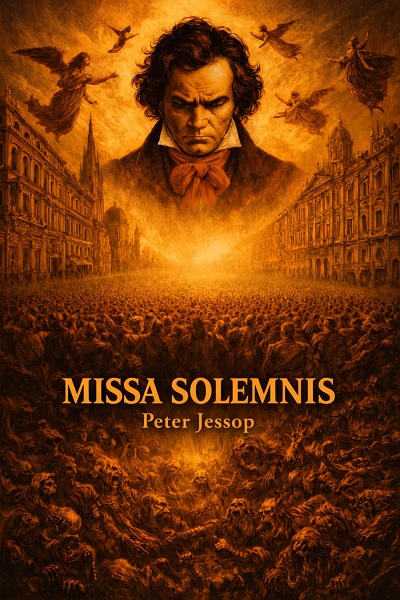
As deafness, illness, and demonic forces close in around him, Ludwig van Beethoven must summon his faith and genius to complete the Missa Solemnis—a sacred masterpiece he believes could bring divine light into a darkening world.
My second book is about a boy who has Asperger's Syndrome and is bullied to the point to where he shoots up his school. I have divided the excerpts from it into three parts: Before, during and after the shooting.