Category: Religion Publisher: Fast Print
ISBN-10: 184426629X
Type: Non-Fiction
Pages: 362
Copyright: 1 May 2009
ISBN-13: 9781844266296
This book aims to increase awareness about the current state of our environment and Islamic injunctions to play our part in protecting it as guardians of Creation ("We appointed you viceroys in the earth after them, that We might see how you behave." Yunus/ Jonah [10] 14).
It includes some disconcerting facts about the current state of affairs, but hopes this will serve as inspiration for positive action (oftentimes saving money at the same time). It is organised around four key areas of Islamic life (beliefs, worship, transactions and moral character), reflecting on Islamic teachings, the current situation and then giving examples of practical ways we might please God by being a good guardian.
With a long-standing interest in the environment, Rianne C. ten Veen has written this book as part of her struggle for the environment. With two Master degrees and a Diploma in Environmental Policy, she is a humanitarian aid worker in her day time job and part of the management team of the Islamic Foundation for Ecology and Environmental Sciences (IFEES) outside her day job. She is a passionate researcher and activist on justice for people and the environment.
The book has 362 pages.
The book is arranged in four sections: beliefs (aqaaid), worship (ibadah), transactions (muamalat) and moral character (akhlaq). Within each section there are several chapters, e.g. under beliefs there are chapters about unity (tawheed) of Creation (which is wider than unity as in 1 God) and our duty of guardianship (khilafa). The section on worship includes chapters about prayer and fasting. The section on transactions includes chapters on shopping and investment (including info on what banks do with our money & reflect on whether that is something we might want to have on our record as it's our money). The section on moral character includes chapters about supplication (dua) and etiquette of eating (impact on environment of pesticides, quantity of food we eat).
Each chapter gives a background of the matter from 'secular'/ factual perspective (e.g. water shortages and unfair trade on malnutrion), shares from life of the Prophet PBUH (e.g. how little water he used for making wudu), his companions and others over time (from Ibn Rushd, Al-Ghazali to President of Pakistan Ecology Council), then examples of actions (e.g. make supplication for species at risk of distinction, use only the amount water the Prophet PBUH used) based on my ideas, but also on the many good examples already out there ('Green Muslims in the District', Washington DC, USA, and London Islamic Network for the Environment). I also include several anecdotes from my own experience (e.g. my time in Argentina, my experience with an allotment, organising organic iftars).
The 4 sections are preceded by an introduction about Creation, with bad and good news (e.g. climate change and natural resource exploitation, but also opportunities of renewable energy and permaculture).
The book has a total of 362 pages, but due to structure, is accessible to just flick through and/ or pick a relevant chapter as and when needed.
Excerpt
The book is arranged in four sections: beliefs (aqaaid), worship (ibadah), transactions (muamalat) and moral character (akhlaq). Within each section there are several chapters, e.g. under beliefs there are chapters about unity (tawheed) of Creation (which is wider than unity as in 1 God) and our duty of guardianship (khilafa). The section on worship includes chapters about prayer and fasting. The section on transactions includes chapters on shopping and investment (including info on what banks do with our money & reflect on whether that is something we might want to have on our record as it's our money). The section on moral character includes chapters about supplication (dua) and etiquette of eating (impact on environment of pesticides, quantity of food we eat).
Each chapter gives a background of the matter from 'secular'/ factual perspective (e.g. water shortages and unfair trade on malnutrion), shares from life of the Prophet PBUH (e.g. how little water he used for making wudu), his companions and others over time (from Ibn Rushd, Al-Ghazali to President of Pakistan Ecology Council), then examples of actions (e.g. make supplication for species at risk of distinction, use only the amount water the Prophet PBUH used) based on my ideas, but also on the many good examples already out there ('Green Muslims in the District', Washington DC, USA, and London Islamic Network for the Environment). I also include several anecdotes from my own experience (e.g. my time in Argentina, my experience with an allotment, organising organic iftars).
The 4 sections are preceded by an introduction about Creation, with bad and good news (e.g. climate change and natural resource exploitation, but also opportunities of renewable energy and permaculture).
The book has a total of 362 pages, but due to structure, is accessible to just flick through and/ or pick a relevant chapter as and when needed.
I have just read the comments you made on my last poem, diversity and difference and I immediately checked out your page to know more about you. I am amazed by your vision and understanding towards Islam as a religion of peace and love and humanity, not a religion of terror and destruction. Keep up the good work, sister. Wish you good luck in all your endeavours
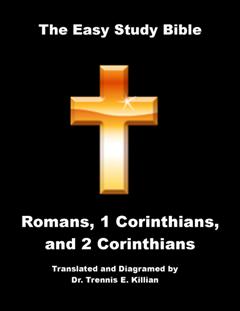
Finally! Understand and learn from the New Testament Books of Romans, 1 Corinthians, and 2 Corinthians.
Try James first for free
Now there is a Bible translation that is easy to read, understand, and study.
This translat