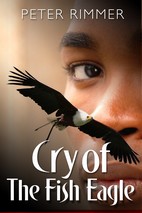
Rhodesia and with it,Cry of the Fish Eagle, is one hell of a story: the African Bush,big game, pioneer farming, prospecting and the tragedy of civil war.
This is the story of Rupert Pengelly who first heard the Cry of the Fish Eagle when he was stationed in Rhodesia for six months during the Second World War. As he was to find and as the saying goes, once you have heard the Cry of the Fish Eagle, you will always come back to Africa!
I appreciated reading this book. The author's character development is commendable, dialog is convincing, and plausible, the well-drawn story line is captivating, draws the reader into the work, and sustains a hold from opening paragraph to last lines on the final page.
Well penned, the writer has presented a fast paced, well ordered work well worth the read and then re-reading again.
At 324 pages, the work begins with a few characters, builds in possibility and depth as the account continues.
The saga progresses as Rupert Pengelly, WW2 war pilot first tries to accomplish the promise to a friend who did not live through the war, and moves on to Rupert’s return to Cornwall where his plans to live in on the family estate are frustrated through chicanery. Rather than brood over his reversal of fortune, Pengelly moves forward to forge a life for himself, and does so with grace and aplomb.
A brief glossary with terms perhaps unknown to those living outside Zimbabwe is included.
The work closes with a page to introduce Rimmer’s soon to be published work, Vultures in the Wind.
Peter Rimmer’s daughter indicates writer Rimmer, was born in London, England, where he grew up and went to school.
After the WW2, the 18 year old Rimmer joined the Royal Air Force, reached the rank of Pilot Officer and at the end of his National Service Rimmer set sail for Rhodesia where he planned to grow tobacco.
Shanghai Escapist grabs the faint-of-heart right from the get-go and serves up an ultimatum: What would you do if caught in the same circumstances? From the opening scene, the reader is tossed into the maze of daily intrigue as it existed in 1960s-70