Category: Native American Publisher: Dawn Voyager
ISBN-10: 9353912342
Type: Non-Fiction
Pages: 242
Copyright: Dec 1, 2019
ISBN-13: 9789353912345
Price: $1.99 (eBook)
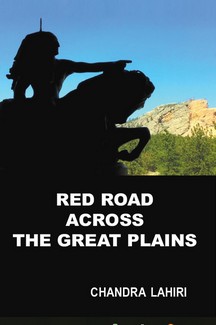
A life-changing solo voyage of discovery across the blood-soaked Great Plains. A pilgrimage to momentous sites of Native American heritage. Meet the amazing “invisible warriors” fighting impossible odds to reclaim their heritage and share in the American Dream without losing their unique identity, much as their ancestors fought on the battlefields to save their way of life.
Nurturing a half-century obsession, he takes the reader along on his astonishing solo road-trip through haunting places of intense tragedy and stunning triumphs, through Native American spiritual experiences that shook the atheist in him, plunging into the rough and tumble worlds that were Deadwood and Dodge City, chuckling gently over modern American idiosyncrasies. Neither a “white historian” nor a “red commentator,” he visits both sides of the Native American experience to discover exciting sparks of a brighter, more hopeful future - an unusual and enthralling odyssey effortlessly plaiting space and time.
Excerpt
.... By now, the cheery morning had retreated in the face of threatening banks of towering, black clouds, spreading a grim overcast across the landscape. They seemed a perfect, Wagnerian background to my somber mood as I drove towards the ill-fated site of the Wounded Knee Massacre – the worst butchery of defenseless civilians by the US Army in its entire history, till My Lai in Vietnam. As I stepped reverentially onto the brooding lea beside the dry Wounded Knee Creek, the many little wisps of mist still enshrouding the land seemed like ghosts of Chief Big Foot’s ragged, starving band of Miniconjou and Hunkpapa Lakota, trudging wearily in their pitiful rags across the freezing, snowbound landscape, under a huge white flag, desperately seeking safety and sustenance at the Red Cloud Agency in Pine Ridge. It was 29th December 1890, and the band comprised mainly women, children and the elderly, led by a mortally ill Chief.
Just weeks earlier, the towering legend, the revered Hunkpapa Wicasa Wakan, Holy Man, Chief Sitting Bull, Tatanka Yotanka, living a peaceful life on the Standing Rock Reservation had been ordered arrested by the infamous General Nelson Miles egged on by the unscrupulous Agent, James McLaughlin, who was deeply envious of the respect and regard universally accorded Sitting Bull. He insinuated, completely untruthfully, that Sitting Bull was encouraging the Ghost Dances which, he claimed, were preparations for war. Ironically, the Ghost Dance, created by the Piuate, Wovoka was, in reality, quite Christian in its tenets if not rituals, preaching love and non-violence leading to a reunion with family and loved ones in a more beneficent hereafter; in effect, a desperate people’s yearning for survival. Sitting Bull had never taken part in, or supported, the Ghost Dances but he had been systematically humiliated and stripped of authority by the corrupt Agent who, like most of his ilk, had rapidly transformed into a petty tyrant once he overcame his paralyzing fear of his illustrious resident. Sitting Bull’s people resisted this unjust arrest and, in the melee, the great Hunkpapa Chief, the last to give up arms, was shot in the back by Lakota policemen, a fate eerily similar to that of his friend and fellow warrior, Crazy Horse. The nearby town of McLaughlin still commemorates this shameful Agent.
Professional Reviews
Author Anthony Avina's Review
The Review
Part history, part travel, author Chandra Lahiri’s novel does an amazing job of creating a narrative that showcases the authors real life journey to these iconic, historic and sometimes tragic locations in the West and Mid-Western United States. The evenly paced read delved deeply into the violent, heartbreaking and blood-soaked history of the Native American tribes and the impact on both their culture and the white settlers as they expanded their territory further and further westward.
From the genocide that was the Trail of Tears to the Civil War and more, the author lays out the history behind the Native American people and highlights the struggles they endured. However this history is broken up naturally by the travel aspect of the author’s journey, showcasing the modern day experiences the author had while seeing first hand the locations and the history of the United States as it settled westward.
The novel is expertly written, with a voice and tone that speaks of personal experiences the author had on this trip with historic facts that are both known and tragically some that are overlooked or forgotten, for as the author points out in the book, history is written by the victors, but often history is only half true or inaccurate if only written by the victors.
The Verdict
This was a brutally honest, emotional and well written historical/travel novel. An even mix of historical research, graphs and statistics that really put the history of the Native American people and culture into perspective, with the natural observations and personal stories brought to life while on a life-changing trip like the one the author experienced, this novel has something for everyone, and is not to be missed. So if you are a fan of travel stories or are just a major history buff like myself and want to experience the emotional journey of the Native American tribes of the United States, then be sure to grab your copy of author Chandra Lahiri’s “Red Road Across The Great Plains” today!
Excellent captivating adventure!
Thoroughly enjoyable read from an old friend. Enlightening history of the native Americans of the northern plains entwined with a humorous travel adventure. I strongly recommend this delightful book to any reader interested in native American culture.
A compelling travelogue!
As book readers we always search for that story that will stay with us forever. The saga of the American Indians is one such, captured in Chandra Lahiri’s book with compelling authenticity and reason. Touching in it’s weight of history yet uplifting in a people’s fight for freedom. Narrated with lucid grace. A highly recommended read.
Your excerpt brought a tear to my eye. It is so sad that history was altered so badly by the European invaders when it came to atrocities committed against the natives who, under the United States Constitution, should have had a right to live freely.
I edited, and then published, after he died, Seven Fires by Brian Goodson, a broad ranging story about how an accidental nuclear war with the Chinese is dealt with by Native Americans who help the president of the United States prevail. From the turmoil comes a young visionary named, Promise. This young man can easily be understood as the second coming of Jesus Christ.
During my high school years, the county I lived in had the highest population of Native Americans in the state. But we never saw any on Main Street. Most lived 30 miles south in a community called, Pittsville and held an annual powwow that I never visited. In college with a church group, we spent our spring break restoring spirit houses of the dead at the Lac du Flambeau reservation. Only to learn that those wooden houses were meant to deteriorate and not restored. The following year, we returned and framed a one-room house for two elderly gentlemen whose house had caved in from heavy winter snow.
Venturing off to California for my master's degree studies in my rusty old car, my grandmother and I experienced the Black Hills where the Crazy Horse Monument was just getting started, the site of the battle where the warriors triumphed at Little Big Horn grateful that there was no monument to Custer, the sacred location of Devils Tower and the museum in Cody with so many wonderful native pictures and artifacts.
The more the true story of how the West was abused is revealed, the better off we all will be as a people.
The drug called "The Shari" has been used for vision quests over many years. But, when all the rivers start drying up, the tribe must send a young hunter named Tomás on a much more important trip through the Amazon.
The drug called "The Shari" has been used for vision quests over many years. But, when all the rivers start drying up, the tribe must send a young hunter named Tomás on a much more important trip through the Amazon.
The drug called "The Shari" has been used for vision quests over many years. But, when all the rivers start drying up, the tribe must send a young hunter named Tomás on a much more important trip through the Amazon.