This is a well-researched and up-to-date look at the issue of child labor. There is no worldwide agreement on the definition of the term "child labor," but difference between exploitative labor and labor which helps children and their families and communities develop socially and economically are explained.
Child Labor provides a global view of this complex issue, interspersed with compelling examples from many different countries.
No one knows how many children around the world are forced or sold by their families to work as indentured or enslaved laborers, but according to an International Labor Organization report the number could be as high as 200 million. A childhood lost to hard labor is a cruel fate, but to compound the problem many children work in completely unregulated industries in workplaces fraught with dangers to both health and life.
Excerpt
When she was eleven years old, Nazma Akhter began work in Bangladesh's garment industry as a helper for sewing-machine operators. Eventually she became an operator herself and earned an equivalent of $15 per month. "I was working in the factory from 8 a.m. to midnight seven days a week," she said.
Today Akhter is on the staff of a garment workers' union, urging better conditions and pay for workers. She explained that when she was a seamstress in the factory, most of the employees were young women and girls. She estimates "at least 30 percent of the workers were under the age of fourteen." Children were able to work in the factories because they "were considered desirable employees...they followed orders, were too timid to complain, were unlikely to assert their rights... Children could also be easily intimidated with physical punishment for making mistakes. I was personally beaten when I made mistakes or when I was late for work."
Professional Reviews
School Library Journal review
Gay reveals the horrors of this practice through accounts of individual children in the United States, India, Mexico, Burma, and many other countries. As chapter after chapter describes cruelty, deception, and greed, it becomes clear that exploiters prey on the poorest people, particularly in poor countries....These children's lives will elicit compassion from readers. Gay describes the efforts of many international organizations working to improve conditions. Laws developed in this country to protect American child laborers are presented as examples of one type of solution. Yet, she points out that enforcement of laws must be combined with economic pressure from consumers to make exploitation less profitable. The complexity of the issues is made clar and no easy answer is presented, Readers are encouraged to join letter-writing campaigns to manufacturers and contact the many organizations attempting to aid working children... Gay's treatment is balanced in its historical and economic perspectives and reasoned in its approach to solutions.
Want to review or comment on this book?
Need a FREE Reader Membership?
Reviews for "Child Labor: A Global Crisis"
Reviewed by gassara hassina
2/27/2006
Dear sir,
I appreciate the abstact, i have not read the book yet.
But I am looking for books on african american discrimination in the labor market ( Chicago 1960s)
PLEASE I NEED A FURTHER ASSISTANCE. Do yuo have any idea.
It's 1969 and some high school students in a small town decide to oppose a war that makes no sense and promises to set their lives on a different path against their wishes.
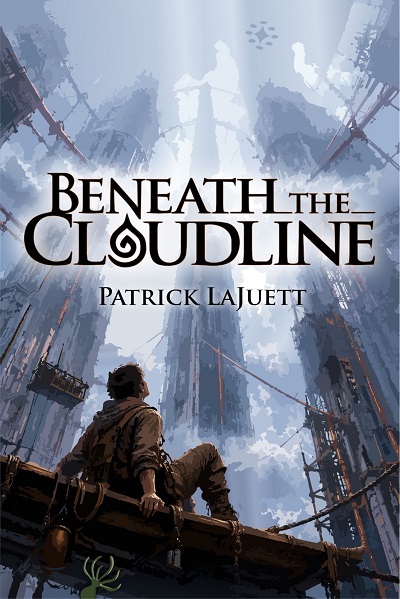
In a vertical city divided between those above the mist and those below it, four strangers are drawn together as failing systems threaten everyone. To save Halidom, they'll have to cross boundaries, uncover forgotten technology, and repair more than
In a vertical city divided between those above the mist and those below it, four strangers are drawn together as failing systems threaten everyone. To save Halidom, they'll have to cross boundaries, uncover forgotten technology, and repair more than