A 30 day log (2005) of life on Moloka'i (HI), the last of the 'befoh time' Hawaiian holdouts, for a haole malihini.
The island of Moloka'i, universally acknowledged as the last (excluding 'The Forbidden Island of Ni'ihau') sanctuary of old-fashioned, colonisation-resisting Hawaiian sentiment, has a history that is fascinating. Known as 'Moloka'i pule O'o', or 'Moloka'i of the Powerful Prayers', and home of ancient Hawaiian priests whose formidable powers were respected and feared throughout the entire Hawaiian chain, in the most recent century it has become better known as the site of Father Damien's colony for those inflicted with Hansen's Disease (leoprosy). Today, Moloka'iians actively resist outsider efforts to turn it into another Disney-like tourist haven on the scale of Maui or Oahu and strive to keep land speculators and real estate developers at bay. Having the highest percentage of native Hawiian blood (kanaka maoli) found anywhere, its inhabitants clearly do not welcome the sort of insensitive western intrusions that have 'ruined' the other islands' indigenous culture over past decades.It takes a long, long time for a haole malihini (figuratively, white mainlander) to become an accepted member of the island communuity and many haoles who discover Moloka'i very soon run into difficulties, in their haste and enthusiasm to settle into its 'local life'.While this book is ostensibly a 30-day log of a visit to the island by a mainlander with the intent of retiring there, it incorporates a running dialogue that focuses on aspects of the ancient culture that are still firmly entrenched on the island and to which islanders profess loyalty.When it comes to seeking that fabulous 'island paradise' we Americans all delude ourselves still exists out there in Polynesia, the old cliche still applies: 'Be careful what you wish for!'
Excerpt
"Later in the afternoon I went up H-way 470 to the Paia Au State Park—about 5.5 miles from the convergence with H-way 450—to Ka Ule o Nanahoa (the famous phallic rock formation). It was raining very lightly and the top of the park was encased in cloud.
On the whole, the overall mood was grey and mysterious as the heavy cloud settled on everything—dripping on trees, rocks, and undergrowth. Overhead the trades rocked the tree tops and murmured through their foliage, add-ing substantially to the somber effect already estab-lished.
I hiked the short 500 or so yards through the trees to the phallic rock and found myself bemused for second time by its graphic shape and reputation as a focus of fertility for the ancient Hawaiians. About 100 yards further down the trail, and somewhat lesser known to the outside world, is another large rock that has the appearance of a vagina or vulva.
Legend has it that both these rocks could work powerful effects on those who spent a night on them and many tales tell of hith-erto barren women who became pregnant shortly after visiting the phallic rock.
Standing there next to these massive earthly totems and listening to the silence (broken only by the soft fall of rain and the indistinct murmur of wind in the trees), was about as spiritual an experience as I have had in a long time.
I could easily see how the ancients could believe the rocks held great mana (spiritual power). There was no one else up there except me at the time, so the experience was particularly profound. Strangely, it was an experience of considerable peace-fulness and calm resolve, but you could definitely sense great mystery in the thick tangle of nearby un-dergrowth. The locals all believe great forces of spiritual power inhabit these woods."
Professional Reviews LAST TANGO ON MOLOKAI?
"An encounter with the realities of island life, as an acknowledged idealist runs head-on into a culture that stubbornly wishes to remain insular and unchanged by what that culture views as 'cultural contamination'" -Linda Rorschach, PhD
A GOOD AND ENJOYABLE READ
"The author writes in a manner that makes this narrative easy to enjoy and participate in the events described, if somewhat vicariously." -Allen Ordnung
DANCES WITH MONGOOSES
"Presumably, there are still people like this (the author) who are still naively tilting virtual windmills in the mid-Pacific region, and as such they provide an amusing diversion from the unpleasant realities of crass, hyper-civilized western society that one tends to find everywhere these days...even in the more remote reaches of Hawaii and despite native populism that may exist there! Lesson? A haole will always be little more than a haole, regardless of how suntanned he or she is." -Gene 'Kono' Hayashi
Reviews for "Marooned on Moloka'i: Coconuts, Dreams & Death"
Reviewed by Laura H. (Reader)
Reviewed on February 5, 2019
The exact accounting of living in this portion of Hawaii tell the story of one person's journey--the good, the bad, and the ugly--as it were. It is certainly an eye-opening tale of what one person's observations, trials, and tribulations if trying to live in this perceived paradise.
Journaling day by day gives the reader an intimate look into the author's psyche. As events unfold we are taken on a journey of what a newcomer might experience in any place that has such old traditions.
While this publication is daunting in its slow and steady daily remembrances--the author writes in a compelling manner. The author does a riveting job of bringing us to the end of this chapter in his and his wife's life in a heartfelt way.
Accounts of previous experiences and how they impact current actions helped the reader to understand the decisions made.
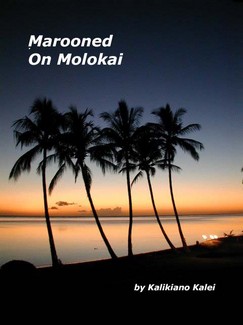
The title of this book is appropriate given the content and the beautiful black book cover will stand out in any library.
Marooned on Moloka'i does sound like a dream destination for someone who wants to leave the rat race of life and settle in where all carers have disappeared. It is a kind of “Garden of Eden,” syndrome that affects many who read of exotic, far off places, largely from a colonial point of view.
I wouldn't want to end up in a place where the culture is centuries old and so unlike my own that I can't fit in. What you describe as a “haole,” is typically the Ugly American who comes to a culture and wants to immediately change to his or her liking. I recall my Thai friend telling me that I was being “insulting” by some of my normal behavior like not wanting to drink the expensive bottled water he bought for me, thinking that all Americans had to have bottled water.
I much prefer going to a place where the only culture I would insult would be the animals. Watching a reality show, Naked and Afraid, I've learned that basic survival, even in areas where there is abundant supply of food, is very, very difficult. Without a rich social culture, survival does not exist.
Thanks for a peek into the Hawaiian culture that most people ignore when they go to the Hawaiian Islands on vacation.
Yankee Doodle Daddy is a historical Appalachian Family Saga. The story follows a mother's reckoning as she struggles to survive and keep her four daughters alive.





Journaling day by day gives the reader an intimate look into the author's psyche. As events unfold we are taken on a journey of what a newcomer might experience in any place that has such old traditions.
While this publication is daunting in its slow and steady daily remembrances--the author writes in a compelling manner. The author does a riveting job of bringing us to the end of this chapter in his and his wife's life in a heartfelt way.
Accounts of previous experiences and how they impact current actions helped the reader to understand the decisions made.
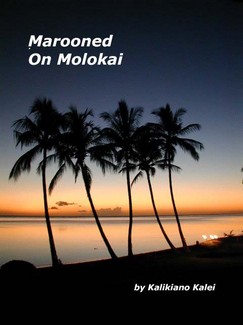
The title of this book is appropriate given the content and the beautiful black book cover will stand out in any library.
I wouldn't want to end up in a place where the culture is centuries old and so unlike my own that I can't fit in. What you describe as a “haole,” is typically the Ugly American who comes to a culture and wants to immediately change to his or her liking. I recall my Thai friend telling me that I was being “insulting” by some of my normal behavior like not wanting to drink the expensive bottled water he bought for me, thinking that all Americans had to have bottled water.
I much prefer going to a place where the only culture I would insult would be the animals. Watching a reality show, Naked and Afraid, I've learned that basic survival, even in areas where there is abundant supply of food, is very, very difficult. Without a rich social culture, survival does not exist.
Thanks for a peek into the Hawaiian culture that most people ignore when they go to the Hawaiian Islands on vacation.
Ron