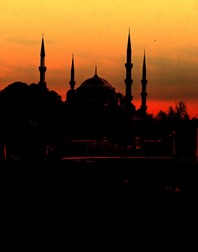
Celeste is young, English and homesick. She lives in Istanbul, Turkey and works in an orphanage teaching little earthquake survivors. When her favourite child disappears, she will do anything to find him. There's just one problem: how do you find one small boy in a city of ten million?
“You’re in Istanbul to find a lost person,” the fortune teller told young Celeste. “They may not be lost yet. But I see death peering over your shoulder. Think carefully about any choices you make.”
Celeste has been caring for her young brothers since her mother died. She has finally taken some time alone and moved to Istanbul, keen to meet the world and find her independence. The city torn between two continents and two cultures feels right to her, torn as she is between her duties and yearnings.
Celeste teaches English to wealthy adults for money, and to orphaned boys for pleasure. Her Turkish landlady, hilariously rude, unnerves her by hiding charms against the Evil Eye around the house. Struggling to understand the unfamiliar culture surrounding her, Celeste forms an extraordinary bond with one orphan, Tekin.
The words of the fortune-teller return to her as Celeste realises it is not only her own life which hangs in the balance, and she must make the most important choice of her life.
Excerpt
ONE
A House On The Corner Of A Continent
Celeste Hamilton stood on the corner of Europe, looking at Asia. The rippling water of the Bosphorus reflected so many dancing shafts of sunlight into her eyes that she was dazzled, and screwed up her eyes until the speckles faded away.
It struck her that this spot, the district of Bebek in Istanbul, may be the best place in the world to stand on one continent and watch another. Istanbul must be the only city where you can live in Asia and commute to Europe every day. Living in a city torn between two continents and two cultures felt right to Celeste, torn as she was between her duties and yearnings. Yet in Istanbul the two continents push so hard to meet each other that they are only a mile apart and the seawater of the Bosphorus has to fight its way between them, squeezing through the narrow channel left for it in a perpetual tumult of rage. Most days it just washes aggressively between streets of houses and mosques and shops, but sometimes it has become so furious that it has taken revenge on the innocent and thirstily sucked in whole ships full of men, drinking them down into its turbulent depths.
Celeste glanced back at the row of slatted wooden mansions behind her, painted in pastel colours gleaming in the sunlight. She was in Bebek to see a room to let in one of these houses, but it was still far too early for her appointment so she decided to stroll along the seafront to pass the time. Beyond the luxury yachts which thronged the seafront and the weather-beaten fishing boats further out in the water, Celeste picked out the hazy silhouettes of several mosques along the skyline on the opposite shore. She slowly made her way towards a fish stall, where a man with a drooping black moustache bought live fish from a boat moored in the water below and threw them into buckets of water. His partner killed them by beating them over the head with a wooden mallet, gutting and frying them as fast as he could, and sold them on toasted bread, wrapped in paper. Some of the fish twitched and flipped over in the hot oil of the frying pan.
Celeste waited by the stall, watching curiously.
“Why don’t you try some?” suggested an old woman beside the fishmonger, probably his mother. Celeste was excited that she had understood the woman’s Turkish easily, especially as she lisped through several missing teeth. She wore a headscarf in blue with white flowers, so large it encircled her rounded shoulders as well as her head.
“How much is it?” asked Celeste.
“Come here,” said the woman, and took hold of Celeste’s hand.
Celeste was surprised how firmly the woman grasped her with her cold, bony fingers, twisted with arthritis. She pulled Celeste’s hand open and looked at the palm.
“Foreign girl, I see you’ve come here to find a lost person,” she said slowly.
Celeste laughed.
“Actually, I’ve come here to teach English.”
“They may not be lost yet,” she woman interrupted her sharply. “The next year will be the most important year of your life. The heart of a daughter will grow into the heart of a mother.”
Celeste glanced at the men running the fish stall hoping to appeal for help. This woman might keep her here for hours talking nonsense.
“That will heal your wound. Your mother’s death wounded your heart. It will start healing soon.”
Celeste gasped, and tried to pull her hand away, but the woman tightened her grip and stepped closer. How could she have known about Celeste’s mother dying? Surely it was just an unnerving coincidence.
Celeste looked at the woman’s beak of a nose and a few downy white moustache hairs catching the light. She scrutinised Celeste’s palm again and then looked up at her pityingly. She was so close now that Celeste felt her breath on her face as she spoke.
“But I see death peering over your shoulder. He has cast his shadow on you.”
The words made Celeste feel a plunging sensation in her chest as if her heart were being pulled out of her, and then a rush of palpitations.
“Think very carefully about any choices you make.”
Celeste was about to shout at the woman to get away from her, that she was a horrible old witch, but the woman suddenly put a blue glass drop-shaped amulet in the palm of Celeste’s hand. There was a white circle at its centre and a smaller black dot within that, to represent an eye. Celeste already knew what it was; a nazar boncuğu, protection against the evil eye.
“You’ll need this,” the woman said. “Wear it always. Remember, the sum of all your choices make up the person you are. You can go now. I know you want to get away from me. ”
Celeste turned and half walked, half ran, still holding the amulet in her trembling hand. When she glanced back towards the fish stall, there was no sign of the old woman, so she stopped to sit on a bench and look out at the sea. Celeste had only just arrived in turkey but she noticed these evil eye talismans everywhere, small ones worn as pendants and larger ones hung at entrances to buildings. They were supposed to protect against the wasting illnesses and death which people believed were provoked by the glance of an envious person. She took a few deep breaths and shaded her eyes with her hand to stare out at the fishing boats.
What should Celeste do with this amulet? She briefly considered throwing it into the Bosphorus. She looked at it in the palm of her hand and turned it this way and that. The glass was bluer than the sea and the sky, and it glowed so radiantly in the sunlight that she decided to keep it.
Want to review or comment on this book?
Need a FREE Reader Membership?
Reviews for "Evil Eye"
Reviewed by Valentino Gambino
1/30/2009
I have just finished reading this book and I am recommending it to all my friends. I felt a sense of loss at the end, as the people seemed real to me and I did not want it to finish. It tells a very thought-provoking story about an English girl who does voluntary work in an orphanage in Turkey. She really loves the children, partly because she is homesick and relates to them more easily than the adults. When one little boy disappears she does everything in her power to find him. I found the story very moving in places, especially where it tells the stories of how some of the children were orphaned in an earthquake, but never mawkish. There is a lot of close observation of human nature here, but an exciting story as well.
Celts and Kings: The story behind the mystifying disappearance of the Celtic Earls in 1607. The story of a lost love and Celtic Spirituality.
The story of a forbidden love going back 400 years.
The story steeped in Irish history, Ce
Determined to confront the hazy memories of his troubled youth, Oliver Matthews, a retired detective and confirmed bachelor, returns to the picturesque town of Henley-on-Thames for the first time in years.
What causes America's mainstream media to fear and try to destroy a group of artists and their work? What happens when such a creative movement grows in strength and threatens media's bottom line? Why would extremists find it necessary to take acti