Category: Reference Publisher: Celia A. Leaman
ISBN-10: 0978347544
Type: Non-Fiction
Pages: 180
Copyright: January 2011
ISBN-13: 9780978347543
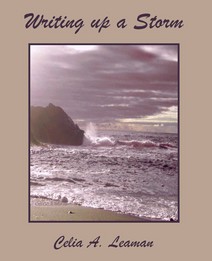
Writing up a Storm addresses many of the issues that challenge new writers.
.
The techniques of writing a good story don't come easily, or overnight, but the good news is that you can learn! Many of your ideas may not be stunning, but don't let this deter you. As nothing you write can be written by anyone else, your writing will be special and your personality woven into your work.
Writing up a Storm will help you to create a flawless manuscript, whether you are seeking a publisher or self-publishing.
Excerpt
Chapter One
Writing
Writing, especially creative writing, is an emotional sort of thing to do and requires true personal involvement. By that I mean, it will take up a lot of time and require your commitment.
In my travels, I meet people who tell me they would like to write a book, and yet I know they never will. I would be the last to censure them though because it's easy to be a procrastinator, especially if you write at home. There is always something to clean, a meal to cook, or another load of laundry to see to. For those of us who love the outdoors or like gardening, nature is always beckoning.
If you have a family, are a student, or work outside the home, your available writing time will be curtailed. Your social life can also be distracting—it's so much easier to talk about writing than actually sitting down to do it.
So before you begin, make the decision; do I really wish to do this? Am I willing to give it the commitment it deserves? If the answer is yes, then go ahead. If your answer is no then perhaps you might look for another vocation, because for many people, what begins as a hobby becomes a vocation.
There are natural-born writers, and there are writers who are not. Some writers succeed, and some do not—although defining writing success is hard because it means different things to different people. Whereas some people are gratified after writing one book and will go onto other things, others will continually strive to reach their potential. For them, writing will become a passion and they won't be able to get enough of it.
No matter which category you fit in, you will still need certain attributes to reach your goal. These include having persistence, being able to work hard, and being self-disciplined. You also need to enjoy solitude. If you own these personality traits, you are half-way there.
A good knowledge of the language you are writing in is also an essential. If you lack in this area you can take a course to brush up on your skills. There is also plenty of help on the Internet (see Useful Links at the end of the book).
Being an avid reader is also a must. Whether you read paper books or ebooks, or even listen to audio books, paying attention while absorbing what you read will help you create balance and form in your own work. You can learn a lot from seasoned writers.
You will also need to practice writing. For many writers, their 'overnight success' actually took ten years. This is because everyone has to do an apprenticeship, no matter which craft they attempt.
It's sometimes difficult to give yourself time to write if you have other commitments, but most writers agree that it's good to have a regular writing routine if you can arrange it, so that you can write without interruption.
Establishing this time might bring on a little guilt. In this world of ours, where emphasis is placed on making money, and where money equals worth, it isn't unrealistic to feel guilty when pursuing creative activities that don't create an income. Don't let this stop you though because without practice you will never improve. And if you don't improve, you won't reach the publishing stage, which is when you will begin to make money.
In summary, writing is not for the lazy or faint-hearted. It takes patience, effort and stamina, and most of all, persistence. Often, the only difference between a wannabe author and a published author is that the latter didn't give up!
Arrange your life so that you have some regular writing time. Avoid answering the phone or email at this time. Close your door. Hang a notice on it that says Writer at Work.
Being a writer is like being a trapeze artist. No one gets right up on a wire and swings effortlessly without hard practice. Have expectations and set goals, but not so high or so far that you can't achieve them. Taking little steps is better than taking no steps at all, and you're doing fine as long as you keep heading in the right direction.
Begin thinking of yourself as a writer, and you'll become one.
Professional Reviews
Dorothy Sander, http://dorothysander.com/ Aging Abundantly author
Writing up a Storm is the perfect tool and inspirational guide, not only for beginner writers, but also for established writers wishing to infuse their work with new life. Celia writes with great love and understanding of her craft and with an enthusiasm that is contagious. Her suggestions are on target and she has a way of making the complex simple and palatable. This little gem should be every writer's companion.
Writers' Tricks of the Trade is like the appetizer table at a writers' buffet, filled with tips, techniques and tricks. Written in easy-to-read prose. Available in paperback, eBook and Kindle from multiple sellers