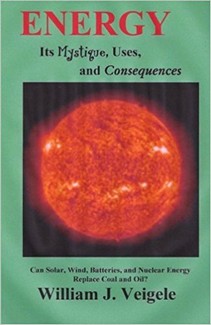
This book discusses renewable and nonrenewable sources of energy and sescribes the consequences of the use of energy.
There is a mystique to energy. It’s a familiar word but a confusing concept. What is energy and what are the consequences of its use including the emission of green house gases. This book provides that information.
The author explains the concept of energy and illustrates the wrong ideas people have about energy. To overcome these misconceptions he presents a definition of energy and explains the different forms of energy, their sources, uses, and consequences. He clarifies creation, conservation, storage, and nonrenewable and renewable energy.
The book contains discussions about the emission of carbon dioxide (CO2) from the use of fossil fuels and it presents calculations of CO2 emitted by human activities. The book shows how new technologies such as electric automobiles, solar, wind, nuclear fusion, and others can reduce dependence on fossil fuels and decrease harmful emissions.
Calculations show how much energy is used and CO2 is generated from the uses of nonrenewable and renewable sources of energy. The author shows how much energy and how much of our resources can be saved and how much CO2 emission can be avoided by conserving energy. He concludes that new technologies and renewable energy sources will not solve the short term problem of energy use and CO2 emissions. The book contains guidelines for long term use and conservation of energy that could solve the problems of energy shortages and the emission of green house gases.
Excerpt
I waited until each person had engaged in some discussion of and made comments about energy. Then I asked them if they would write a few words to answer a question about what they had been commenting on and that I would keep the answers to the survey anonymous. They agreed. The question I asked them to write a sentence or two about is: What is energy?
Now, you the reader of this book, pause at this point in the book and take up a pencil or pen and a piece of paper. Write down your brief answer to the question above that I asked of other persons. Then put your answer aside until you read further what other persons wrote. Then see how your answer compares with their answers.
The reactions of people to this concise simple question were startling.
Complete Troubleshooting & Repairing guide to hot air furnaces * Complete operation, maintenance, and repair * Covers gas, oil, and electric forced air systems * Includes flowcharts and highlighted tips and solutions to common furnace problems
Complete Troubleshooting & Repairing guide to hot air furnaces * Complete operation, maintenance, and repair * Covers gas, oil, and electric forced air systems * Includes flowcharts and highlighted tips and solutions to common furnace problems