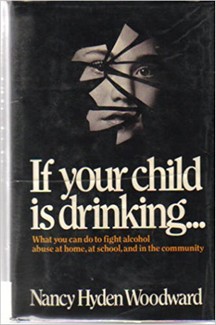
practical guide for parents to help their alcohol abusing child and help to educate the school and the community in ways to accept and deal responsibly with a very real problem.
Introduction
For as long as man has used alcohol it has played an ambivalent role with him. It has served as the root of pleasure for Bacchus, as a symbol of maturity for the young, and as medicine for the ill. It has been used to toast long life, to seal an agreement, to bring in revenue, to welcome home friends. But alcohol also has been the downfall of countless human beings, destroying lives and menacing our well-being since man first learned to produce it. Nowhere is the problem more heart-rending than among our children. Today nearly 50 young Americans will dig on the highway. More than 200 will be brutally hurt or disfigured – killed and maimed by peers drunk and reckless behind the wheel of a car. Even as I write, I have learned of a maddening, senseless accident. Four young boys, three of them sixteen, their driver just seventeen, were bombed on pot and beer while careening down a narrow, winding road on a private estate. The road was wet, the fallen leaves were slippery. At eighty-five miles per hour, their car skidded, slammed into one tree, catapulted to another, and jackknifed to a third, ramming the passenger side well into young bodies.
Excerpt
What became new under the sun of the 1970s was the way in which alcohol was being drunk. It was taken in concert with other drugs, the habit an outgrowth of the youth culture of the sixties, when pot, LSD, heroin, and other mnd-altering drugs dominated the scene. Buried in the drug controversy was the news that alohol has akways been the drug of choice among the young. (p. 70)
Professional Reviews
Library Journal
Library Journal - This well-researched book offers practical guidelines for dealing with adolescent alcohol abuse. Woodward begins with statistics and survey samples that demonstrate the patterns of youthful drinking. She then explores myths and sociocultural values about alcohol in today’s society. Most useful are the chapters which present detailed strategies that families, schools, and communities can use to combat teen drinking. Appendixes provide extensive listings of education programs, prevention groups, and information resources on alcoholism.. A comprehensive and constructive sourcebook that will be useful in public library collections. – Barbara Grochowsky, Van Noy Library, Fort Belvoir, Va. 15 Oct 1981
Kirkus Reviews – Authoritative information and workable suggestions for concerned parents and educators – especially concerned now that alcohol is the drug of choice among teens. Data on various aspects of the problem (its extent, the physiological manifestations, the media influence) provide a backdrop for recommended actions. In a chapter on helping the non-abusing child, Woodward elaborates convincingly on conventional ideas. Re "communicate with your children" - use family meetings to talk through what a boy should do if a teenager planing a party wants to serve beer. On "help them to make choices" – start early, with lunch menus; explore alternatives to driving home drunk (staying overnight, using a "buddy system," etc) before the need arises. In the material on dealing with alcohol-abusing children, a "get-tough" attitude prevails – tempered with advocacy of professional help.
"The alcohol abuser cannot be coddled," Woodward writes; "he must be responsible for his own actions" – even to leaving him to his own devices to get out of jail, or charging rent to the child who has been suspended from school (since parents should not "allow him and the disease to sponge off" them). But parents are also encouraged to get children into treatment programs and to participate themselves. With particulars on sources of aid (and some innovative initiatives), an excellent guide – straightforward and unflustered. 15 Oct. 1981
Publisher’s Weekly – According to recent HEW statistics, adolescent alcoholism is a national problem. The depth of parental ignorance, bureaucratic obfuscation and social ambivalence regarding the use and abuse of alcohol by children is explored in case histories by Woodward, a contributing editor at Town & Country. Her survey is a comprehensive nontechnical resource for parents, educators, and others involved in therapeutic efforts. Ideas for prevention, suggestions for coping with the high-risk years, for differentiating between an adolescent alcohol abuser and an adolescent alcoholic are abundantly supplied and presented with practicality.- 15 Oct 1981
Kirkus Reviews
Kirkus Reviews – Authoritative information and workable suggestions for concerned parents and educators – especially concerned now that alcohol is the drug of choice among teens. Data on various aspects of the problem (its extent, the physiological manifestations, the media influence) provide a backdrop for recommended actions. In a chapter on helping the non-abusing child, Woodward elaborates convincingly on conventional ideas. Re "communicate with your children" - use family meetings to talk through what a boy should do if a teenager planing a party wants to serve beer. On "help them to make choices" – start early, with lunch menus; explore alternatives to driving home drunk (staying overnight, using a "buddy system," etc) before the need arises. In the material on dealing with alcohol-abusing children, a "get-tough" attitude prevails – tempered with advocacy of professional help.
"The alcohol abuser cannot be coddled," Woodward writes; "he must be responsible for his own actions" – even to leaving him to his own devices to get out of jail, or charging rent to the child who has been suspended from school (since parents should not "allow him and the disease to sponge off" them). But parents are also encouraged to get children into treatment programs and to participate themselves. With particulars on sources of aid (and some innovative initiatives), an excellent guide – straightforward and unflustered. 15 Oct. 1981
Publisher's Weekly
Publisher’s Weekly – According to recent HEW statistics, adolescent alcoholism is a national problem. The depth of parental ignorance, bureaucratic obfuscation and social ambivalence regarding the use and abuse of alcohol by children is explored in case histories by Woodward, a contributing editor at Town & Country. Her survey is a comprehensive nontechnical resource for parents, educators, and others involved in therapeutic efforts. Ideas for prevention, suggestions for coping with the high-risk years, for differentiating between an adolescent alcohol abuser and an adolescent alcoholic are abundantly supplied and presented with practicality.- 15 Oct 1981
Re-Release! No longer back-listed. Return to the Olde Ways. The hustle and bustle of modern day life has brought many of us to a quick fix attitude.This book is for those of you who are fed up; have looked at your life and your loved ones and realize
Re-Release! No longer back-listed. Return to the Olde Ways. The hustle and bustle of modern day life has brought many of us to a quick fix attitude.This book is for those of you who are fed up; have looked at your life and your loved ones and realize