The Second Mission is an historical fiction/adventure novel that describes a twentieth century engineer, Alan Fisher’s, accidental participation in the second mission of humankind into time.
The novel tells the heart-pounding story of Sophia, the agent from the future, who reluctantly integrates Alan into the culture of ancient Athens while facing the constant risk of detection and death.
In an engrossing adventure that fully incorporates the environment of ancient Athens in 399 B.C.; Greek society, culture, literature, philosophy, and the personalities of history come alive for the modern reader.
What events would mankind choose to observe in time—what singular events define the history of the world? Alan Fisher learned first hand the purpose of the second mission into time. He became an unwilling and accidental participant in a great experiment to record the words and death of Socrates—The Second Mission.
Sophia was his reluctant guide. The second mission was hers, and she did not want to share it with anyone. She trained ten years to become Sophia, a Greek woman of 399 B.C. For this one year of history, 400 to 399 B.C., neither Alan nor Sophia could return to their own times. They were linked together for better or worse in the second most important mission of mankind.
Yet Alan Fisher, marooned in time, turned into Sophia’s greatest hope of success—for her mission and for herself. And because of the first mission, Sophia became Alan’s greatest hope of spiritual deliverance. The first mission changed Sophia’s world, and the second mission would also change the future of humanity.
The Second Mission is a unique experience in literature. It is a heart-pounding time mission story that fully incorporates the environment of ancient Athens in 399 B.C. Greek society, culture, literature, and philosophy come alive for the modern reader. The Second Mission brings to life Socrates, Plato, and the School of Hellas. It provides a stimulating method to introduce and place into context the Socratic dialogues: Euthyphro, Cratylus, Crito, Phaedo, and The Apology of Socrates.
Excerpt
Time stopped. For a single drawn-out heartbeat, nothing moved, and in the whole world there was no sound. Like thin paint running out of an open bucket, all the color drained from the earth. Only a black and white landscape and the silence remained. Then, all at once, the world vibrated, exploded, screamed, blazed—and turned upside down.
Clouds sifted slowly in the powder-blue sky. The clouds touched the mountains and frosted them with a fine white covering of snow. Trees: pine and laurel and European oak marched like towering gods up the rocky slopes. They formed tongues of verdant fire filled with chirping songbirds.
The world swam. It gave a solid lurch, and with a sickening thud, Alan came to rest amid the trees. He lay sick and dazed for a moment. Then, unconsciously, he reached up and grabbed his head. The movement nauseated him, and pain shot through his skull. For a while, he couldn’t think clearly. He lay still again, and allowed his mind a chance to catch up with his whirling thoughts.
Without moving, Alan examined his surroundings. His head lay against a hard knotty surface. His neck bent almost double and his chin nearly touched his chest. Slowly, moving only his hand, Alan felt back along the top of his head. His head rested on a hard misshapen root. The fragrance of pine filled his nostrils. He tried to open his eyes but the light was too bright. He shielded his face with one hand and finally squeezed open one eye. Above him, a huge pine stretched arrow-straight into the sky. Cautiously, he opened both eyes and eased himself up. He gingerly rubbed the back of his head. He couldn’t feel the bump he was sure should be there. Invisible birds sang in the branches high above him. Still groggy, Alan leaned back against the thick cushion of fragrant pine needles. Small flowers and a shrub clung to the ground at the base of the tree. Around him, like an ancient temple, similar forest giants formed pillars, and their canopies almost completely covered the sky above.
The clarity of the air and the brilliance of the sunshine exhilarated him. Both characteristics, though filtered and muted through the depths of the thick pines, seemed enhanced by some unique quality of the forest. Remarkable, he thought. At his right hand, tiny blue and white flowers walked up the heavy loam to the thick root of the tree. In his dazzled state of mind, their delicacy and perseverance amazed him.
His head still felt heavy and dull. Alan took a couple of deep breaths to clear the unusual lethargy, then he stood up. He swayed, immediately dizzy, and grasped the tree to steady himself. The feel of the bark was rough and unfamiliar under his hands.
How did I get here, he thought. In his last memory, he stood on the gantry of the antenna tower at the research station. The next thing he knew, he was here. But where was here?
Marooned is the 1860's saga of Justin Radcliff, a young American, who is beaten and thrown overboard by his evil twin brother, Edward.
Kolya, a handsome Black man and new leader of the transplanted Zulu tribe there, finds Justin caught in hi
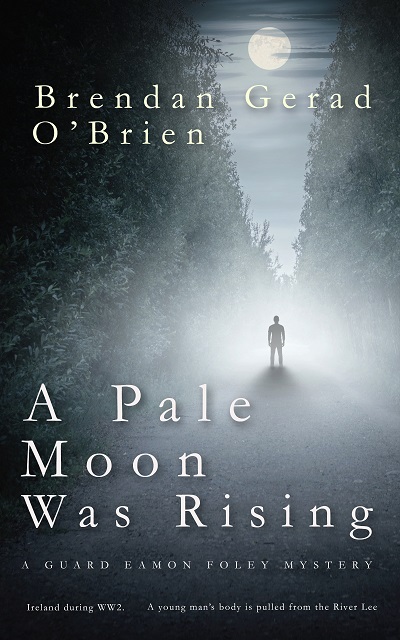
Ireland 1944.. A young man’s body is pulled from the River Lee. He’s wearing a distinctive silver ring that belonged to Paudy Daly, the eldest son of the notorious Mixer Daly. Why?
First Place Winner in historical fiction in the Purple Dragonfly Awards for excellence in children's literature, and named a U.P. Notable Classic.
Feel like you are in the moment nearly 100 years ago with a young girl, daughter of Finnish immigr