Epigenetic biofield control system of the organism and the need for new physics.
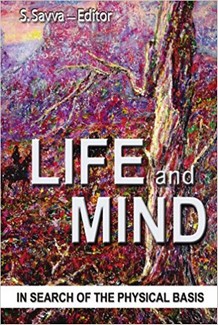
LIFE and MIND—In Search of the Physical Basis, Edited by Savely Savva. MISAHA/Trafford Publishing, 2007. 262 pp. $40.00 (paperback). ISBN 1–4251–1090–8.
Available from Trafford: http://www.trafford.com/06-2849 or from MISAHA www.misaha.com at a discount and from Amazon
Genetic information carries four fundamental programs of life: development, maintenance, reproduction, and death, but these programs operate not on a chemical level, i.e., not by direct chemical interactions with genes. Dr. Craig Venter very thoughtfully mentioned this at the TV announcement of the deciphering of the human genome in 2000. This “different level of organization”— the Biofield Control System (BCS) of the organism — is a hierarchical structure that includes the whole organism, organs, tissues and cells. It also includes the mind (at the organism level) that materializes all fundamental programs of life in behavior.
Ignoring the role of the BCS impairs biomedical science and pharmacology and consequently the social health care system. But the root of the problem is in the insufficiency of contemporary Newtonian physics which does not have any concept of the physical interactions responsible for emergence and existence of life.
The book suggests some ways to approach the problem. It consists of three parts: I — Concept of the biofield control system, its structure and its history; II — Experimental observations, and III — Alternative physical models.
The concept of the biofield has a century-long history. It was engendered by developmental biologists in opposition to the strictly genetic, biochemical approach (Prof. L. Beloussov, Moscow State University with a Commentary by American Professors J. Opitz and S. Gilbert) and was independently introduced by the Romanian biochemist E. Machovschi in the 1950s – 1970s as the “biostructure” (Prof. G. Drochioui, Romanian University). The structure of the BCS and its function suggest that the physical carrier of the BCS cannot be reduced to any of the currently known fundamental physical interactions (S. Savva).
Experimental observations include confirmation of the biological nuclear synthesis introduced by Louis Kervran (Dr. A. Kornilova, Moscow State University, and Prof. V. Vysotsky, Ukraine State University); water interaction with hydrophobic liquids (S. Savva); paradoxical effects of super low doses of biologically active substances on living systems (Prof. E. Burlakova et al. Institute of Biochemical Physics, Russian Academy of Sciences); and communications between living systems (Prof. J. Kiang, Walter Read Army Institute of Research and C. Backster, Backster Foundation). These observations indicate that the physical carrier (or carriers) of BCS must have both energy and informational qualities and that it is (they are) capable of interacting with the currently known fundamental physical forces.
Alternative theoretical physical models presented and referred to in the book reveal the inadequacy of the current scientific paradigm (Dr. J. Bockris and Dr. H. Puthoff), suggest a five-dimensional space-time model (J. Beichler), an eleven-dimensional space-time model (Prof. W. Tiller) and a concept of stable structures in superfluid vacuum (Dr. N. Sotina, Moscow State University).
Excerpt
12 articles by 15 scientists from four countries
Professional Reviews
Filling a Gaping Hole in Medicine and Biology
By Dr. Richard G. Petty (Atlanta) -
It is sometimes astonishing how few of us know that there remains a huge gaping hole at the center of biology: how do biological systems become organized and maintain their level of structure, activity and organization over long periods of time? Indeed there is an even more fundamental question: "What is life?" That was the name of a famous book first published by the Nobel Prize-winning physicist Erwin Schrödinger in 1944. And more than sixty years later, we are still struggling to find an adequate answer.
Yes, molecular genetics is making rapid progress, but the more that we learn about genetics and epigenetics, the less we seem to understand about the mechanisms involved in biological organization. The English scientist Rupert Sheldrake once used the analogy of a building site. The bricks and all the other materials have been delivered, the workmen and standing around, but where are the architectural plans, and who is going to make sure that they are used to guide the building of the house? It is sometimes foolish to try and fill in gaps in our knowledge with an entirely different model. To say, perhaps, that if we don't understand, then that must mean some form of Divine Intervention. The type of theorizing that we call the "God of the gaps."
However, there are powerful reasons for thinking that there is an organizational principle in biology that stretches way beyond the interactions of DNA, RNA, enzymes, peptide bonds and epigenetic factors. Biofield is a word about which we are going to hear a great deal in the years to come. It is the term that we use for the organizing Informational Matrix that is the underlying field of life itself. It is the matrix that underlies and directs the "energy systems" and biochemical processes in the body. Unbeknownst to many people, a small but robust literature on the biofield has been developing in recent years, given particular impetus by the ways in which many healers are able to induce dramatic changes in the persons with whom they are working. There are powerful reasons for believing that some healers are working not with energy, but with the Informational Matrix that underlies the flow of energy.
The editor of this fascinating collection of essays is Savely Savva, a Russian-born engineer who founded the Monterey Institute for the Study of Alternative Healing Arts in 1990. I have personally met or known the work of over two thirds of the contributors, and most have distinguished scientific careers and impressive academic affiliations: they are most certainly not from the fringes of science. Yet here they are producing evidence for the existence of the biofield.
The book is arranged into three sections and twelve chapters:
Part One: Biofield Control System
1. Biofield Control System of the Organism by Savely Savva
2. Biofield as Engendered and Currently Perceived in Embryology by Lev Beloussov, J. Opitz and S.F. Gilbert
3. Eugene Macovschi's Concept of Biostructure and its Current Development by Gabi Drochioiu
Part Two: Paradoxical Observations
4. Nuclear Synthesis of Iron Isotopes Fe57 and Fe54 by Alla Kornilova and Vladimir Vysotsky
5. The Effect of Ultra Low Doses of Biologically Active Substances and Low Rate Physical Factors by Elena Burlakova, Alexander Konradov and Elena Mal'tseva
6. Bioenergy Effects at the Cellular and Molecular Level by Juliann Kiang
7. Paradoxical Communication Between Living Systems by Cleve Backster
Part Three: Alternative Physical Models
8. About Approaches to a New Paradigm in Science by John O'M Bockris
9. Physics and Metaphysics as Co-Emergent Phenomena by Hal Puthoff
10. Towards a New Physics and Biology that Includes Consciousness by William Tiller
11. Structures in the Physical Vacuum by Nina Sotina
12. Alternative Physical Models of the Universe by James Beichler
Although some of the contributors made their names in the 1970s, the papers - about half from Russia and Rumania and the remainder from the United States - are remarkably fresh and up-to-date.
Part One begins with an introduction to biostructures and biofields, beginning with the work of the Russian Biologist Alexander Gurwitsch who first proposed as long ago as 1912 that there might be certain "fields" that somehow act upon embryonic cells to help direct and orientate them. In those days almost all learned papers were written in English or German, and so he used the German word "Kraftfeld" to describe these putative fields. This idea of the field, together with the way in which organisms self-organize, led him to postulate that living systems could not be reduced to chemistry and physics alone.
The editor proposes that there are four interdependent but distinct control systems operating in the body:
1. Chemical
2. Neural
3. Electromagnetic, including biophotons
4. A control system that is seen in acupuncture, and is, or is related to qi or prana
I thought that he should also include at least one or two more systems that we see activated by homeopathy, flower essences and spiritual healing.
The second Part is more technical, with the authors drilling down into the nuts and bolts of "biostructures," the products of informational fields and molecular structures.
If you look at the title of Chapter Four, and ask if that means that there are nuclear reactions in cells that can create isotopes of iron, you are quite correct. I first saw some data on this bizarre observation at a meeting in London in 1974. The passage of the years and the introduction of ever better technology seems to confirm that living cells can produce or transmute some metals by some form of alchemy that nobody understands. Though I know of more than one company that was looking into the idea of using cells to produce gold! I have heard nothing from them in a decade, so you can read what you will into that.
There is also yet more evidence that therapy using the biofield - either the Informational Matrix or "energy" - can affect cells and whole organisms.
In Part Three, the authors set about the creation of a new science that must take into account the growing numbers of paranormal phenomena that have been reported from laboratories around the world. The eminent chemist John Bockris re-capitulates some of the arguments that he advanced in his excellent book "The New Paradigm" in which he demonstrates that some of the received wisdom about Relativity and evolutionary theory rests on very shaky ground. And he, William Tiller and Hal Puthoff all point out the importance of including conscious experience in a comprehensive model of the universe.
This highlights a key issue in consciousness studies as well as the work from parapsychological and healing research: how do different types of "stuff" interact? How can information "stuff" interact with consciousness, energy "stuff" and physical matter? It is these skull-cracking questions that have lead many people back to the ancient non-dual ideas, in which all of these phenomena are manifestation of Mind or consciousness.
Rupert Sheldrake's work is mentioned, but surprisingly I could not find anything about the works of Harold Saxton Burr. A Professor Anatomy at Yale for over forty years, he first claimed in the 1930s that all living things are molded and controlled by electro-dynamic fields that could be measured and mapped with standard voltmeters. He used to stick his electrodes onto and around trees and animals to demonstrate the effect of what he came to name "Fields of life" or "L-fields." I must admit to being biased: I first stumbled on Burr's work in my late teens, and it has had a long lasting effect on me.
Sadly there is no index, and not all the citations contain the titles of the papers. Both are a shame, given the ease with which word processors can generate an index, and software like Endnote will generate uniformly formatted lists of citations.
The first article in the book is available on the website of the Monterey Institute for the Study of Alternative Healing Arts. Sadly I cannot include the URL in this review, but you will be able to find it with a couple of clicks.
For anyone interested in consciousness, non-invasive healing and the fundamental nature of life itself, this is an extraordinarily interesting book that should be easily accessible to most readers. There are a few equations, but you can easily skip them and enjoy the text.
I wish that some of my friends and colleagues in academia would really read and study the material in this book, but most will not, simply because the findings are too radical for them!
Highly recommended.
Review by T. M. Srinivasan, Ph. D.
This recent book proposes to introduce new physics of life and mind. The editor says that the current science “does not seem to have any concept of, and ignores the need for an understanding of the organism’s general control system” [p. i]. In other words, at present, a comprehensive model of the human system that includes mind and consciousness is not available. Both physics and its sister discipline, biophysics do not concern themselves with the role of mind and consciousness in the health of organisms. An even more fundament question of what constitutes life is not addressed seriously by modern science. This book attends to these issues and provides an overview to open new vistas in this area.
The book is presented in three parts: Part I on Biofield Control Systems, Part II on Paradoxical Observations and Part III on Alternate Physical Models. The contributions are both unique and topical. Half the papers are from Russia and Romania, with the other half coming from contributions of USA based researchers. It is also interesting to note that most of the US contributions are in trying to provide a model for anomalous behavior of systems and people.
Part I starts with an introduction to biostructures and biofields. Russian Biologist Alexander Gurwitsch proposed as early as in 1912 that certain ‘fields’ might be acting upon embryonic cells directing and orienting them in some manner [p.27]. Hence he introduced ‘kraftfeld’ or a force field that acts even up to the level of macromolecules ordering the system to biologically useful and interacting entities (perhaps lowering entropy of the environment). This kraftfeld along with the capacity for self-organization gives an idea that living systems could not be reduced to physico-chemical laws. A profound question is asked by one of the authors [Lev Beloussov, p. 34] “How do we deal with this ‘anti-physical situation’ in biology, namely, with a crucial dependence of holistic macroscopic laws on micro-machinery that is too complex to be organized either spontaneously or by a kind of a random search?” Perhaps kraftfeld or biofield approach could answer this question more fully than any other model so far postulated.
Biofield of the above model is modified to Biofield Control System (BCS) by the editor, to take into account field-like non-electromagnetic control system in the organism. It is postulated that BCS includes all control mechanisms we find in a cell and up to the entire organism including the mind of the organism. Thus, four interdependent but distinct control systems seem to operate within an organism: nervous, chemical, electromagnetic (including biophotons) and a control system that is seen in the practice of acupuncture (related to chi and prana) [p. 9].
A persistent problem in biology is the distinction between dead matter and matter endowed with ‘life’. Basically, the question is: what is life, a question that Erwin Schrödinger tried to answer in his small book half a century ago. G. Drochioiu from Romania makes a bold statement “there is no life without biostructures” [p. 44]. Now we need to understand what a ‘biostructure’ is. Biostructure is one that maintains ‘life processes’ and the related chemical reactions. This seems to be a circular reasoning; however, a detailed presentation is given to make this statement clear. We might say that molecular structure + kraftfeld = biostructure.
Many details of hierarchical structures and fields are given in the second section which makes interesting reading. A new view of biology emerges that seems to be consistent with the results of earlier and very popular biological experiments. Even classical experiments resulting in sodium pump model in cellular matrix is better explainable through biostructure concept. Further, we are provided with other observations such as biosynthesis of iron isotopes (read, nuclear reactions) and survey of bioenergy effects in inanimate, animals, humans and a few in-vitro studies. All these point to the existence of biofields in around humans. Some experiments have shown the usefulness of bioenergy therapy in increasing immunity in cancer patents, promote tumor death and increase survival of tumor-induced animals. More and carefully executed work is required for bioenergy therapy to be accepted by mainstream professionals.
The most exciting part of the book for this reviewer is the third part wherein possible physical models are discussed. This part starts with a forceful paper by John O’M Bockris; this is important to anyone interested in the history of science and technology. Bockris briefly presents non-viability of theories such as Darwin’s evolution and Einstein’s theory of relativity and even the much-touted Big Bang theory of evolution of the universe. After a brief presentation regarding the deficiencies of these popular theories, he concludes “..what may be called the pillars upon which fundamental science rests, are in collapse”. It is a strange fact of scientific research that theories that are popular and supported through research are those that are approved by pundits in the field. Those who are not in tune with what is popular in scientific circles (read, liked by the professors) are brushed aside.
Study of paranormal phenomena has given rise to an urgent need for introducing a new paradigm in physics. The editor’s statement at the end of his own paper is indeed an eye opener: “No immediate gratification may be expected but there are no other ways to solve existing problems” [p. 19]. Psi phenomena including clairaudience, remote viewing, healing of various modalities, and many related processes including life and its preservation require a new biophysics at the earliest. The many anomalies found in laboratories around the world dictate a new paradigm in biophysics and this book provides an excellent introduction to such a model.
A few additions could have made the book more useful for a research person. An introduction to the works of Drs. Harold S. Burr, Björn Nordenström and Robert Becker could provide a back drop in developing the Bio Control System theory. These scientists have worked with electromagnetic signals in the body in a fundamental way to classify and detect changes in organ function in health and disease. Dr. Burr introduced the concept of electro-dynamic fields or L-fields as he called them after exhaustive measurements in the biological system. Dr. Burr found that the electro-dynamic field of the body serves as a matrix that preserves the arrangement and shape of the molecules within the influence of the field. Similarly, the works of the other two scientists reveal different electromagnetic control systems in the body. An introduction and a comparison of these fields could have made this book even more informative from a research point. It is hoped the editor could include these topics in the next edition of the book.
The Editor is to be congratulated for an excellent presentation bringing experts from many fields from around the world. Lack of a subject index at the end of the book is a handicap for many interdisciplinary workers consulting this book. However, this is a minor difficulty considering the amount of excellent research material available in this volume.
Review by Roy B. Ziegler, MS.
You hold in your hands a harbinger of the future sciences.
Here is a thought for the present.
A bright mind is like an umbrella. Neither one works if it is not open.
This book is a treasure trove for bright, open minds.
Traditionally, new paradigms have been resisted by entrenched science. Closed minds where none should be.
Locality, preventing superluminal communication, and realism, where external reality is assumed to exist with definite properties, are no longer discernable in quantum systems, as shown by bell's theorem and associated experiments.
Unbreakable quantum cryptography has already been demonstrated from those studies. These so called unreal and non local areas are where this book points the way for open minded researchers to follow.
Savely Savva, the compiler of this collection, holds an ms degree from Russia but, communist disagreements blocked his doctor's dissertation for over 5 years. He thereafter immigrated to the USA for freedom to pursue his studies in the sciences.
Mr. Savva has been investigating these mysterious new areas for some decades now and has painstakingly assembled this compelling array of scientific extracts, pointing the way that future researchers may travel in their pursuit of a new and deeper understanding of reality.
A "must have" and thought provoking research tool with deep ramifications for all branches of present day science.
The symbiotic pattern of evolution is everywhere and allows us a very different and fascinating window into the way symbiotic viruses work, since all viruses are symbiotic, including those involved in our human reproduction.
The symbiotic pattern of evolution is everywhere and allows us a very different and fascinating window into the way symbiotic viruses work, since all viruses are symbiotic, including those involved in our human reproduction.