Category: History Publisher: Infinity
ISBN-10: 0741409461
Type: Non-Fiction
Pages: 454
Copyright: February 2003
his book is the Cadillac of survival manuals -- without question the best in the world! It is highly recommended by all the experts. For example, Sergeant Red Smith, U.S, Marine Corps survival instructor said: "This guy really knows his stuff. Best survival book I've ever seen!" Tom Dodge, Heartland USA wrote: "The perfect survival manual. Every person should keep one in their home as well as one in their vehicle." It is without a doubt the best, most practical, easy-to-use, survival manual on the market today. Profusely illustrated and power-packed with easy-to-understand information on every aspect of basic survival, emergency medicine, edible plants and medicinal plants.
1. Once your fire has been started and it's burning well, it's time to begin building your shelter.
2. A shelter should ideally be constructed where water is close at hand, where materials are readily available and where there is fuel for your fire.
3. Your shelter should be in a place safe from hazards such as floods, avalanches, poison ivy and other such plants, and pests such as fire ants, mosquitos, etc.
4. The kind of shelter you build will depend upon how much time you have.
5. Factors also include how much daylight is left and the weather conditions (rain, snow, hot, cold, etc.).
6. Also important are the tools you have on hand. Do you have a survival knife? A wire saw? A hatchet?
7. What can your surroundings (nature) supply for your shelter (Leaves? Pine needles? Tree limbs?).
8. What your physical condition is at the time. Are you fatigued? Do you have injuries? Are you dehydrated?
9. And lastly, and most important, is how ingenious (creative) you happen to be.
IMPORTANT THINGS TO CONSIDER ABOUT YOUR SHELTER:
1. Is your shelter to be built near the fire?
2. Is your shelter roomy enough to sleep in comfortably?
3. Is there enough room to store your gear?
4. Is the shelter strong enough to hold up?
SOME KINDS OF SHELTERS
PONCHO SHELTERS
1. The simplest kind of shelter can be made by pulling your poncho over your sleeping bag.
2. Easy-to-set-up shelters can be made by attaching your poncho to trees, tree branches, or poles.
IMPROVISED SHELTERS
1. During the summer, you need protection from mosquitos and other pesty insects. During the winter, you can't stay in the open for long unless you're on the move.
2. Tents or other regular shelters are sometimes not available in an emergency situation. If they aren't, a temporary improvised shelter must be built.
3. Suitable natural shelters may be available. Natural shelters would include caves, rock ledges or overhangs and crevices.
4. The shelter you build will depend on the tools you have and available materials. Some sort of shelter can be built in any season by properly using available materials:
a. In open terrain, a shelter can be built using ponchos, canvas, snow blocks, etc.
b. Snow houses, snow caves, snow holes, or snow trenches can be built in the winter.
c. In the woods, a lean-to is usually preferred to other kinds of shelter.
5. Whatever the weather conditions, nature provides the materials to prepare a shelter. Your comfort, however, greatly depends on your initiative and skill at improvising.
Professional Reviews
Roger Parorie
Congratulations! You have published the finest survival book ever found on the market. I am a retired marine corps survival instructor and must tell you that this book is a hundred times better than the survival manuals I have used in training sessions while in the Corps. Even an idiot would make it through any survival situation if he or she had this book to use. It's really a good one, a class act. Irecommend that every American famil.y have one copy in their home and to toss another in their car or truck for use in an emergency while traveling. Wow! This can't be beaten!
Richard Bauman -- cdolumnist
I have thoroughly read over this book and found in to no doubt be the finest survival manual I have ever read. I am a retired marine survival instructor, and believe me, it is much better than the official military survival manuals -- easier to find anything you need to survive in an emergency. And the fine illustrations are a godsend. I can assure you that even an idiot could survive by using this manual. That's the difference in this book and all the other manuals I have looked over. It is the most practical survival manual I have ever tried to use. I recommend that every family in America get this manual and keep it in a handy place in their home and even put another copy somewhere in their car for emergencies when traveling.
Barbara Cram -- survival instructor
I can't say enough good things about this book. It is the finest survival manual I have ever read!! I heartily recommend it to all of my students.
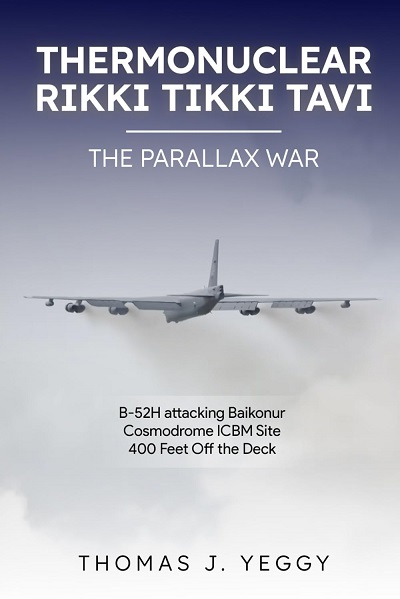
This book explores how U.S. presidents Dwight D. Eisenhower and John F. Kennedy failed to stand up to Soviet aggression during the early Cold War—despite America's overwhelming nuclear advantage.
This is the story of the author’s great great grandparents, Edward Lewis and Sarah Crosby, who were convicts transported to Van Diemen’s Land in the 1840s. It is told from the perspective of a detective agency searching for what happened to Edward, w
A Viconian Cycle/ Babylonian Captivity Memory Silence Re-Founding of Southern history out of Dublin GA and the KBPS7 Trial. In psychology this is a Wounded Pride case.