Category: History Publisher: The History Press, UK
ISBN-10: 0750950870
Type: Non-Fiction
Pages: 149
Copyright: 2008
ISBN-13: 9780750950879
Regional history book for Yorkshire, England
ISBN 978-0-7509-5087-9
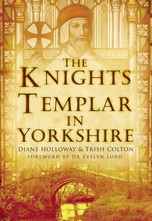
Where can you see an effigy of a Templar? What prompted King John to hand England over to an Italian? Who worked for the Templars in Yorkshire? When was sugar introduced into our diets? Packed with information, The Knights Templar in Yorkshire answers all these questions and many more.
This book explores what medieval life was like during the Templars' stay in Yorkshire. Not only was it the biggest county in Britain, but in Templar terms it was also the richest. They owned more land, property and people in Yorkshire than in any other county in England.
This fascinating volume takes the reader on an intimate tour of the ten major Templar sites established in Yorkshire, and reveals what life was like for their inhabitants – how the land was farmed, what the population ate, how they were taxed and local legends.
Illustrated with an intriguing collection of photographs and specially commissioned maps, this book is sure to appeal to anyone interested in medieval history.
Excerpt
FOULBRIDGE
Land given by Hugh Bigod before 1177
Foulbridge is a Templar site which sent tremors of excitement through the world of Knights Templar scholars. This medieval hall, part of which had been used as an apple store, had been shut off from the world for decades and was only rediscovered in 1981.
If the Templars returned to Foulbridge, 700 hundred years on they would find little has changed in the landscape. Just like Faxfleet, it stands on ground that is slightly higher than the surrounding countryside. There are still numerous cultivated fields and although the course of the river may have changed a little, it still it meanders through them on its way to the sea. There are more trees to be seen around the Preceptory and fewer buildings. And though these are very different from the original layout, it’s doubtful that any Foulbridge Templar would be lost.
******
Although the term “Royal Forest” might suggest that such areas were exclusively for the sovereign’s use, this is not strictly accurate. Then, as now, forests included cultivated land and communities. Some of it was certainly the exclusive preserve of the king who relaxed by hunting there. Deer and wild boar could only be taken by the king or those who had his express permission. If land owned by local lords fell within forest boundaries they were still subject to Forest Law. This meant that nobody could do anything without a licence from the king. Landowners needed a royal licence even to hunt such animals as hares, rabbits, foxes, wolves, badgers and wildcats on their own land. Think in terms of places designated as National Parks for example, where everyday life continues as normal but what you can and can’t do is tightly governed.
A work in American history and existentialism Which is an Invitation to connect and create the dots in your life to other revolutions like the Cuban Revolution.
A work in American history and existentialism Which is an Invitation to connect and create the dots in your life to other revolutions like the Cuban Revolution.