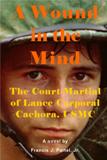
Category: Historical Fiction Publisher: Fiction Publishing, Inc.
ISBN-10: 0981972713
Type: Fiction
Pages: 131
Copyright: March 27, 2009
ISBN-13: 9780981972718
Ltjg Cannon and Ens Chase defend their client, LCPL Cachora, who formerly had a perfect record on a charge of assault and battery. Cachora, a half-Hopi American Indian, was awarded the Navy Cross for gallantry in The Hill Fights of Khe Sanh in the prior year, 1967.
It is 1968. The US naval war in Vietnam is at peak intensity. USS Ticonderoga, Attack Carrier 14, is in the Gulf of Tonkin for her fifth combat cruise prosecuting Operation Rolling Thunder. The historical naval novel has moved forward from the Napoleonic Wars of C.S. Forester and Patrick O’Brian to the modern navy. The ships and weapons may have changed, but time-tested traits of courage and leadership remain very much in demand.
Ltjg. Cannon has just retired to his stateroom when Gunnery Sergeant Mates phones him to take on the defense of a marine’s marine who won the Navy Cross in the brutal Hill Fights of Khe Sanh in 1967. LCPL Cachora is charged with assault and battery while on liberty in Hong Kong. Ltjg. Cannon along with Ens. Chase take on an uphill struggle to defend their client. With the odds stacked against them, they creatively mount a spirited defense.
This is the thrilling drama of Cachora’s court-martial. I think you will like this story.
Excerpt
“Either you’re a super Injun or you ain’t tellin’ me the truth. C’mon son, ain’t no shame in a warrior’s nightmares. Tell me about ‘em.” Cachora, just sat there in silence, staring at no one, focused only on the ship’s deck. Mates was slightly puzzled. Nightmares were common among combat veterans. They only seemed to matter in frequency and intensity. “Okay, let’s move on. How many times you been in firefights?”
“Four times, sarge.”
“What was the first?”
Cachora told them about two skirmishes and a patrol with several engagements. The worst was the last.
Professional Reviews
In Print : A novel of turmoil, war, and humanity
In Print : A novel of turmoil, war, and humanity
By Jack Shea
Published: May 28, 2009
"A Wound in the Mind" by Francis J. Partel Jr. Fiction Publishing Inc. 129 pages. $19.95
The 1960s, particularly the later part of the decade, was a blur of action, events, tragedy, liberation and the emergence of the sex, drugs and rock 'n roll mentality. Recently, personal books about the 60s have been rolling off the presses from Tom Brokaw's bestseller, "BOOM!" to locally authored, "In My Life," by Tom Dresser. Now comes "A Wound in the Mind", a short novel of combat-related stress disorder penned by Chappaquiddick summer resident Francis J. Partel Jr.
For some authors, 60s books may be a way to understand what really happened. Others, such as Messrs. Dresser and Partel, seem to know. Mr. Partel was a young naval officer who served in the Southeast Asian naval theater in which his book takes place.
Mr. Partel's novel reminds us that Vietnam wasn't just a poorly executed war. Post-traumatic stress disorder (PTSD), an almost invisible pathology in 1968, was also unleashed. As we've since learned, the effects of PTSD are viral, deadly, and continuing.
"Wound in the Mind" has an autobiographical tone. It tells the story of the real-life court martial of a United States Marine corporal Juan Cachora, accused of breaking the jaw of his commanding officer in a spontaneous melee that began after a string of firecrackers exploded behind him when he was on shore leave during the Vietnam War.
He did it, according to witness statements. However, witnesses, many of whom are shipmates, are equally clear that Cpl. Cachora was not drunk or disorderly, nor did he have a grudge against his well-liked superior.
The military disfavors striking officers and the law is clear. Cachora faces five years in brig time. The defense team becomes aware of early research efforts into PTSD and argues that the Marine, who has received The Navy Cross and The Purple Heart, needs therapy, not jail time.
The psychological damage of war on combatants is well documented, and in the book, the defense team notes that the pathology was known as "shellshock" in World War I and "battle fatigue" in the Second World War.
The facts that are described reveal facts about the causes of PTSD that should give us pause today. PTSD is more pronounced in those who kill in close physical proximity to their foes: bomber pilots suffer less PTSD than do soldiers fighting hand-to-hand in foxholes. And PTSD is not only a victim's disease but extends to aggressors as well - in this case, Cachora's accidental shooting during combat of two civilian children. Guilt is the trigger of his PTSD.
Dublin 1941. A brutal murder. Mistaken identity. And barman Eamon Foley is running for his life.
Nine months later Foley is in a crowded pub, and his brother-in-law is shot dead.
Fourth Book in the Southern Swallow Series finds the Academician Li K'ai-men in exile on Hai-nan Island. China has a new invasion threat. A showdown between ingenuity and technology explodes as the Sung Dynasty tries to preserve itself.
A novel about a family during World War II, set on the homefront in Springield, Mass., and in the South Pacific. The book focuses on four characters and how their lives were affected and changed during the war years.