Category: Humor Publisher: Laugh Line Publishing
ISBN-10: 0983425533
Type: Non-Fiction
Pages: 146
Copyright: March 2011
ISBN-13: 9780983425533
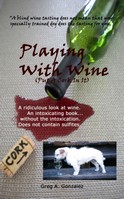
Playing With Wine was written for wine lovers with a sense of humor. It is cheaper than a good wine and "gooder" than a cheap wine. Like wine, it is best shared.
Wine is too good to be taken so seriously. Don't worry about pairing food with the appropriate wine.Stop worrying if there is enough oxygen in the room for the wine to breathe. Should you panic and call the paramedics? Should you give it “mouth to mouth?” Maybe you should just cool it or rather, chill it.
This book was written for wine lovers with a sense of humor. Instead of food, wine is paired with activities such as preparing your taxes, working on cars, and bathing the dog. It is both sophisticated and corny. A Robert Mondavi meets Foghorn Leghorn or Dr. Seuss kind of book. The glossary of wine terms is refreshingly creative. For example, "earthy" is defined as a person who tastes wine while wearing Birkenstock sandals."Aroma" is a kind of tomato.
You also get to meet the grapes in a different and playful way. There are red ones, white ones, and pink ones.Celebrate diversity even with wine.
Included in the book are useful wine tips such as using white wine to clean up a red wine spill on carpet. A better tip advises against using red wine to clean up a white wine spill.
Wine should be enjoyed and played with. So go ahead and Play With Wine.It is best shared with someone.Remember to read responsibly.
Excerpt
Aeration (A fancy way of saying breathe, or “someone open a window.”):
Of course the wine has been breathing prior to tasting. This can be accomplished a variety of ways. The traditional method of removing the cork thus allowing air to enter the bottle is still the necessary first step in the process. Unscrewing the cap has joined uncorking as a means of aeration. Drilling holes in the sides of the bottle hasn’t shown to work very well and busting off the top of the bottle against a countertop went out with the 1880s and is now only advisable if you have good health insurance. Now if you happen to be in the middle of the Kalahari Desert with a bottle of Beaujolais and no corkscrew, the last method would be acceptable. Good luck finding a countertop though.
Another traditional step in allowing a wine to breathe is to get it out of the bottle. The process of pouring the wine into another container is called decanting. There are special containers for holding wine that has been decanted. They are called, believe it or not, decanters. Of course, in you want to serve the wine to your guests directly from the bottle you could empty it into another vessel and then funnel it back into the wine bottle for pouring. It is very important to note here not to use the same funnel with which you add gasoline to the lawn mower. You may be able to get away with it if you’re pouring a $3.99 selection purchased at some discount outlet, but for the most part not.
These days many have taken to using wine aerators. Devices that either attach to the bottle or through which wine is poured allows the wine to, so they say, be instantly aerated. Call me old fashioned, but I prefer to give my wines “mouth to mouth.” Even if you simply pour a glass of wine and allow it to sit in between sips you’ll notice how the flavor changes as time elapses. Breathing may be overrated for the majority of wines, as they are ready to enjoy off the rack. Experiment with this and decide for yourself. Personally, I try to breathe everyday.
Thirteen Sick Tasteless Classics, Part II is adult literature featuring adult language and situations that satirizes thirteen famous novellas and short stories. It is Jay Dubya's sixteenth ebook.