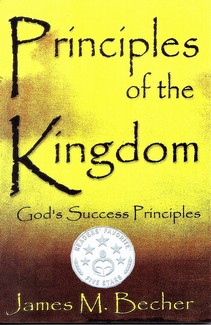
5 Star Biblical self-help success book. 17 Biblically Based principles for successful living with quotable quotes.
eBook om Crowd Pricing (FREE for the moment.)
Do you know what it takes to be successful?--to succeed in business as well as in life itself?
In this Biblical self-help success book, the author contends that God has several principles, which if followed can lead to success either in business or in life itself. He further contends that although many of these same principles may be found among the motivational speakers and thinkers of today and yesterday, that they were originally derived from Holy Scripture, whether or not these spokespersons are aware of it. He points to Jesus' parables to show that not everyone who preaches or practices Kingdom principles will be found to be in the Kingdom at the end. The 17 chapters of this book contain 17 articles relating to 17 of these principles. ·Knowing you purpose
·forgetting the past
·conquering fear
·believing
·focusing
·sowing and reaping
·resting
and 10 others. (For a complete list of the principles included in this work, check the "Table of Contents.")
There are examples, positive and negative, of these principles in the lives of characters from the author's novel, Of Such Is The Kingdom, A Novel of Biblical Times, so this book and the novel make perfect companion volumes.
And each chapter has a Quotable Quotes section with quotes from famous people past and present, including the Bible writers, so it makes a great reference source for quotations.
Excerpt
From these parables, we gain a picture of the kingdom in various stages of development. It starts small but
grows to be big. It initially contains people with all kinds of hearts as represented by the different soils, some of whom will fall away, be snatched away by Satan, or wither and die. Those who remain produce fruit in various quantities. Yet, among them, there may still be some who are not real followers but are represented as either tares or bad fish, to be thrown out at the end of time. When, however, in chapter 19, he says of the children, “of such is the kingdom of heaven,” I believe that there he is talking about the basic nature of the kingdom as it will be at the end, after the removal of the tares and the bad fish.
I originally called this book .God‘s success principles. because I believe there are principles throughout the
Bible which, if followed, can cause us to have a successful life. There are many speakers or writers who speak
or write about some of these principles. Some of these speakers and writers may not be true followers of Jesus. Who is and who isn‘t remains to be seen until the final judgment. But that doesn‘t make the principles any less effective. Thus for the remainder of this book I intend to share some these principles which I have found
helpful along with some quotes from some of these speakers and writers as well as from the Bible in the hope
that as we follow them to the best of our ability, they will produce a measure of success in our life and
endeavors.
Since the kingdom is what it is, as depicted by Jesus in the Matthew 13 parables, that is, since at the present
time, it contains people of different types of soil and people in different stages of development and at present it
must contain both wheat and tears, both good fish and bad and we cannot really tell the difference as yet, I
thought it might be helpful to refer occasionally by way of example of some of the principles I am about to set
forth— to some of the characters in my novel, .OF SUCH IS THE KINGDOM, A Novel of Biblical Times,.
even though of the characters themselves are flawed. I use them to show examples of the principles I am about to set forth, even though they may not be the best sort of people to follow. They, according to Jesus‘ parables would, could or may be in the kingdom at the time, but whether or not they will remain in it to the end, we
cannot now tell. I include Timotheus the beggar for his seeking attitude and hopefulness toward the coming of
Messiah. I include Pilate for his soft heartedness, confusion and weakness. Even though he sent Jesus to be
crucified, he did it grudgingly, washing his hands. And he did ask Jesus .What is truth?. I include his wife for
her far sighted vision and also for warning her husband of her dream regarding Jesus. I include Manaheeem,
Herod‘s foster brother for his searching and open heart as well.
Admittedly these characters lack something when it comes to being shining examples of truth to follow. But I use them to point to specific aspects of their character or life which illustrate specific principles or truths. And surely they can be of use, at times, as negative examples of what not to do or think.
Jesus also said, in vs.52 of Matthew 13 that every scribe which is instructed unto the kingdom of heaven is like
unto a man that is a householder, which brings forth our his treasure things old and new.. I trust, therefore to
bring forth in the following pages, some timely principles derived from both the old and new testaments of Holy
Scripture to guide us toward successful living. As to why I use the Bible to derive success principles, there is
more on that in Chapter 2. But for now, let me briefly describe two of the most important principles, that of purpose and that of vision which together comprise the inspiration necessary for any mission.
B. THE POWER OF INSPIRATION
“But there is a spirit in man, and the inspiration of the Almighty gives them understanding” (--Job 32:8)
"Trust in the Lord with all your heart and lean not to your own understanding. In all your ways, acknowledge HIM and HE shall direct
your path." (--Proverbs 3:5-6)
INSPIRATION can be a powerful thing. It can keep you going when all around you cries out .quit!. It is even
more powerful than motivation, as motivation gives you your basic reasons to keep going—it tells you why you
want to do what you do, because motivation is based on goals. These, in turn, may be based on necessity want
or desire. But, inspiration fills those reasons with hope, possibility and enjoyment and keeps the .grind. from
becoming too grindy. But just what does inspiration consist of? I posit three elements: purpose, vision and
mission.
1) Finding your purpose is the crucial first element which will give you the inspiration needed to move forward
in life. In my novel, "OF SUCH IS THE KINGDOM," Timotheus began thinking seriously about purpose too late
in life. If he would have thought about it earlier, perhaps he MIGHT have been able to find a more useful way to
make a living. On this, we can only conjecture. Yet The purpose of your life, as Rick Warren reminds us in .The
Purpose Driven Life1, “is greater than ...your career, or even your wildest dreams and ambitions.”.. And it
begins with God. He further points out (and I paraphrase) that we were made by God and for God, and that life
will never make sense until we understand that. God‘s purposes are revealed in His Word, the Bible.2 That‘s
why I include quotes from the Bible in the quotes section at the end of every chapter and in every issue of my
ezine, .”Inspirational Success Tips.”.(More on Purpose in Chapter 4)
2) Once you realize your purpose, you will begin to have a vision. Proverbs 29:18 says .Where there is no
vision, the people perish.. A vision is the first step toward turning your motivation into inspiration. A person
with a vision sees down the road. He can sense what it will be like six weeks, six months, a year, two years, five years and more ahead.
But how do you get a vision? you ask. First, of course you need to sense your purpose. But having done this,
you need to narrow your perspective. You can‘t attempt to ride off in all directions at once,. so to speak. Try to
decide what it is you are looking for, so you‘ll know it when you see it. In other words, try to have in mind
some general goals as to where you want to be six months a year, etc. from now. These goals will not only form
the basis of your motivation but should also serve to limit to an extent the scope of your activity.
Next, try to locate and choose an opportunity (business, career or job) which you feel is right for you—which
will fulfill your purpose and thus further your vision. This may be easier said than done, as there are many
choices which sound good. You may come upon an outstanding one right away, purely by chance. If so, latch
onto it. But you will probably have to pick several at first and study the things which each one offers and try to
evaluate the potential of each one as you see it. Settle on the one which you feel has the most potential with the
least amount of hassle(preferably one that is totally Internet driven as opposed to one where you have to spend
time calling potential prospects by phone).
Once you have chosen your field of endeavor, (your career, job or company) stand behind it in every way and
don‘t quit or change your mind. B.C. Forbes said .”Without loyalty, nothing can be accomplished in any
sphere....” Think of yourself as being in it for the long haul, no matter what. Try to envision, based on what
you know, how things will be down the road. Keep that picture before your mind, and never doubt. Napoleon
Hill said .”What the mind can conceive and believe it can achieve,. and the Bible says, in Hebrews 11:1 “Faith
is the substance of things hoped for, the evidence of things not seen..
Once the vision stemming from your sense of purpose is firmly implanted in your mind, let it become your
driving force. Let the vision excite you with the possibility of its fulfillment and you will automatically begin the next step—you are on a mission. Your mission is to bring about the realization of the vision. If you keep
the vision in mind, you will move forward in the mission, accomplishing enthusiastically step by step that which
is necessary to bring the vision into reality. You will have developed a sense of excitement, importance and
urgency which will keep the fires of inspiration burning in your heart and moving you ever onward and upward.
Another example from my novel is Pilate‘s wife. She saw his purpose as to be a ruler over large territory and
she pursued that vision until it was her mission.
----------------------------------------
QUOTABLE QUOTES:
1)"Success is; knowing what you're doing, loving what you're doing, and believing what you're doing."
--Napoleon Hill
2 "Believe you can, believe you can't, either way you're right."
--Zig Zigler
3).Whatever the mind can conceive and believe it can achieve.
--Napoleon Hill.
4)"NOW FAITH IS the substance of things hoped for, the evidence of things not seen."
--Paul(Hebrews 11:1 [the Bible])
--------------------------
Footnootes:
-----------------
1 Rick Warren, .The Purpose Driven Life. Zondervan, 2002, p.17-18
2.ibid.
Professional Reviews
Reviewed By Mamta Madhavan for Readers’ Favorite
Principles of the Kingdom (God's Success Principles) by James M. Becher offers good insights given by Jesus about the parables depicting the kingdom of heaven. It is said that the principles from the Bible, if followed properly, will lead to a successful life. The 17 chapters in this book deal with 17 of these principles such as: knowing the purpose of life, forgetting the past, believing, focusing, resting, sowing and reaping, conquering fears, giving and receiving, and many others that will motivate readers to make positive changes in their thinking, lifestyle, and endeavors.
Principles of the Kingdom is a good book that will help readers make changes that will make them happier and empowered. All 17 principles have been explained in detail, making it easy for readers to understand them. Every chapter has quotes from a famous person that is connected to the contents in the chapter. The author handles the subject in a manner that is neat and simple and makes it easy for readers to understand and enjoy it. It is a good book for all those readers who want to discover their divine purpose and set their goals accordingly. It can also be used in Bible classes and as a starting point to improve faith in God. Sometimes it is easy for readers to understand God when points are listed one by one and explained in that order and this book does that so that there is no need for readers to search for the messages hidden between the lines.
Reviewed by Steve Ibeawuchi for Author's Den
Principles of the Kingdom" by James M. Becher is a book that I will recommend for anyone who wants to make progress in this business and journey called life. It is lavish with deep revelations and insights with the most brilliant linguistic presentation that will make many psychology books and theological writings a mere joke.
I very respectfully chose to do a review of only one chapter of this masterpiece. Anything more would take a whole world of pages to contain.
The 10th Chapter of the amazing book “Forgetting the Past” is a brilliant presentation of Apostle Paul’s winning philosophy passionately and succinctly portrayed in the account of Philippians 3:12-16. Who in the world could give us a total drill on life, struggles of life and super-normal accomplishments better than the man that saw and was it all? Paul’s personal struggles and astute accomplishments were usually the centerpiece of every page in all his Epistles.
In every case, Paul’s earthly life: his achievements, his controversial conversion and transformation; his personal struggles, unimaginable dangers and troubles, along with his profound insights and unique to approach life have become a true life mirror for any meaningful success in Godly living.
The plan and tone of this chapter brings out the best of a visionary Pastor Evangelist gifting which seeks to bring out the best out of everybody and community for THEIR eternal good. Every line is a sheer piece of art studded with the purest most succinct phrases and literary devises in the book which even a fool could understand and instantly relate with. Chapter opens up with a paragraph which alone contains more intriguing insights and ex-rays on life and the struggles of life than any book on human Psychology ever written.
Paragraph 1: This Chapter is richly packed with impactful tact and technical devises that simply leave the reader with a feel of awe, revelation knowledge and a powerful propelling inner charge to instantly take action against negative mental images of self and the entire concept of life and journeys of life.
Line 1:
“Forget your failures” …. The writer comes out with such a convincing impactful tone: “Yes, take action… You can do it … You don’t have to be where you are right now… Take action… Don’t even think about it… Already taken care of… It is part of the deal!”
“Move On” The idea of a constant progressive motion is implied. Get up… Dust your buttocks, lace your boots and move on.
“Toward your dreams” … The need to reflect on your goals and motives is implied in this prepositional phrase. The goal is not exactly for you to forget your failures or the causes thereof. The writer clearly points that it is not enough to forget your failures. That will be dubious and utterly misinforming.
He urges the reader to instantly reflect on the original essence and purpose of the journey leading up to the troubling and damaging failure(s) weighing hard on our mortal mind… He uses the summation imagery, “Your dreams.”
“It is” … The Author’s use of “it is,” another high impact prepositional phrase here reminds me of a Latin phrase, quod erat faciendum, which in simple terms would mean, “As is required!.” The simple connotation here is that of essence, definitely requiring or a necessity.
This quickly brings to the fore the folly of some of the things we fight against or lose our sanity over … bitter pills, needles and injections when we are sick, the pain of a loss, the grief and the shame when we sin, as well as the hardship from material want and so on.
That brings to mind Job’s situation, the patience and wisdom he displayed: “Curse God and die!” … You speak like one of the foolish women … would you receive… and not receive? … Though He slay me…yet….”
“Fact of life” … Writer appears to agree with the premise that life is not lived in a vacuum. There are facts and rules that must be followed if life should be meaningful. Writer appears to address one troubled soul but also opens the conversation to the whole world of listening bewildered minds. This is an interesting literary device mixed up by writers everywhere. This writer is excellently on point.
Line 2:
“All of us” … His immediate transportation of this emotional connection from the individual to “all of us” right in the same line and breadth captures the attention of the reader and gives enormous credibility to the writer’s take on the matter being discussed, his insights and admonition(s) moving forward. His choice of words and imagery leave no room to any blind arguments or vague interpretation.
“Will inevitably fail in something” … None of us is a robot. None is superhuman. Only Lord Jesus on the surface of the earth was sinless. The author paints home the awareness that at some point and in some very thing, we will fall short. He strikes a note that almost startles you as though you haven’t heard that before. The difference now is that the Author has ignited something in your conscious mind and spurring you up for action.
Line 3:
“Along” --- The use of “along,” a seemingly invisible insignificant preposition in this sentence, is a silent pointer to the sense of progression. Life is a journey. A progression of sorts. Everyone in it is expected to see and understand that we are in a state of constant progressive motion. There is no returning to the joys or the bumps we scale on the way.
They are there for a larger purpose beyond us. That we had to encounter them goes beyond our individual personalities. That we had to encounter them is simply because we found ourselves in those plains and on those courses. We should simply look up, observe known rules, be cautious and relish and the experience with all grace and informed knowledge.
“Bumpy road of life” … The allegory of a highway. Bumpy – not so smooth. That also means that it is not altogether disastrous. Bumps represent an uncomfortable experience in what should otherwise have been a pleasant journey, which was the original intention of the earthly life, and certainly the eventual goal of the one to come.
“When this happens” … A charge to look out, be on the guard; stay in expectation, and react based on a pre-informed position of strength.
“We need to be able to” … The idea that “We need to be able to” reveals the concept of personal responsibility and will to amend ways through personal knowledge of what is true, acceptance of a done-deal and a personal will to apply its effect.
Line 4:
“Forget it and move on” … In a very precise and impactful tone, the writer charges us not to wallow in meaningless blind conjectures about momentary failures but to earnestly move on to the goals ahead. However, the next line also makes it clear that to “forget it and move on” should not be taken for a quick escape from personal responsibility.
Line 5:
“If you've sinned” … Paragraph opens with the high-impact insights of a Mentor an authoritative Teacher. The Author’s lines so far would bear the same impactful redemptive weight on anybody merely struggling with personal failures in terms of poor social life as it would on the more serious, more religious sounding concept of “SIN.”
There was no reference to sin or sinless condition per se until this point. The connection has already been made and the reader’s attention fully drawn. Any mention of SIN or its impact at this point is not construed as proselytizing but a matter of legitimate concern to the mentor, an issue of uttermost importance never to be overlooked.
This, to me, is the heart of soul winning. And I give kudos the writer for his excellent insight and wisdom herewith applied.
“Ask for and accept God's forgiveness and then forgive yourself”: The idea that we can ask for, accept God's forgiveness and then forgive ourselves paints a picture of perfect possibility of a transactional activity and completeness of resulting effects. The conciliatory words and technical devices applied in this paragraph create an immediate pause, a deep ponder and a momentary stimulating urge in the heart and mind of the reader towards immediate acceptance of the revealed/implied remedy herewith being presented.
That leaves the reader with a sudden and an instant feel of gratitude to have stumbled into this piece of advice and material, a strong connection to the reality that what had always been a difficult inconvenient truth in the past should actually be true and so instantly applied to his/her individual need. What a sense of relief and ultimate empowerment!
Steve Goodier:
The tactful reference to Steve Goodier’s “delete key” antithesis is a classic linguistic device which instantly herewith points to the fact of human nature as distinct from material and elemental forms of creation. With this tool, the writer tactfully and subtly warns that there are no gadgets, no buttons, and certainly no substances to manipulate any aspect of man’s life, the mind and the conscience.
“The past is what it is --past. … Finished”. … He makes a bold connection with the reader’s mental reality regarding the body of old issues, events and emotions and collects them into one monster, the
“past.” This is Animation, giving it form and attitude and projecting the past as Un-retractable, unchangeable, un-erasable…
“There is no taking it back” The use of paradox and a little proverb is applied here, simply painting the past as a Dead horse. No taking it back!
“Yet no purpose …. old memories.” … Writer is clear to point out that as humans we possess and do actually exercise extensive energy, including emotional energies exercised in the form of worry, fear; anxiety, etc. Writer’s foresight and tact portrays these mental energies as only useful when applied into life giving and life-sustaining activities, not on past memories.
“It is gone. …” The past is clearly posed as having a form and a personality. This personality is not wanted. Yesterday is gone.
“Let it be a teacher”. … Teachers are not meant to live with us. We don’t keep the same teacher for an extended time, unless there is no progress. And, that in itself, is a problem nobody wants to dwell with. Writer’s tone and excellent choice of words drums this home using five simple words.
Brother Becher so intimately and so passionately wants us to learn from the harsh lessons of life and the joys thereof, whichever and if ever they came our way, or should I say, if ever we stumbled into them. Then let us leave them where they belong and not take them with us or attempt to stay put with them.
Happy Reading from a lover of great books:
Want to review or comment on this book?
Need a FREE Reader Membership?
Reviews for "Principles of the Kingdom (God's Success Principles)"
"Principles of the Kingdom" by James M. Becher is a book that I will recommend for anyone who wants to make progress in this business and journey called life. It is lavish with deep revelations and insights with the most brilliant linguistic presentation that will make many psychology books and theological writings a mere joke.
I very respectfully chose to do a review of only one chapter of this masterpiece. Anything more would take a whole world of pages to contain.
The 10th Chapter of the amazing book “Forgetting the Past” is a brilliant presentation of Apostle Paul’s winning philosophy passionately and succinctly portrayed in the account of Philippians 3:12-16. Who in the world could give us a total drill on life, struggles of life and super-normal accomplishments better than the man that saw and was it all? Paul’s personal struggles and astute accomplishments were usually the centerpiece of every page in all his Epistles.
In every case, Paul’s earthly life: his achievements, his controversial conversion and transformation; his personal struggles, unimaginable dangers and troubles, along with his profound insights and unique to approach life have become a true life mirror for any meaningful success in Godly living.
The plan and tone of this chapter brings out the best of a visionary Pastor Evangelist gifting which seeks to bring out the best out of everybody and community for THEIR eternal good. Every line is a sheer piece of art studded with the purest most succinct phrases and literary devises in the book which even a fool could understand and instantly relate with. Chapter opens up with a paragraph which alone contains more intriguing insights and ex-rays on life and the struggles of life than any book on human Psychology ever written.
Paragraph 1: This Chapter is richly packed with impactful tact and technical devises that simply leave the reader with a feel of awe, revelation knowledge and a powerful propelling inner charge to instantly take action against negative mental images of self and the entire concept of life and journeys of life.
Line 1:
“Forget your failures” …. The writer comes out with such a convincing impactful tone: “Yes, take action… You can do it … You don’t have to be where you are right now… Take action… Don’t even think about it… Already taken care of… It is part of the deal!”
“Move On” The idea of a constant progressive motion is implied. Get up… Dust your buttocks, lace your boots and move on.
“Toward your dreams” … The need to reflect on your goals and motives is implied in this prepositional phrase. The goal is not exactly for you to forget your failures or the causes thereof. The writer clearly points that it is not enough to forget your failures. That will be dubious and utterly misinforming.
He urges the reader to instantly reflect on the original essence and purpose of the journey leading up to the troubling and damaging failure(s) weighing hard on our mortal mind… He uses the summation imagery, “Your dreams.”
“It is” … The Author’s use of “it is,” another high impact prepositional phrase here reminds me of a Latin phrase, quod erat faciendum, which in simple terms would mean, “As is required!.” The simple connotation here is that of essence, definitely requiring or a necessity.
This quickly brings to the fore the folly of some of the things we fight against or lose our sanity over … bitter pills, needles and injections when we are sick, the pain of a loss, the grief and the shame when we sin, as well as the hardship from material want and so on.
That brings to mind Job’s situation, the patience and wisdom he displayed: “Curse God and die!” … You speak like one of the foolish women … would you receive… and not receive? … Though He slay me…yet….”
“Fact of life” … Writer appears to agree with the premise that life is not lived in a vacuum. There are facts and rules that must be followed if life should be meaningful. Writer appears to address one troubled soul but also opens the conversation to the whole world of listening bewildered minds. This is an interesting literary device mixed up by writers everywhere. This writer is excellently on point.
Line 2:
“All of us” … His immediate transportation of this emotional connection from the individual to “all of us” right in the same line and breadth captures the attention of the reader and gives enormous credibility to the writer’s take on the matter being discussed, his insights and admonition(s) moving forward. His choice of words and imagery leave no room to any blind arguments or vague interpretation.
“Will inevitably fail in something” … None of us is a robot. None is superhuman. Only Lord Jesus on the surface of the earth was sinless. The author paints home the awareness that at some point and in some very thing, we will fall short. He strikes a note that almost startles you as though you haven’t heard that before. The difference now is that the Author has ignited something in your conscious mind and spurring you up for action.
Line 3:
“Along” --- The use of “along,” a seemingly invisible insignificant preposition in this sentence, is a silent pointer to the sense of progression. Life is a journey. A progression of sorts. Everyone in it is expected to see and understand that we are in a state of constant progressive motion. There is no returning to the joys or the bumps we scale on the way.
They are there for a larger purpose beyond us. That we had to encounter them goes beyond our individual personalities. That we had to encounter them is simply because we found ourselves in those plains and on those courses. We should simply look up, observe known rules, be cautious and relish and the experience with all grace and informed knowledge.
“Bumpy road of life” … The allegory of a highway. Bumpy – not so smooth. That also means that it is not altogether disastrous. Bumps represent an uncomfortable experience in what should otherwise have been a pleasant journey, which was the original intention of the earthly life, and certainly the eventual goal of the one to come.
“When this happens” … A charge to look out, be on the guard; stay in expectation, and react based on a pre-informed position of strength.
“We need to be able to” … The idea that “We need to be able to” reveals the concept of personal responsibility and will to amend ways through personal knowledge of what is true, acceptance of a done-deal and a personal will to apply its effect.
Line 4:
“Forget it and move on” … In a very precise and impactful tone, the writer charges us not to wallow in meaningless blind conjectures about momentary failures but to earnestly move on to the goals ahead. However, the next line also makes it clear that to “forget it and move on” should not be taken for a quick escape from personal responsibility.
Line 5:
“If you've sinned” … Paragraph opens with the high-impact insights of a Mentor an authoritative Teacher. The Author’s lines so far would bear the same impactful redemptive weight on anybody merely struggling with personal failures in terms of poor social life as it would on the more serious, more religious sounding concept of “SIN.”
There was no reference to sin or sinless condition per se until this point. The connection has already been made and the reader’s attention fully drawn. Any mention of SIN or its impact at this point is not construed as proselytizing but a matter of legitimate concern to the mentor, an issue of uttermost importance never to be overlooked.
This, to me, is the heart of soul winning. And I give kudos the writer for his excellent insight and wisdom herewith applied.
“Ask for and accept God's forgiveness and then forgive yourself”: The idea that we can ask for, accept God's forgiveness and then forgive ourselves paints a picture of perfect possibility of a transactional activity and completeness of resulting effects. The conciliatory words and technical devices applied in this paragraph create an immediate pause, a deep ponder and a momentary stimulating urge in the heart and mind of the reader towards immediate acceptance of the revealed/implied remedy herewith being presented.
That leaves the reader with a sudden and an instant feel of gratitude to have stumbled into this piece of advice and material, a strong connection to the reality that what had always been a difficult inconvenient truth in the past should actually be true and so instantly applied to his/her individual need. What a sense of relief and ultimate empowerment!
Steve Goodier:
The tactful reference to Steve Goodier’s “delete key” antithesis is a classic linguistic device which instantly herewith points to the fact of human nature as distinct from material and elemental forms of creation. With this tool, the writer tactfully and subtly warns that there are no gadgets, no buttons, and certainly no substances to manipulate any aspect of man’s life, the mind and the conscience.
“The past is what it is --past. … Finished”. … He makes a bold connection with the reader’s mental reality regarding the body of old issues, events and emotions and collects them into one monster, the
“past.” This is Animation, giving it form and attitude and projecting the past as Un-retractable, unchangeable, un-erasable…
“There is no taking it back” The use of paradox and a little proverb is applied here, simply painting the past as a Dead horse. No taking it back!
“Yet no purpose …. old memories.” … Writer is clear to point out that as humans we possess and do actually exercise extensive energy, including emotional energies exercised in the form of worry, fear; anxiety, etc. Writer’s foresight and tact portrays these mental energies as only useful when applied into life giving and life-sustaining activities, not on past memories.
“It is gone. …” The past is clearly posed as having a form and a personality. This personality is not wanted. Yesterday is gone.
“Let it be a teacher”. … Teachers are not meant to live with us. We don’t keep the same teacher for an extended time, unless there is no progress. And, that in itself, is a problem nobody wants to dwell with. Writer’s tone and excellent choice of words drums this home using five simple words.
Brother Becher so intimately and so passionately wants us to learn from the harsh lessons of life and the joys thereof, whichever and if ever they came our way, or should I say, if ever we stumbled into them. Then let us leave them where they belong and not take them with us or attempt to stay put with them.
-- A decision delayed even one second is not the same decision --
A fascinating guided journey through your decision making process and cause and effect that will help you to think about your decisions and how your actions or inaction impa
My Georgia Journal helps readers spark their interest with historical trivia and tidbits about Georgia. It’s an interactive journal designed to nurture creativity and self-motivation.
The second portion features one side for drawings, sketches, o