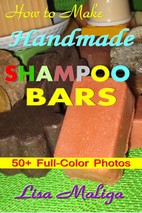
Learn how easy it is to make natural handmade shampoo bars. This innovative eBook includes 25+ recipes for shampoo bars, hair rinses, and hair masques. Contains more than 50 color photos, step-by-step instructions, and a chapter on natural additives.
Learn how easy it is to make natural handmade shampoo bars. This innovative eBook includes 25+ recipes for shampoo bars, hair rinses, and hair masques. Contains more than 50 color photos, step-by-step instructions, and a chapter on natural additives. You get fragrance and essential oils information, and the creative labeling and packaging ideas chapter includes several photos. There is lots of information for both melt and pour and rebatch/hand-milled soap bases and how to craft fine bases into wonderful shampoo bars for all hair types. How to Make Handmade Shampoo Bars is written and photographed by the author of THE JOY OF MELT AND POUR SOAP CRAFTING.
Excerpt
In The Joy of Melt and Pour Soap Crafting, I mention the large variety of types and shapes of available soap molds. However, when it comes to making shampoo bars, there are three main considerations.
1. How comfortable will the shampoo bar be for your hands?
2. What size is preferable? Small half-ounce mini shampoo bars or jumbo four or five ouncers?
3. How easy is it to get out of the mold?
Traditional molds can be found at the listed suppliers in the Resources section, all designed to hold the hot, melted soap and turn it into a practical and/or pretty shape.
There are several shapes and sizes that you can mold your shampoo bars into from rounds to flowers to traditional rectangular bars. Plastic molds are easy to locate. Wal-Mart, Target, Dollar stores, and many discount stores all carry soap molds just waiting to be used. If it’s plastic, if it’s microwavable and dishwasher safe, [even better!] it can be used to shape that shampoo bar. You can order molds online or find them at crafts and candle supply stores and shows/fairs. Microwavable containers, food containers, candle molds, or even drawer organizers can be used. Melt & pour tip: Molds should have a smooth interior surface as melt and pour soap is notorious for picking up shapes.
Another advantage to crafting shampoo bars is that finding the best molds will often be in the least expensive places. Although you can easily obtain inexpensive molds, if you want to continue to use the same mold[s] or will be doing a lot of soap crafting and shampoo bar making, flimsy plastic containers won’t last that long. Keep that in mind when you purchase molds.
By using molds that are made exclusively for soap crafting, such as the Milky Way mold, you’ll like how easy they are to use and you’ll enjoy the impressive end results. For shampoo bar crafting, these molds are sturdy, have numerous designs and shapes, and are reasonably priced.
Professional Reviews
How to Make Handmade Shampoo Bars
Try out new homemade bath and beauty recipes is always fun. So when Lisa Maliga, author of The Joy of Melt & Pour Soap Crafting, asked if I'd like to review her newest book, How to Make Handmade Shampoo Bars, I was happy to oblige.
This book is a fun introduction to making homemade shampoo bars for those recently getting into melt and pour soapmaking. It provides overall comprehensive information you'll need to get started and serves as a great springing board for later creating your own custom shampoo bar recipes for your family and their specific hair care needs.
How to Make Handmade Shampoo Bars begins by explaining the many benefits of making your own natural shampoo bars. Not only do you not have to worry about spilling shampoo bars, they also use less packaging, are perfect for travel and camping, easy to use, and they can be completely customized with your favorite scents or hair care needs. Additionally, homemade shampoo bars are economical and eco-friendly, dog safe and they can also be used on your face and body cutting out the need for additional products. What's more, as many commercial soaps contain tallow - referred to as sodium tallowate in the ingredient list - which is render cow or pig fat, this book will allow you to create your own animal friendly products if you choose to live a vegan lifestyle.
There are also some wonderful informational sections on how to store your soap bases prior to and in between usage, the differences between fragrance oils and essential oils, fragrance blending tips, and what kinds of molds to use - including my new favorite soap molds, silicone molds, which allow for ease of soap removal and the creation of fun shapes. (They can also be used to make your own handmade solid sugar scrub cubes, homemade solid lotion bars, and bath bombs making them a great choice if you are wanting to make more of your own diy bath and body products.) Further, there's a guide to natural additives like aloe, avocado oil, jojoba oil - even beer - that can be included in your handmade shampoo bars as well as a list of herbs and essential oils that are recommended for each hair type from dry to normal to oily as well as those suffering from hair loss or dandruff.
The handmade shampoo recipes within this book are divided into two sections - melt and pour shampoo bar recipes and hand-milled (or rebatched) shampoo bar recipes. Both of these methods are perfect for those who want to make their own quality bath products at home, but aren't ready to delve into cold process soapmaking which involves the use of sodium hydroxide, commonly referred to as lye. Some of the homemade melt and pour shampoo bar recipes include Rosemary & Lavender, Monoi de Tahiti, Peppermint Mocha, Chamomile Comfort, Lentil Bliss and Sensuous Silk (pictured right) which contains Moringa Seed Oil and silk.
The handmilled shampoo bar recipes - which are made from grating and rebatching an existing bar of soap and adding skin and hair care ingredients - include recipes like Pink Clay & Shea, Strong & Silky, Brewed Coffee, Bouncy Brew - made with brown ale, Chocolate Chili - made with cayenne pepper and chocolate, Roobis Tea & Coconut, Matcha Green Tea, and Yucca & Nettle Leaf. Each recipe includes a photograph of the finished product as well as photographs of the steps involved.
In addition to the twenty-one shampoo bar recipes included in this book, there are also hair rinse and hair mask recipes, as well as information on creating and using hair oil, tips for using your shampoo bars and packaging ideas. There's also an excellent suppliers list of places to buy ingredients for your shampoo bar projects as well as a list of soapmaking mold suppliers. Of course one of my favorite suppliers for organic ingredients, Mountain Rose Herbs, is included within these extensive lists.
Rebecca D. Dillon ~ Soap Deli News - www.soapdelicatessen.com
Make Your Own Handmade Shampoo Bars
I never even knew shampoo bars existed until I was contacted by the talented Lisa Maliga. But they do exist, and you can make your own with her amazing new pdf book!
Written in the spirit of her book The Joy of Melt and Pour Soap Crafting, How to Make Handmade Shampoo Bars is a self-explanatory book that will have you creating shampoo bars in a cinch.
The book goes step-by-step with everything a beginning shampoo bar crafter needs to know. There are material lists, guidelines, and helpful hints. And did I mention the oodles of recipes?? I was actually astounded by the amount of recipes in this book. The book is not expensive, so I didn't really expect many recipes to be included. But, boy, was I wrong!! I don't think I would ever need another book with shampoo bar recipes. This one has more than I would probably ever make! ~ Melanie East at Bear Rabbit Bear Crafts - www.bearrabbitbear.com
How to Make Homemade Shampoo Bars
I am really getting tired of spending so much money on cleaning and beauty supplies. Recently, I found that I could clean my showers for cheap using Dawn dishwashing detergent and just plain vinegar – and it works great! Instead of shelling out money for commercial cleaners, I have decided to try and make my own products.
I was contacted by Lisa Maliga to see if I would be interested in reviewing her new ebook How to Make Homemade Shampoo Bars. Since I am trying to save money and try more organic and natural products, I hopped at the chance. Lisa’s ebook is filled with information about creating Shampoo Bars. These bars are used instead of regular liquid shampoo that is often filled with unnatural chemicals that are not good for you or the environment. Shampoo Bars are easy to make, require minimal packaging, easy to transport, can be scented or unscented and can be made for your hair type.
How to Make Homemade Shampoo Bars doesn’t just have Shampoo Bar recipes, but also educates you on the type of equipment you will need, how to store your shampoo base, fragrances and essential oils to use, shampoo molds, natural additives and the best ingredients for your hair type. The recipes are divided into two sections: Melt and Pour Shampoo Bar Recipes and Rebatch/Hand-Milled Shampoo Bar Recipes. You will find such recipes as:
Rosemary & Lavender Shampoo Bar
Peppermint Mocha Coffee Shampoo Bar
Chamomile Comfort Shampoo Bar
Tapioca + Honey Shampoo Bar
Yogurt Shampoo Bar
Milk Chocolate Shampoo Bar
California Goat’s Milk & Honey Shampoo Bar
Winter Eggnog Shampoo Bar
And MORE!
I decided that I wanted to give it a go and I made a batch of the Rosemary & Lavendar Shampoo Bars. The process was simple and easy and only took me about 10 minutes! I loved the smell of the shampoo bar and it lathers up really nicely.
Shampoo Bars can sometimes make your hair feel different, often like it is coated. If this is the case, Lisa has included Hair Rinses that can be used as well. Also included in the book are a few recipes for hair masques that can be used for deep conditioning your hair once a week.
Cecile Pryor at The Shopping Duck
Personal journals are full of potential, waiting for you to add the color! Pages for you to fill in the blanks with tidbits and trivia about South Dakota