Kindle Edition
Amazon
Val Dumond
Category:
Language
Publisher: Muddy Puddle Press
ISBN-10: 0979746604
Type: Non-Fiction
Pages: 300
Copyright: 2012
ISBN-13: 9780979746604
Price: $12.99 (eBook)
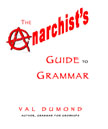
Uncovering myths about U.S.-English (you're not in Britain anymore). Shun the "rules" and create Your Style Manual, with your own choices of grammar usage.
Don't you just love grammar! You don't? I wonder why. Could it be because you are confused about which "rules" to use when? Wonder no more. The Grammar Anarchist is on the job!
When attempting to write all the "rules" of U.S.-English, I discovered so many discrepancies, exceptions, and downright inconvenient usages that I had to set writers straight. We in the U.S. are blessed with a language unique in the world because it contains bits from all the languages in the world. No other country can make that claim! So, of course, we have our own grammar!
One myth that begged immediate notice is that one about there being some basic language book somewhere that had all the answers. First of all, there are several kinds of "English" (Canadian, Australian, South African, British, and U.S. — I hesitate to call it "American" because there are so many American countries).
After my initial rant, I calmly review the parts of U.S. speech — in ways you will understand — and add a few chapters about writing sentences and paragraphs, spelling, using numbers, incorporating inclusive (unbiased) language, and my particular favore section: all about w-o-r-d-s (my passion).
To recap, dear fellow writer, there are standards of good (acceptable?) U.S.-English grammar, but there are very few rules. Instead, you will pick up info about the background of parts of speech and options for standard usage.
The most important part of using this book is to create your own Style Manual. Sure, there are commercial ones about, but they are built around the needs of the originators — not around your needs. So why not develop a collection of your language preferences and never need to wonder again? the answer is: choose your favorites and adapt them to your own writing — or write Your Style Manual. I did — and it works beautifully.
Excerpt
Writing isn’t all that hard. Everyone is doing it these days. Everyone has their own book, from world leaders to Mr. Jingles the dog. And I’ll bet you have one in the works as well.
But I’m not writing for “everyone”; I’m writing for you: the writer struggling to find your writing style — the right words — and put them in the right sequence, transmit to readers the pictures you see in your head, and write your pictures clearly.
For more years than I prefer to count, I’ve taught “grammar” and writing, and I’ve grumbled about the common language problems that writers encounter. I even wrote a couple of grammar books to enlighten writers and educate those greeting American-English for the first time.
I get it that children need rules and teenagers question them. Now, as a grownup, you get to look at those rules you were fed as students and discover they can be modified.
As an editor, I see a great need for help with your very real problems as a writer. Which is why I’m following an urge to write explicitly for you, the writer, who now has a computer and access to independent publishing, and — most importantly — a message, a helpful piece of information to impart, or an idea for a story.
Sure, you know about writing from what you learned in school. Remember how you learned all about nouns and pronouns and the like? That is not “writing”. Writing is about learning the tools of your trade, language — and language has changed. Books are written and published with no punctuation or no capital letters. Texting has added an entirely new language.
Additionally, if you try to look up the “right” way to construct a sentence or the “right” place to add a comma, you’ll find conflicting advice. I hear you wailing, Where oh where is that one rule book that answers all my questions?
You have found it. Only it’s not a “rule” book — it’s a set of guidelines. By picking up this book, you’ve taken the first step to overcome your struggles with writing.
|