Kindle Edition
Download from Smashwords (eBook)
Books by Roger Ellerton
Amazon.com
Category:
Publishing
Publisher: Renewal Technologies Inc.
Pages: 30
Copyright: January 17, 2014
ISBN-13: 9780991864539
Price: $0.99 (eBook)
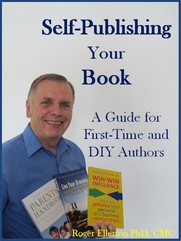
The purpose of my book is to share with you my insights and experiences based on my mistakes and lessons learned. In doing so, my hope is to save you time and money and make your publishing experience less onerous, more enjoyable and hopefully profitable.
I am the author of eight books -- three paperbacks and eight ebooks. Overall I have been successful in getting my books published and sold. However, I have made mistakes and learned some valuable lessons along the way. This book is far from a complete resource on how to write, publish and market your books. The purpose of my book is to share with you my insights and experiences based on my mistakes and lessons learned. In doing so, my hope is to save you time and money and make your publishing experience less onerous, more enjoyable and hopefully profitable. For example, do you know that in many countries there is a national organization that collects fees from organizations (e.g. schools, government) for the right to copy published works? These fees are then passed on to the registered authors/publishers.
Excerpt
1. Publishing Your Book
In the past, you really had little choice on where or how to publish your book -- traditional publishing company or self-publish. In the latter case, it was often find a printer who would deliver 1,000 - 10,000 books that you could store in your basement -- potentially forever.
The traditional publishing route still exists, but now the self-publishing option has really changed and provides you with some real choice, flexibility and cost savings.
1.1 Traditional Publishing
With traditional publishing, you write your manuscript and a query letter/proposal, which you submit to a publishing house (or have a literary agent do this for you). An editor at the publishing house reviews your material and decides either to reject it (leaving you free to offer it to another publisher) or to publish it. If the publishing house decides to publish your book, the publisher buys the rights from you and pays an advance on future royalties. They finance the cost of editing, designing, packaging, printing and distributing your book.
* Advantages
A traditional publisher offers:
* Greater prestige.
* Advances.
* Experienced editors who can offer creative and practical feedback.
* Potential to sell international and subsidiary rights to your book.
* Professional, in-house designers to create great book covers.
* Experience, knowledge and contacts to promote your book. However, you are ultimately responsible for marketing your book.
* Drawbacks
Traditional publishing has a number of drawbacks:
* It can be a long, expensive process finding a publisher who will accept your book.
* Once your book is accepted for publication, it will be 9 - 18 months before it is on shelves.
* You may not recognize your book nor agree with some of the changes once the publisher's editors gets their hands on it.
* If your book does not meet the publisher's sales expectations, it can quickly be removed from shelves with limited or no availability.
* Publishers may take 70% of the royalties for electronically published books and up to 90% for paperback or hardcover books.
* You are responsible for marketing your book. The time and money you spent finding your publisher may have been better spent on marketing your self-published book.
1.2 Self-Publishing
With self-publishing, you don't have to worry about a publishing house's editor ripping your manuscript into unrecognizable shreds. Or having the publisher pull your book after only a couple of months on bookstore shelves. You have control over the contents, design, and appearance, as well as where and how your book is marketed and distributed.
Gone are the days when you contracted with a printer to put 1,000 - 10,000 books in your basement, although I have recently heard of a few people who have taken this route. Why? I'm not sure unless they felt the low printing cost per book made up for storing their books and the possibility that less than 100 of the books would be sold.
Today, authors have access to Print on Demand (POD); that is a copy of your book is created if and when there is a request for it and sent to the requestor soon thereafter. No longer is it necessary for you or your printer to hold any books in inventory, thus saving money. However, there are advantages for you holding a few books in inventory:
* The more books you print in a single printing, the lower your cost per book.
* If your printer is busy, they may not print your book for several days.
POD also provides advantages for online and "bricks and mortar" stores, as well. Being able to get a book within a few days and not have to carry it in inventory reduces their costs and allows them to offer a much larger selection of books to their customers.
Thanks to POD publishing, you have two main choices when self-publishing your book:
* Subsidy/vanity publisher
A subsidy/vanity publisher charges a fee to print your book and make it available for sale to the public. Many subsidy publishers are not selective -- if you pay their fee, they will publish your book. Depending on the publisher, there are a variety of services they may offer, e.g. design, editing, distribution, and marketing services -- often at an additional (inflated) cost.
There are some good subsidy publishers; however a few bad publishers have given this industry a bad reputation.
My first two books were published by a subsidy publisher. I chose this route, as I did not know a great deal about getting a book published and the publisher that I selected had a good reputation. Unfortunately, they were bought out by another subsidy publisher, who significantly reduced the royalties paid to me, even though this was in violation of the contract and constantly tried to sell me unneeded, questionable and inflated marketing services. I have since canceled my contract with this publisher and now publish all of my books through CreateSpace and Smashwords.com, which are described later.
If you are interested in pursuing the subsidy publisher route, I highly recommend Booklocker (booklocker.com), run by Angela and Richard Hoy. They have an excellent reputation, do not accept all books submitted to them and offer you editing, marketing and other services at a reasonable cost. When I was first seeking out a publisher, I would have gladly published my books through Booklocker, however they were only accepting US authors at the time and I live in Canada. Angela also writes a weekly newsletter that can be found at writersweekly.com.
* Publish it yourself
At one time, publishing your book yourself would have been totally out of the question. With today's technology and a little work on your part, this is certainly a viable and profitable option.
This approach, like subsidy publishing, requires you to take on the entire cost of publication, marketing and promotion. However, rather than paying for a pre-set package of services, you decide on the services you need -- editors, cover and interior designers, publicists, etc. Because every aspect of the process can be put out to bid, this can be more cost effective than subsidy publishing. It can also result in a higher-quality product.
If you publish your book yourself, you can have a high quality hardcover or paperback in your hands within six months. This includes writing, editing, designing and publishing your book. Once all editing and design is finished, a hardcover book or paperback can be available for sale within weeks and an ebook within days.
|