www.valdumond.com
valdumond.com
Category:
Reference
Publisher: Muddy Puddle Press
ISBN-10: 0979746698
Type: Non-Fiction
Pages: 312
Copyright: Mar. 20, 2016
ISBN-13: 9780979746697
Price: $5.99 (eBook)
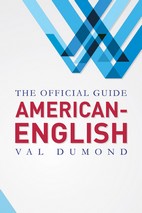
Here is the only book that offers the Official Guide to understanding the unique American-English language. No longer will you need to seek hard and fast rules. Instead, take you can take control of your writing by choosing your preferences from professional guidelines.
Use this practical approach to American-English grammar to create wonderful words, satisfying sentences, and professional paragraphs. Pick up four ways to improve spelling; the easy use of unbiased language; and learn how to create Your Style Manual. For quick reference, check out Grammar Glitches and the complete index.
Val Dumond shares her know-how of American-English, developed over years of writing, editing books, and teaching writing. Her earlier books include the best-selling Grammar For Grownups, Elements of Nonsexist Language, Just Words, and The Anarchist’s Guide to Grammar.
When was the last time you reviewed your beliefs about writing? Took a look at the “rules” with all their exceptions? Tried to discover your own writing style? Probably never! We all sopped up grammar rules in school as if they were manna handed down from on high. And now, as grownups, you see more clearly that those were just “ideas of rules” that you were made to learn, nothing cast in stone or made official.
At last, comes an official guide to American English — as unique as the country that uses it. No hard-and-fast rules to learn, since you are dealing with a language comprised of all the other languages. American English is like no other for the simple reason it lacks a set of rules we can all agree on. So why try!
What makes this book official is the use of guidelines — not rules — on which writers can make your own decisions, learn your own options and choose the ones that best fit your style of writing. And that doesn’t include the styles set by creators of corporate style manuals that reflect only how employees of that corporation are to write.
American English reviews the parts of speech without burdening you with learning any of the names given them over time. It’s the way those words function that is more important. You’ll also review the strange curly cues, dots, and lines that form punctuation — to provide readers with the sound of your voice. And finally, you’ll find guidelines to put it all together, including help in learning ways to improve word usage, sentence structure, paragraph patterns, spelling, the use of numbers, avoiding biased language (PC means “polite and courteous” here). You’ll find a succinct list of Grammar Glitches and a full index to guide your special-needs search.
What you take away is a wider view of this marvelous language called American English, not to be confused with British-, Canadian-, or Australian-English. And you’ll learn to create your own Style Manual, especially to serve your writing needs.
Excerpt
Writing isn’t all that hard. Everyone is doing it these days. Everyone has their own book, from world leaders to Mr. Jingles the dog. And I’ll bet you have one in the works as well.
But I’m not writing for “everyone”; I’m writing for you: the writer struggling to find your writing style — the right words — and put them in the right sequence, transmit to readers the pictures you see in your head, and write your pictures clearly.
For more years than I prefer to count, I’ve taught “grammar” and writing, and I’ve grumbled about the common language problems that writers encounter. I even wrote a couple of grammar books to enlighten writers and educate those greeting American-English for the first time.
. . . .
Sure, you know about writing from what you learned in school. Remember how you learned all about nouns and pronouns and the like? That is not “writing”. Writing is about learning the tools of your trade, language — and language has changed. Books are written and published with no punctuation or no capital letters. Texting has added an entirely new language.
Additionally, if you try to look up the “right” way to construct a sentence or the “right” place to add a comma, you’ll find conflicting advice. I hear you wailing, Where oh where is that one rule book that answers all my questions?
You have found it. Only it’s not a “rule” book — it’s a set of guidelines. By picking up this book, you’ve taken the first step to overcome your struggles with writing.
|