Kindle Edition
Amazon
Category:
Health/Wellness
ISBN-10: 0000000000
Type: Non-Fiction
Price: $0.99 (eBook)
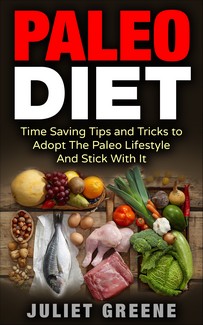
Paleo Diet - Time Saving Tips and Tricks To Adopt The Paleo Lifestyle And Stick With It. This is a short book packed with valuable information and is a perfect book for beginners that want to loose weight and/or lead a healthier lifestyle.
Why postpone losing weight, feeling healthy and increasing energy one more day?
This book has lots of actionable time saving tips and tricks that will help you to adopt the paleo lifestyle and stick with it with ease.
Losing weight would be an effortless process, right? All you need to do is to eat what our Paleolithic ancestors ate and avoid the foods that our bodies (which have similar genetic makeup to that of our paleo ancestors) have not evolved to digest and assimilate and you are good to go, right?
Well, it is as easy as that. But with our fast paced way of life nowadays, it can be tough to eat and exercise like the paleo man; we just never seem to have the time to get everything that needs to be done, leave alone follow a diet that might be ‘inconvenient’ for our modern way of life.
What do you do? How do you ensure that you follow the paleo lifestyle without feeling as if you are being burdened? Well, this book will discuss that. It will start with beginner friendly information before moving on to discuss the specific tips and tricks that will make your adoption of the paleo diet easy and effortless.
Here Is A Preview Of What You'll Learn...
. What Is A Paleo Diet
. Benefits Of A Paleo Diet
. What To Eat & Avoid
. Paleo Health And Fitness Tips
. Paleo Diet And Nutrition Tips
And Much More!
Excerpt
The Paleo diet also called a Paleolithic diet, a stone-age diet, a caveman diet, hunter-gatherer diet, or a primal diet, is a diet that involves mimicking a cave dweller’s diet that primarily consisted of vegetables, fruits, lean meats, nuts, seeds, and seafood.
While adopting the Paleo diet, a good rule of thumb is to do everything in your power to exclude all processed foods or foods resulting from agricultural practices such as refined sugars, grains, and dairy products.
Developed in 1970s by Loren Cordain, a researcher at Colorado State University, the Paleo diet is gaining popularity day-by-day. Cordain believed that by adhering to such nutritional guidelines practiced by the Paleolithic man, you would be aligning your diet with the evolutionary pressures that have defined our current genetics thereby improving your health and well-being.
Paleo In Action: What To Eat & Avoid
A Paleo diet does not have a one “right” way of eating your meals. Many believe our Paleolithic ancestors thrived on any type of diet depending on what they could easily find (largely depending on their environment). Think about it; the Maasai of Africa could definitely not be eating the same foods as the Aboriginal Australians, the Inuit, the Mbuti Pygmies of the Congo, and the San Bushmen of Namibia. Each of these communities thrived on what was available. Therefore, you should think of your great grandparents (8 generations back). What do you think they ate? Whatever they ate, that’s perhaps what you too should eat, as it is what your ancestors ate. This guide gives you a general guideline you can modify to suit your personal preferences.
Foods To Eat
Eat foods such as fish, meat, eggs, vegetables, fruits, herbs, nuts, seeds, healthy oils, and fats. Let’s discuss these in detail:
Meats
The meats you should eat include lamb, turkey, pork, beef, chicken, and so on. This must be grass-fed, organic, or pasture-raised animals or free-range poultry. If you cannot get organic product, always go for the least processed products. Otherwise, eat meats as freely as possible.
Seafood
The Seafood you should eat includes haddock, shrimp, salmon, shellfish, trout, etc. Preferably, get the wild caught seafood.
Eggs
Eggs must also be from free-range poultry.
Vegetables
Eat vegetables such as kale, broccoli, peppers, tomatoes, carrots, etc. These can form part of your daily diet. Just use different varieties.
Your vegetables should be fresh or frozen. Limit your intake of canned vegetables as much as possible. Should you discover that consuming fresh vegetables leads to bloating or gas in your stomach, you may stir fry them in sesame or coconut oil or steam them before consuming them.
Fruits
Eat fruits such as avocadoes, apples, bananas, strawberries, pears, blueberries, oranges, etc. Eat one to three fruits per day; but if you want to lose weight, or have problems with yeast/candida infections, have adrenal fatigue, or extreme inflammatory conditions, limit your fruit consumption to one per day.
Root vegetables
You can also include root tubers such as sweet potatoes, turnips, yams, arrowroots, etc
|