Kindle Edition
Audiobook
Amazon
Category:
Historical Fiction
Publisher: Dancaster Creative
ISBN-10: 1495256359
Type: Fiction
Pages: 554
Copyright: January 16, 2014
ISBN-13: 781495256356
Price: $4.99 (eBook)
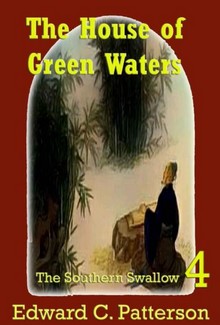
Fourth Book in the Southern Swallow Series finds the Academician Li K'ai-men in exile on Hai-nan Island. China has a new invasion threat. A showdown between ingenuity and technology explodes as the Sung Dynasty tries to preserve itself.
“Exile is a state best experienced to understand. To spend thirteen years in a fly-infested wetland, slogging through jungle streams and unfurled on deserted beaches - to be blown hither and thither by storms and falling palms, is a lesson no book can teach. Still, I, K’u Ko-ling, had lived so long to tell of the fire, which heats the back until noodles could be tossed on it and stew made from the sweat.” Thus begins the sweeping fourth installment of The Southern Swallow Series - a tapestry of historical adventure and intrigue set in 12th Century China. While Li K’ai-men and his companions are in exile on a tropical island in the south, the political world explodes as a mad prince invades the Sung Empire. It’s a time for heroes and riveting warfare, including the first recorded battle in history to deploy poisonous gas as a weapon.
Book IV of the Southern Swallow series – The House of Green Waters, like its predecessors (The Academician, The Nan Tu and Swan Cloud) is told by K'u Ko-ling, servant to the exiled-Grand Tutor, Li K'ai-men. It depicts the harsh life on Hai-nan Island and the progress of family – fathers and sons from Emperor, to officials, to commoners. The roots of modernity stir within the soul of the daily life of Sung China and nowhere greater is it witnessed than in the fabric of this tale.
Excerpt
Chapter One
Time Captives
1
Exile is a state best experienced to understand. To spend thirteen years in a fly-infested wetland, slogging through jungle streams and unfurled on deserted beaches — to be blown hither and thither by storms and falling palms, is a lesson no book can teach. Still, I, K’u Ko-ling, had lived so long to tell of the fire, which heats the back until noodles could be tossed on it and stew made from the sweat. How my master, Li K’ai-men, bore it is amazement, considering he depended upon your servant for almost everything. Yet, we had spent but a fraction of our time on Hai-nan as I begin to tell you about our years there.
We were a tolerable crew — my master’s lover, Fu Lin-t’o, the Protector Hu Min and his adopted son, Mi So, the old (but young) Preserver, K’ang Yu-wei and my master’s youngest son, Li Ch’e-k’ai. Yes, a tolerable crew — a ch’i-t’ang destined to weather the peace times far from civilization. On Hai-nan Island we struggled, although the Emperor had dubbed my master the Superintendent of Wen-ch’ang — an empty title. Superintendent to Bugs and Rats would better describe it. Here our neighbors were Miao tribesmen, who followed their time-honored, barbarian course, and Pu Xin-pu, the sheriff of Hai-k’ou, who treated our ch’i-t’ang with leprous disdain. Still, we bore it.
We lived in a ramshackle remnant of a former Ya-men constructed of rotting bamboo and wattle — the roof in disrepair and the floor hovering over a meandering stream, which seeped through, puddling every room. My master dubbed this palatial ruin The House of Green Waters after a tavern he had known in his youth at Yang-shuo. The name also denoted the green swamp seeping through the floorboards. Green was the water, to that I can attest. As for the place being called a house, it’s still a lingering question.
We did receive other visitors on occasion — Tzu Ma-lin and Go Xin, Yueh Fei’s former lieutenants, who had thrown their lot in with us, taking local women as concubines and embarking on industrious, if not questionable, enterprises near the beach and away from Pu Xin-pu’s official eye. Despite help from these hearties, we had tricks up our sleeves, being ch’i-t’ang and all that. Of course, we needed to be circumspect in our use of magic as it was a violation of our exile and could get us garroted and sliced. Only quiet effects, like kindling fires from wet tinder and the occasional dream walk occurred. My master’s loyalty to Emperor Kao was steadfast and unquestionable. Of course, I questioned it, having known him longer than any of the crew. I believe my master wavered at times. But who would not waver? Ah, but I’m getting ahead of myself. Loyalty’s a dish best served as an afterthought — a eulogized assessment. However, before I tell the tale of Hai-nan and our exile, you must understand the events in the world we had left behind, because while our existence was a solitary bitter cloth unchanging and monotonous, the civilized world — the heart of the Empire was changing.
Peace had descended across the land, managed by a treaty signed by the Sung Emperor and the Jurchen lord of Chin. It wasn’t a happy arrangement, relegating Emperor Kao to disadvantage — styled a poor relative to the barbarian king. The Sung paid an annual tribute — much silver and silk. Still, peace contented the common folk, who prospered, if such a word can be applied to the heads of those otherwise downtrodden. But the world turns and changes. Good fortune doesn’t last forever, especially for a piss ant like your servant, who lived, after all, in a jungle swath on a bug infested island.
Change came upon the death of the Director of the Right — Ch’in Gwei. Change peeked through a chink in the court’s political armor. But death is like that, you know. You spend your life walking in circles, and then the loop is broken and you trip over your last bowl of pork, which leaps into your throat and calls you home to the Yellow Springs. So it was with Ch’in Gwei. Too much pork in too large a bowl. Whether he was destined to serve the Jade Emperor, is a matter for debate.
2
In his bed, Ch’in Gwei barely breathed, cloaked in yards of silk and cushioned for his last moments, propped at a curious angle. From a distance, he might have been viewed as an ancient sage drifting toward slumber. But nearness revealed cracked lips and sallow cheeks, a jaundiced glow wreathing his chin — death’s toxin heralding the end. The fire had gone — the rush of stealthy commandments buttressing Imperial doctrines now wafted in the breeze. The flame burned low; and Ch’in Gwei saw little beyond his lids. The aromas he cherished had vanished. The joy of his favorite Tan-chou wine had flown south with last summer’s swans. He sensed others watching his life ebb. He knew it ebbed, witnessed by long waves of shortened breath, which scarcely rustled the silk bedding.
Suddenly, a form flickered near him. It couldn’t be his wife, because she had departed three years before and slept in the mound awaiting his wiry frame. In any case, even her spirit would refuse to claim him. The looming form must be his son, or so Ch’in Gwei surmised. But the figure was unusually silent, unlike Ch’in Xi’s nattering chirp, the unending catalog of demands and wants and wily plans. Too silent to be Ch’in Xi. Yet, the figure lingered.
Who was it?
“Who?” Ch’in Gwei muttered.
The figure bent. Ch’in Gwei started.
Could it be?
The General’s figure towered over the bed cabinet. Ch’in Gwei trembled, his spindly feet scrabbling to avoid the man.
“Yueh Fei,” he whispered.
The great General’s ghost spun above Ch’in Gwei’s head — red eyes flashing — commanding lips sneering. The spirit had come to take its revenge. At the last hour, hell opened to claim its quarry and the Jade Emperor sent Yueh Fei as emissary and escort to take this minion beyond the pale of the Yellow Springs.
“No,” Ch’in Gwei whispered. “I meant you no harm, Yueh Fei. It was for the empire you died. Your death sealed . . . the peace. I made you more famous than you could have ever been. Consider this. Consider this as you devour my ch’i.”
The form came closer and, as it did, it clarified.
“Be at peace, Ch’in Gwei.”
“Your Majesty,” Ch’in Gwei stammered, relieved and enlivened. He sat up. “Your Majesty.”
“Be still,” Emperor Kao said. “You’ve come to the end of your days as all men do — as I shall also. Bear no pain or shame in this passing.”
Ch’in Gwei relaxed, his jaw trembling slightly before reaching for the Emperor’s crimson vestments. He pulled them to his lips.
“You have served me well, Ch’in Gwei,” Kao said. “You had vision.”
“It is not I, Your Majesty. It is you who had vision. I am but a poor servant fulfilling your commandments.”
Kao touched his hand to the old man’s forehead. He probably meant to agree, but knew that would have taken responsibility’s weight upon his own head. He turned away. Ch’in Gwei heard him ask:
“Are there no other prospects?”
A voice muttered indistinctly beyond Ch’in Gwei’s view, but he knew it to be his wife’s cousin, Wang Min-ch’in, a healer and purveyor of herbal remedies. Ch’in Gwei heard not nor cared for the reply. His bones gave answer. When the Emperor turned toward him again, Ch’in thought he saw Yueh Fei — a brief intercession — a spectral delusion, which he couldn’t avoid. Beyond the bed and before the grave, Yueh Fei’s ghost hovered to restore honor.
“Your Majesty,” Ch’in Gwei whimpered.
“Yes, Director of the Right.”
“May I recommend my son Ch’in Xi for your consideration?”
“You may,” the Emperor said, giving Ch’in Xi a distant glance. “You must not let these matters worry your head, my friend. You must be ready for your next position at the Jade Emperor’s court.”
“But my son is worthy.”
“He shall retire to exercise his devotion to you,” Kao replied. “After that . . . we shall see.”
Ch’in Gwei had his answer. His legacy would remain, but his family would not inherit the power. He sighed, but was too weary to fret. He had done his best for his family. They had been regrettably untidy in their business — too much presumption, drawing periodic denouncements from the censorate. Without his firm hand on the wheel of state, his family could expect no more than a comfortable life in retirement. He sighed again.
“Do not forget your servant, Your Majesty.”
“How can I?” Kao said, leaning over and imparting a farewell kiss — a rare seal from the Imperial lips.
“Ah,” Ch’in Gwei sighed. He shrugged his weary shoulders and burbled feebly, before the world shuffled away. “Yueh Fei,” he croaked. “Yueh Fei, I am ready.”
His arms slumped. His eyes ceased to flicker. Ch’in Gwei was dead and, with him, his tyranny.
3
Empress Wu sat vigilantly in her audience hall, The Pavilion of Radiant Tranquility. She guessed sadness stalked the land, but hoped celebration also stood in the margins, daring all promises for thanksgiving. Her son was coming — returning home from an inspection tour of the northern borderlands, not so north now or so far, marked by the Huai-ho River. Prince Wei had sent word that he had curtailed his business. His mother did not guess why. The wind was shifting. Her son, always politic and taught to be so, first by his tutor Li K’ai-men, and then by her own instruction in the art of the courtly life, returned home on an excuse. His wife, Princess Tuan, was with child again and complained of difficulties. This was a ruse, Tuan being above her childbearing days. But when a woman sent such a call, a husband responded. Purpose was never questioned. Not by a mother, a father or an Emperor. Least of all, by an Emperor.
“He will find me well,” Princess Tuan said as she sat fanning herself beside her mother-in-law. “He shall not be pleased.”
“It was necessary,” Wu replied, curtly, but not unkindly. She looked to her chief handmaiden, Lady Li, called Mei Lin and wife to the former Custodian of the Yellow Door, Li K’ai-men, now in exile for thirteen years in the deep south on Hai-nan Island. Mei Lin appeared ashen. “Lady Li?”
“Yes, Your Majesty.”
“You do not improve? Have you taken the spice wine?”
“I have tried to drink it, Your Majesty. It does not sit well.”
“I commanded that fat servant of yours to persist until you drank every drop.”
Mei Lin bowed. The other ladies remained stiff on their chairs, seven queens and consorts summoned to greet Prince Wei. They gazed sternly at Mei Lin as if to be ill was a fault they would never adopt. At any rate, they would never eschew a prescribed remedy from the Mother of the Nation.
“Ch’ing Ch’ing has been persistent, Your Majesty, but she cannot swallow the wine for me.”
“No,” Wu replied. “Indeed, not. Although she can swallow everything else.” The Empress nodded at Lady Li. “Come to me, child.”
Mei Lin crept closer, dutifully. She was by no means a child. Indeed she was a year younger than Her Majesty, but the Empress was matronly and Mei Lin’s mother was dead for many years. As she approached, she coughed, suppressing the worst with her robe sleeves.
“My child,” Wu said. “Do not be distressed. It is only a summer cold.”
“Such a cold took my mother,” Princess Tuan muttered.
“Nonsense.”
“It is true.”
“I doubt it not, daughter. But surely her summer cold was a symptom masking a deeper cause. I am sure of it.” She returned her attention to Mei Lin. “Come, my child.”
Mei Lin came to the foot of the throne, sitting on the bottom step. She stared at the consorts — stiff cats who fanned hot breezes about their brocades and coiffures. For many years these ladies had given their bodies to His Majesty but, with no fault on their part, produced no children. Even the Empress failed, Prince Wei having been adopted from a select pool of descendants of the founding bloodline. Still, many years had muted the subject. His Majesty still found pleasure in a soft army of younger concubines, all willing and hoping to bud and bring forth the fruit to supplant Prince Wei. Hopes were many. Sons, none.
“Perhaps today there shall be hopeful news for you, Lady Li,” Her Majesty said.
“Perhaps,” Mei Lin muttered, her eyes downcast.
“When the wind changes, who knows what blossoms are blown from their stems?”
Mei Lin bowed low. A eunuch entered, standing on the moon gate’s threshold.
“Cha Tu,” the Empress called. “Is it time?”
“Yes, Your Majesty, good of you to recall my name.”
Cha Tu stood aside and three more eunuchs emerged. The ladies stood, except the Empress. Lady Tuan shuffled to the first step as Prince Wei approached, his robes dust laden from travel, his chin sporting two-day’s growth. Despite this, a golden brooch shone from his chest — a flying dragon with two pendulum pearls, unique in all the Empire, an heirloom bestowed on him by the long-gone Dowager Empress Yang Yu-yuan. Rumor had it the dragon pendant possessed magical powers, but Prince Wei had never put it to the test.
The Prince strode center hall, the eunuchs clearing a proper margin between him and the Imperial women. The Prince bowed deeply to the Empress.
“Mother,” he said, crisply.
Princess Tuan bowed to her husband. Then, Empress Wu stood.
“You have come without delay, I see,” she said. “It is for the best, I suppose.”
She beckoned him forward. He approached, looking first to Lady Li, and then to his wife.
“Mother of my children,” he said. “I’ve come at your bidding, but do not see a belly.”
Princess Tuan bowed again.
“Forgive me, my lord. A miscalculation.”
He frowned, but then grinned, an effect not lost as a necessary pretense.
“Although I’d rejoice at another son, I’m glad for the miscalculation as I’ve been away from your bed and would suspect that some eunuch has a teapot spout.”
After another round of bows and muttering from the eunuchs, Prince Wei grinned at his mother. She sat, unfurling her fan.
“These things are unpredictable,” she stated. “I can assure you, our cockless roosters are without combs, but if you care to check, you have my permission to do so.”
“I’ll take you at your word, mother.”
“Stomachs rumble and flood tides are missed, misjudgments on the part of women, who are often left to assess these things beyond husbands. We only ask for comfort when uncertainty is at hand and you, my son, are most responsive.” She looked to Princess Tuan, who nodded, hiding her face behind her fan. “Still, your return is timely and shall be put to good use.”
“So, I suspect,” Prince Wei replied. “News travels slow, but rumors strike like lightning. The thunder has outrun the bolt.”
“So, it has.”
Prince Wei sighed, but then winked at his mother.
“Is he very ill, mother?”
“Very.”
“May Heaven watch over him.”
“And us, as only Heaven can at such times.”
She grinned again. Prince Wei glanced at Lady Li.
“Are you well, wife of my tutor?”
Mei Lin frowned, and then hid her face.
“Just a summer cold,” the Empress said. “It shall pass with proper care. I have insisted on her presence in case . . .”
“In case the power of persuasion prevails,” Prince Wei concluded. He came closer to Mei Lin. “It’s my earnest desire to return your husband from exile, lady. But these things can be difficult to manage if the world’s against it. His Majesty carries his pride like a warrior his sword.”
“As it should be,” Empress Wu snapped, giving her son a deterring glance. “But nothing is considered until . . .”
A gong was heard in the distance. All heads turned toward it. The gong reverberated and sounded again, followed by a steady drumbeat and a fart horn.
“Death is the usher,” the Empress said. “The Director of the Right has passed to his ancestors, may Heaven grant him peace.”
Prince Wei appeared to add his own comment, but restrained his thoughts behind bit lips. He nodded to his mother.
“Cha Tu,” the Empress said.
“Yes, Your Majesty, good of you to recall my name.”
“We shall visit with His Majesty. Summon my chair.” She turned to the statuary of court ladies. “Sisters, you may join us.” She then reached for Mei Lin. “My child, you must return to The Pavilion of the Gentle Zephyrs. Rest and be better. I will send for you if the winds have shifted in your favor.”
Mei Lin bowed. The Empress stood, and then looked to her son.
“You may follow on foot or by chair.” She leaned forward. “Your father does not expect you, although he has been told of Princess Tuan’s condition. When it comes to these matters, I do not press him. It is best. But when he realizes you have returned, he may judge it as improper. Be circumspect. Bide your tongue. Wait for an invitation before engaging him.”
“Not even a greeting?”
“His mind will be wild and any such protocol will unsettle him.”
“If I didn’t know better, mother, I’d say you mean to play on his vulnerabilities.”
“Every man needs the advice of his wife. You would not be here but for Princess Tuan.”
Prince Wei blinked, but acquiesced.
“I’ll keep my silence until father beckons me to do otherwise.”
The Empress, suddenly surrounded by eunuchs, grinned. They escorted her through the moon gate to an awaiting chair. In her wake, the consorts preened, their own servants scurrying for chairs. Prince Wei kissed Princess Tuan’s hands, and then touched Mei Lin’s cheek.
“Do not hope for much, wife of my tutor. We shall try.”
She bowed. He turned, and then followed the parade of chairs — on foot.
4
The Emperor Kao had much on his mind as his palanquin carried him along Lin-an’s Imperial Way. His preoccupation with Ch’in Gwei’s death was such he scarcely heard his retinue hiss the street crowds — the signal for them to turn backs and avert eyes. Kao had lost sense of time and space, ignoring his porters’ missed steps upon entering the Imperial City as they wended their way toward The Hall of Harmonious Peace. There the Emperor anticipated a bureaucratic throng assembled to attend his commandments — adjustments in the wake of the Director of the Right’s demise.
The Emperor needed to choose a new Director of the Right. Or would he? It could wait on time and his bidding. Although Ch’in Gwei’s policies suited the Imperial prerogative and favored the peace, the methods over the last thirteen years had been onerous. The Emperor was responsible for acts both kind and unkind in accordance with the classical teachings of the sage, K’ung Fu-tze. Every act was cloaked in this ancient bastion of justification. Ch’in Gwei had promoted the old religion’s latest interpretation, peppering the government with an army of ingratiating men, all quoting K’ung Fu-tze by rote — a quote for every occasion — argument-stopping quotes — the weight of three thousand years. The heart of old Lord Fo-tze was fading, his golden shrines confiscated by that wily fox, the Director of the Right. Taoist temples had been stripped of relics and silver ingots in the name of conservative zeal. These acts were not popular with the common folk, but most folk could shift from rite to rite — from old practices to new ones easily enough. What lingered in their minds most was the execution of General Yueh Fei. However hard Emperor Kao tried to distance himself from that act, it still stank in the Emperor’s bonnet.
“Nan Ya,” Kao muttered, shaking his head, and then closed his eyes.
He missed his tutor and friend, although it was Li K’ai-men who told him that Emperors had no luxury in friendship. Still, Kao’s world, bereft of Nan Ya and his ch’i-t’ang, lacked its former luster. Yet, the Custodian of the Yellow Door had betrayed him. Yueh Fei’s ghost lingered in every corner of the empire with Nan Ya’s poetic turn of phrase. Effigies of the fallen general were erected in secret gardens and woodland hides, folk declaring Yueh Fei a war god, despite the threat of punishment — a threat Ch’in Gwei broadcast before illness slaked his tongue.
“Indeed, I’ve no friends,” Kao stammered.
The palanquin shuddered, and then halted. The Emperor swept his hand through the curtains, the sunlight forcing him to squint. A prostrate eunuch peered up — Chou Chou, the Imperial favorite.
“Chou Chou, why have we stopped?”
“Forgive me, Your Majesty, good of you to recall my name. We have arrived, Your Majesty.”
Kao squinted, perceiving a crowd of officials flat to the cobblestones, their noses to the ground.
“But we’re not there yet,” he growled. “I’m not holding court in the sunlight.”
“Yes, Your Majesty, but . . .”
Kao noticed something else. Another procession. The Empress approached, slowing as her chair neared his. He grinned. Indeed, he did have one friend. He returned to the darkness of the sedan and waited. Soon a voice came.
“Your Majesty,” the Empress said from within her sacred enclosure. “Pardon my interference, but I heard the drum and horns and feared . . .”
“Your fears are well founded, my lady. The great man has passed to the Yellow Springs.”
Silence. Then his palanquin moved again.
“Meet with me in the Silver Pearl Pavilion,” he said.
“If you command it,” the Empress replied.
“I do.”
“Your ladies are here,” she added.
“Let them come.”
“And your son.”
Kao swept the curtain aside. His head darted out so fast the eunuchs had scant time to turn toward the officials and hiss. Kao grinned. Indeed, his son was there — a tall man in travel clothing, and not decked out for fawning or making courtly appeals. This served well, so Kao settled into the palanquin.
“It’s good,” he said, and the chair continued on its course.
The Silver Pearl Pavilion served as a private audience hall, having a fine view overlooking Lin-an and, in the summer heat, fostered breezes from the river. Kao favored it for work and, since he plied always to work, the place was fresh with his fragrance. He wore no ceremonial robes here nor did he have need for a dozen eunuchs apologizing for their every word. This was neutral ground for courtiers and court ladies and for his only son, ignoring the Forbidden City’s stricture on the mingling of the sexes.
When Kao disembarked, he immediately headed for the gardens behind the pavilion, knowing his wife and son would join him there. The gardens were laden with nectar aroma and inclined toward his favorite retreat — The Plum Pavilion, a palace at the hill’s apex — the pinnacle of the city. Kao came here to dream, when dreams came, and vowed to die here. His first, and only, blood son — a child drowned during the Ming-shou Rebellion, was honored in a nearby shrine overlooking a glistening pool wreathed with wisteria. Whenever Kao marched up the hill to the Plum Pavilion, melancholy stood by his shoulder — but also the comfort that he had been a father once and had fulfilled his filial duty.
The Emperor ensconced himself on a bench overlooking the city — a city he found as a mud hole called Hang-chou and now raised to the grandest city in the Empire. It glistened like a million pearls beneath the sun. It would be his legacy — Lin-an and the enduring peace — prosperity’s advent. But Yueh Fei’s ghost promised to be an enduring legacy. He sighed at the thought.
“My lord and husband,” came the silvery tones of the Empress Wu.
She knelt.
“Up, my love. You know I detest groveling.”
“I know. But Heaven watches. Heaven judges.”
“Heaven judges, true,” he replied. “But I believe a particular general stands in judgment on us more surely than Heaven ever could do it.”
“I will not dispute you on this day.”
“You’ll never dispute it,” he said, and then gazed across to see Prince Wei. When the Emperor stood, the Prince knelt. “Up. Up with you, sir. You stir from your northern circuit. I suppose you will have a say on the current events.”
“I came at Princess Tuan’s bidding, my father,” Wei said, unconvincingly. “She sent word of lady complaints and . . .”
“Nonsense,” Kao snapped. “You know better than to speak such things before the barren and the shallow. We must be thankful for the choices we make in posterity’s shadow.” Prince Wei bowed. “I assume you found our borders secure and the Chin lord’s minions happy within them.”
“Never have I seen so many soldiers, father.”
Kao frowned.
“Is my august relative on his northern seat so bent against us?”
“No, my father. The soldiers are ours — a sea of helmets, ready to defend, if it were not for the civil lords who restrain them.”
“It’s best not to criticize Ch’in Gwei while his ch’i still drifts to Heaven. It will speak ill of us to the Jade Emperor. Besides, I believe we should criticize policy, not a spirited minion of the state.”
Prince Wei bowed again, this time holding his position.
“I would never criticize you, sire.”
“I know you speak true, son.” Kao raised his son, and then escorted Empress Wu to the bench. He turned to the array of consorts poised at The Silver Pearl’s doorway. They curtsied in unison, nodding to each other in turn. Kao grinned. “Chou Chou.”
“Yes, Your Majesty. Thank you for . . .”
“Have my consorts served our finest tea . . . and offer them those pastries you were reserving for yourself and your cronies.”
“Yes, Your Majesty . . .”
“Yes, yes. Be about it.”
Chou Chou scurried away, his cronies joining him, heading to the Imperial pantry, no doubt. The ladies settled on chairs brought for their comfort. Kao walked to the garden’s edge, assessing Lin-an’s beauty. A gentle mist passed. Perhaps it was Ch’in Gwei’s last temper.
Kao turned to his son, who stood as fixed as a birdbath.
“I suppose it’s time for change,” Kao said, striding toward his son. “What would you propose?”
“I would not presume, my father.”
“I didn’t ask you to presume. I commanded you to speak your mind. You’re above the heads of the censors. They correct me and risk their lives. You may speak when asked and, if I disagree, I’ll not curtail your allowance or your silk monopoly. I’ll just dismiss your words as childish prattle.”
“That would be worse, father.”
Kao grinned.
“Come now. Speak.”
Prince Wei loosened his stance and approached his liege-lord. He glanced at the Empress, who looked away as if to say he was on his own.
“I agree with you, father,” he began. “It’s a time for change. Ch’in Gwei followed his course for many years and, although no one will deny the benefits of peace, the price to those who opposed the Director of the Right has been onerous.”
“Men are men,” Kao snapped. “They rise to office with the knowledge they can be swept from it by a single wave of my hand.”
“Or by a memorial from a censorate under the firm control of the Director of the Right.”
“And you fault me for this?”
“No, sire. I do not. Nor do I say you don’t know the case. I’m saying it has become unpopular with many and Ch’in Gwei’s passing might be better commemorated with a sign from the Son of Heaven that the virtues of those exiled are extolled once again.”
Kao trembled at this last remark. It was unkind to say he didn’t value virtuous men, but it is true many had been swept away and even died in exile. It weighed heavy on the Imperial conscience. To be accosted by his son and heir on this score, although he had encouraged it, dampened the effects of the Plum Pavilion. Kao’s frown deepened.
“This accusation doesn’t raise you in my estimation.”
“Nonetheless, father, I believe it should be considered when you ponder change.”
Kao grinned — an ironic smirk, like a man about to parry a blow.
“My thoughts have settled on the Wang family and on Ch’in Xi. Is this change enough?”
Prince Wei bowed in defeat.
“I will remain silent.”
“No, you will not, sir,” Kao muttered. “You’ll tell me what you think. Ch’in Gwei’s family has served me well. His wife and her family have provided me with ambassadors to the Chin court and with physicians. And Ch’in Xi, for all his shortcomings, is a scholar of uncompromising skill.”
“Craft, you mean.”
“Craft? Skill? He serves me well.”
“As Grand Historian, Ch’in Xi has served many well.”
The Empress Wu stood.
“My son, a rumor and no more. To suggest the Imperial archives and the Daily Records have been compromised is something I shall not hear.”
Prince Wei bowed again, this time to his mother.
“A rumor,” he said. “But a rumor is dangerous. Lies have long fingers.”
The Empress sat with a thud. The Emperor snorted, but did not pursue this topic. That Ch’in Xi may have tampered with the sacred archives to place his father in a better light in history’s mirror would be a capital offense if true. But Ch’in Gwei may have tampered with many entries leveraging his son’s official position. Kao knew it, but also had enough sense to know his chief minister would have taken care of his master’s record as well. Kao eased his stance.
“I suppose you’d advise a more noncanonical candidate for the Director of the Right position.”
“There are many worthy men.”
“All opponents of Ch’in Gwei.”
“Opponents no more, because Ch’in Gwei is dead.”
“And I suppose you would suggest I make a formal Imperial sign to mark this change?”
“I would.”
“Mind you, I will not change the Reign Period. That would presage too much and . . . and I would need to empty the jails and forgive the exiles.”
Prince Wei looked to his mother.
“Such an act would dishonor you, my lord,” she said, unequivocally.
“I’m glad someone agrees with me. Change I can make. Change I can endure, but I will not dishonor this bloodline.”
Kao gazed from mother to son in silence, expecting an argument from his son. But when the Empress turned her robes toward him, he was relieved. Her voice would intercede. She was his mainstay, her heart central to the household. The people bathed in her brilliance. She always found compromise.
“Although bringing the exiles home, Your Majesty, would be provocative,” she began, “perhaps exonerating those exiles who have died in your service would suffice. They have paid for their wickedness, but also served you well in their own way; in their own time.”
“That’s reasonable,” Kao said. “I could restore them to honor. But, mind you, I will not include Yueh Fei.”
“Of course not,” Wu said, smiling, and then cocked her head. “He was never an exile, but was duly tried and punished. But you might consider lifting the interdict on the children of those still in exile from holding office. There is much talent to tap, while still holding the fathers to task for presumption.”
“That’s a thought,” Kao mused. “It serves no purpose to deny the Empire a wealth of talent. There’ll be exceptions, of course, but I could establish a review bureau.” He looked to his son. “I charge you with this. Gather worthies to this cause — a Bureau of Review. Find me the most talented scholars among the exiles’ children. Have them posted immediately according to their examination results.”
“It shall be done, father.”
Kao spread his arms wide as if to embrace family and Heaven.
“You see, I’m not unreasonable. I do listen to the people and to my son and heir.” He winked at the Empress Wu. “But further compromise would stir the spirits. I’ve enough ghosts stirred up already.”
Kao glanced toward the city roofs — the sun’s glint catching an errant tear. How he would have liked to bring back his friend from Hai-nan Island. But his friend had the power to deal with exile on his own terms. No bond, except loyalty, really kept Nan Ya on Hai-nan Island. For thirteen years, that had been surety enough.
5
So the Emperor commanded pigeons and postern runners sent to the five points of the South Pointing Needle carrying his edict. He gave the Wang family and Ch’in Xi permission to retire from office for the three-year mourning period out of respect for the illustrious Ch’in Gwei. In fact, he told them to relinquish all thoughts of ever returning to court.
The word went out — change was in the wind, and thus the runners spread as far south as Hai-nan with the news. The birds arrived even at the doors of the Gui-lin Ya-men and at the Li ancestral home. Change had been announced, not that I ever believed it. But I lived in an ever-changing world, so how could I tell?
Chapter Two
The Exile’s Son
1
My master once owned a great estate in Gui-lin, but let it pass as a dowry for his daughter and thus to the Huang family. Surely, you know this, being who you are. Still, nothing is simple in life when it comes to land and inheritance. There’s always a hand out for a patch of soil or a bowl of rice. There’s always someone insisting on what’s not theirs or giving it to someone as if it had been theirs to give. It was in this manner Nan Ya’s grandfather, who was really his uncle, dispatched the land away from his bloodline, to my master’s, and that is how the Li family shifted the estate to the wealthy Huang family — a bit of flash and chicanery, if you ask me. Because Li Fo-shan didn’t want his four daughters and their husbands to divide the estate, he persuaded his brother, the fisherman Li Xien to live on the land and be its foreman. In exchange, he adopted his brother as his son and, through Li Xien’s son, my master became wealthy and famous. His uncle was also his grandfather and the ancestral lands passed to Li Xien.
When Li Xien went to the Yellow Springs, Li Fo-shan’s four daughters descended onto the estate like geese on barley, settling their asses improperly in the big house, purloining every advantage they could cosset. Since the Emperor had forbidden my master the usual three years retirement to mourn for Li Xien, the rituals were performed by proxy. Hu Min, the Protector, traveled to Gui-lin and drove Fo-shan’s daughters off the estate, securing it as a dowry for Nan Ya’s daughter, Li Li-fa. Although Hu Min, great ox that he was, had little skill at woman’s work, he arranged a marriage between Li Li-fa and Huang Min-ch’ang. From that day, the ancestral home belonged to the Huang family.
When we were exiled to Hai-nan, your mother was sent south to marry Huang Min-ch’ang. It was a lonely time for her, because your grandmother, Mei Lin, remained in service to the Empress Wu in the Forbidden City at Lin-an. Since the children of exiles were prohibited from holding office, my master’s eldest son, Li Pao-xien, completed his examinations, but, by necessity, followed his sister to Gui-lin, where he was employed in various scholarly but inconsequential positions. He settled in a house at a far point on the Huang estate, taking a wife to console him. Still, Pao-xien festered. Although the world abandoned us to our fate on Hai-nan Island, you would think Li Pao-xien fared worse for his treatment, if you were to hear him tell it. Pao-xien was always a proud child — clever and inquisitive. He would have made a fine official, much like his father, only his sense of importance was never curbed — an ambitious air. Could he be blamed? He had been tossed to the winds in stressful times. His parents and the ch’i-t’ang had their own cares. What was one meandering adolescent to the eventful world?
Years passed as years do. Li Pao-xien grew older, away from mother and father and younger brother. Away from the pulse of the state and the heart of scholarly accomplishments. He withered on the strip of soil relegated to him by a younger sister, who was compelled to follow her husband’s wishes. It’s no wonder things turned out the way they did.
2
Rain in Gui-lin persisted during the late winter, drenching the souls of folk and buffalo alike. The River Li ran high and the hundred rivulets, which coursed through the plum pudding hills, saturated soulful marrow and good earth. The harvest would be fine, but a scholar’s spirit would turn to wind sighs and sky tears. Clinging mists dashed high hopes, and one season would follow another — one crop, one tortured scholar and one pitiful day at a time.
Li Pao-xien pulled his sodden robes closed as he trundled through the mud banks of his brother-in-law’s fields, returning from a numbing day of instructing unappreciative students in the art of writing. Like the wormholes in his sleeves, these sons of rich merchants were a gaping abyss in his heart. He walked unsteady, three cups of rice wine having visited his lips and gullet when he passed the local teahouse — The House of Green Waters, an ancient establishment, which had supplied the Li family for several generations. Pao-xien could hold his liquor, but the rain encouraged piss, so he slogged to the roadside grasses, hoisted his robes and let fly. He heard laughter nearby. He glanced toward a shrine to Guan-yin — a small temple as disrepaired as his clothing.
“Laugh at me, Guan-yin,” he mumbled to the goddess, but then realized the laughter was male and old and increasing. “Who dares laugh at the son of Li K’ai-men?”
A head poked out from the temple door.
“I laugh at a man who doesn’t know enough to get in out of the rain,” said an old peasant, a man of advanced years and few teeth. “Come join Old Kua under the goddess’ skirts.”
Pao-xien smoothed his clothes, and then splashed through the puddles to the shrine. He gazed down at the old man, who had a bottle of rice wine and a bag of cowcumbers plowed loosely under the goddess’s crooked base.
“You make a sight,” Pao-xien said.
“You make a sight too, young sir. Your father would have doubled over at such a sight.”
“Don’t speak to me of my father,” Pao-xien said, sitting roughly beside Old Kua. “He’s not here.”
“I know this. He’s away in the south. My son shares his shame.”
“Shame’s shared by all who have his blood and service, Old Kua. Just look at me.”
“I know.” Old Kua scanned him again. “I said, what a sight.”
“It shouldn’t be so.” Pao-xien spat. “I’m a scholar. I passed the examination with honors — second in my rank. Yet here I’m sitting in the rain in a broken temple beside a broken cowcumber farmer — in secondhand threadbare robes.” He lifted his leg and wiggled his footwear. “And my toes are about to poke through my sandals.”
Old Kua lifted his leg, wiggling his toes, attached to a calloused bare foot.
“I haven’t seen sandals since your father left Gui-lin.”
“What need have you for sandals?” Pao-xien carped. “You’re a cowcumber farmer.”
“You’re right in that, young sir. Old K’u K’ai-san would be best naked in this world, wallowing behind my buffalo to grow the biggest cowcumbers this land has ever belched forth. But how should I know the quality of your sandals or the heartbreak of the holes in your robe. I have lice in my drawers that leap through the windows in my loin cloth.”
Pao-xien pushed up, standing, still unsteady, but enough to arrange his robe sash and brush the soil from the fading glory, a robe once a fine robe worn by his brother-in-law.
“If you’re going to piss again,” Old Kua complained, “please go outside. I know and even welcome the smell, but it’s not polite before our lady.” He pointed to the crooked statue of Guan-yin. “She wouldn’t speak kindly to the Jade Emperor for you or yours.”
Pao-xien waved his hands dismissively. Old Kua offered him the bottle, but the tattered scholar just turned and plodded back to the sodden road.
3
Li Pao-xien lived at a far corner of his brother-in-law’s estate. While most folk in Gui-lin and the surrounding villages dwelt in bamboo huts or in hill caves, Pao-xien’s house was built of black bricks that winked at the world through many chinks, but many years away from collapse. Still, it was a poor place compared with the Huang family’s grand pavilions and halls, where Pao-xien’s little sister lived. But what more could an unplaced scholar expect? He could afford no other dwelling without supplicating at his brother-in-law’s door or at his sister’s feet. Such prospects would destroy him, because, although he couldn’t afford to be proud, he was Li K’ai-men’s eldest son. His father had been the Grand Tutor and the Custodian of the Yellow Door. His sire was Han Lin’s select — a leader of the ch’i-t’ang and the keeper of the Jade Owl. His father had warrants, even in his distressed condition on Hai-nan Island. What did the eldest son have? A black brick hovel at the edge of his little sister’s husband’s estate — an estate that should have come to him, but for the indictment.
Li Pao-xien could suppose fortune spared him the worst, if he could suppose as much. He was honored by his position — a second-rank degree holder and, if the interdict didn’t exist, he would be a superintendent, if not a governor, by now. His brother-in-law, Huang Min-ch’ang graciously allowed him this house and employment — record keeping and tutoring the Huang children in their letters and the classics. For this Pao-xien received a salary, but he would take no more. If he had, his robe would be new and his sandals would not sponge rainwater. He would have a cart and a servant, if not from the Huang, from the Xiao family, his wife a good match, with a generous dowry. That dowry, spent long ago, his wife, Fei-so managed as best she could with the little he provided.
As Li Pao-xien approached the house, he paused, gazing across the fields — lush fields, rice paddies and a fine crop of emerald scallions — pea vines twinkling in the rain. Fine fields, but not his fields, but worked by industrious folk, tenants of Huang Min-ch’ang. Instead, Pao-xien had a small garden patch, which fared poorly as he hadn’t farming skills and, Fei-so, town bred, never had considered a friendly hoe. Occasionally, a neighbor would till the patch as payment for a letter written or one read, but otherwise it remained a scrawny legacy.
Pao-xien heard crying — a child — his daughter, Li-bei. Heaven didn’t even give him a son. Just another mouth to feed and a dowry to be paid. Pao-xien shook his head, the raindrops loosed from his unkempt raven locks. As he snapped up his brush bag and pushed through the garden gate, he heard Fei-so admonishing the child to silence. His wife must have heard his approach, because she stirred. He hoped she found something to cook. Her cooking was bad, but she could manage simple things — plain rice, soaked greens, seared fish if luck brought one to the table. Today no smells came except the sharp scallion aroma from the surrounding fields. Pao-xien shook his hands as he entered.
“Husband,” Fei-so said, plaintively. “You have been long about today’s work. Is there more work, may Guan-yin keep us?”
“No other,” Pao-xien said. “If Guan-yin wants to bless us, she should come into my kitchen and cook me a meal instead of standing like a stick in her temple keeping Old Kua and his rice wine company.”
Fei-so nodded, frowned and then turned away. Li-bei began to cry again.
“I’m not in a mood for it,” Pao-xien snapped, sitting at the table looking for the invisible food.
“She is hungry,” Fei-so replied. “I would weep too, if I were not a Xiao woman.”
“You’re a Li woman now. Weep as you will.”
“Being a Li woman has not been a blessing, husband.”
Pao-xien slammed his hand on the table, scaring his daughter.
“If your dowry had been larger and your belly filled with a son, perhaps Heaven would have smiled better on me.”
Fei-so sniffled, grasping the child to her skirts.
“I have rice to boil,” she said. “I managed some greens from Guan Ch’i-lin’s old woman.”
“What did she want?”
“Nothing. They have eyes, my lord. They have ears to hear Li-bei’s weeping.”
“They’ve brats of their own. What do they care for mine? The rice I will have, but the greens can be tossed to the rain.”
“I and the child shall eat them,” Fei-so replied. “If you are too proud to enjoy the neighbor’s concern, you can starve, although from your breath, I think you have had a visit to the Green Waters.”
“I didn’t drink enough,” Pao-xien said. “If I had another student, I’d have staggered over the threshold and went to bed straight away. I wouldn’t need to listen to wailing and complaints.”
Fei-so stiffened, and then took Li-bei into the next room. Pao-xien closed his eyes, drawing a deep breath. He meant none of these words. They were mean words. He was kind by nature— but nature was not by nature kind, so it took hold of him at times and made him speak without thinking. No scholar of his rank should be unhinged. He could hear weeping from the next room — Fei-so’s quiet weeping. Xiao women didn’t weep — in public that is, but Fei-so now matched the rain in season.
“You must understand,” Pao-xien said quietly as if to assuage his last remarks. “I was destined for greater things. I’m not inclined to charity. I’m not an itinerant monk or a beggar on the road. It’s hard, I know, but my family was once at court. My mother’s still at court. I’m accustomed to better rooms — better clothes and sandals. I was meant to mediate the lives of His Majesty’s subjects, not teach radicals to merchant’s children. I’m destined for better.”
Fei-so stood on the threshold, an empty bowl in her hand. She set it before her husband, and then sat.
“Your bowl is empty, husband,” she said, softly — sympathetically. “I cannot fill it. I am a mere woman, brought to your house in good faith by my father. My cousin might be the Superintendent and sit in his spacious Ya-men, but I cannot fill an empty bowl if you choose to keep it empty. If I could serve you better — if I could give you the son of your dreams, I think you would still have an empty bowl.”
“True,” Pao-xien replied. “A man fills it by his own prowess, wife.”
“But not with pride, my lord. You would starve before it could bring you succor.”
Pao-xien reached across the table and took her hand. He rubbed it gently, and then pressed it into his own.
“I’ll not fill it with charity. I’ll seek another pupil.”
“Perhaps you could ask Huang Min-ch’ang for a few coins, or perhaps a laborer for the garden until you secure more work.”
“You speak of a loan, which I might fail to repay, and then it would be charity, because Min-ch’ang would forgive it before calling the bailiff.”
“Perhaps your mother . . .”
“My mother’s a distant dream,” Pao-xien said. “She’s sacrificed too much in this life, I’ll not press her.”
Li-bei came to her mother’s side. She had stopped weeping, perhaps sensing her parent’s settlement, but she still cloyed, hunger gnawing at her tender belly. Fei-so pressed her close, and then took the bowl.
“The rice will be ready soon.”
“Thank you, wife. You do me a great kindness, and . . . and you may add the greens. If it’s come from you, it’s due me. I needn’t know the kindly source.”
Fei-so and the child drifted into the other room. Pao-xien wished for Old Kua’s bottle. He had holes in his robe sleeves and sandals, but also one squarely through his heart.
4
After the rice was eaten, scant as it was, the greens also being thin and soggy, Pao-xien repaired his brushes. His mind drifted to thoughts of acquiring another student. He already wandered from house to house, swatting flies and unruly heads, pounding the correct brushstrokes into unappreciative noggins. Still, he knew among this crop, a few scholars would rise above the account books and sit for the regional examinations. Perhaps one might go on to the nationals. He derived no comfort that one might succeed where he had failed. He had had several tutors, including his father’s lover Fu Lin-t’o and the Preserver K’ang Yu-wei. He had devoured five more tutors prestigiously, never doubting the outcome. Li Pao-xien would govern like his father had, although his father had been exiled. It had never occurred to Pao-xien that, when the moment came, he would be shunned and cut loose like those who never had applied themselves — the miserable failures. The alien thought was closer now than neighbor Gui Ch’i-lin’s old woman or K’u K’ai-san and his fat cowcumbers.
To bed Pao-xien would go — to that platform contraption they shared instead of a warm cabinet lined with silk. He was too tired to try for a son tonight, but as his head bobbed toward the table with the notion, a knock came to his door. He started, but Fei-so confirmed it.
“Husband, we have visitors.”
“Who can it be? And how do you know there’s more than one?”
“I have good ears.”
It was so. Pao-xien leaped to his feet, steadied himself on his foul sandals and opened the door quickly.
“Gao T’ing-pei?” he stammered, looking past this soaked man into the rain.
Four men were on horseback, and porters stood nearby with a double sedan chair.
“Li Pao-xien,” T’ing-pei said, bowing. “Are you well?”
“As well as you could expect under the circumstances,” Pao-xien replied, wishing he had just said I am well. “Come in.”
“No time, my lord.”
Gao T’ing-pei had been the foreman of the estate for twenty years under Li Fo-shan, and then retained by Huang Min-ch’ang. Gao had conspired with the Protector, Hu Min, when the ch’i-t’ang master had been Nan Ya’s proxy. Together they chased Li Fo-shan’s daughters off the land and helped dismiss their claims. Still, Gao was a servant — one in rich attire, far exceeding Pao-xien’s current suit. His address, my lord, was most appropriate to Pao-xien’s mind.
“Is my sister unwell?” he asked.
“She’s fine, my lord. There’s no issue at hand, except you’re invited to my lord’s table.”
“When?”
“Now. As I said, there’s no time for dalliance.”
Pao-xien was struck dumb. He attended his brother-in-law once a year at a family gathering, but otherwise stayed on the periphery. No such invitation had come previously during these thirteen years. This request was unprecedented, and downright mysterious.
“What have I done?” he asked suspiciously.
“Nothing, my lord. You must come.”
“I must change into better robes.”
“No time. Come as you are.”
Pao-xien looked at his smelly robes — holes and all, and then to Fei-so, who looked a sight worse. The promise of changing into better robes was a lie. There were no better robes, but at least he could patch the sleeve holes and plug his fraying sandals. And as for his wife and his nearly naked daughter, much work was necessary.
“I must protest,” he replied.
“Protest on the way. You’ve an escort.”
At this, Gao T’ing-pei raised a san-tze over Li Pao-xien’s head and nudged him over the threshold. Fei-so, the child in her arms, followed him.
“I don’t understand,” Pao-xien said. “I’ve already dined. I couldn’t touch another bite.”
“You must force yourself, if for politeness only.”
Pao-xien glanced back at his wife and daughter, who, at the mention of a meal, brightened.
“I still protest. A gentleman shouldn’t be subjected to such abrupt treatment.”
“I understand, my lord, but not being a gentleman myself, I can only sympathize with my orders and no more.”
Gao lifted the san-tze higher to accommodate Fei-so and the child. The sedan chair’s door opened, swallowing them into this mysterious invitation.
5
Mysterious, indeed.
|


