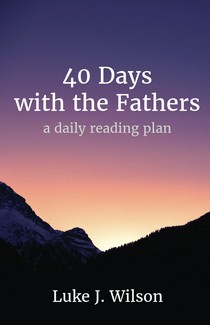
Take a journey through the first 400 years of Church History in only 40 days!
Take a journey through the first 400 years of Church History in only 40 days!
Over the course of this reading plan you will read extracts and commentary on ten different early Church texts from a selection of some of the most influential Church Fathers:
Didache, Diognetus, Polycarp, Ignatius, Justin Martyr, Cyprian, Athanasius, Cyril of Jerusalem, Ambrose of Milan, and Leo the Great.
These people who came before us, those great men of faith, many who suffered persecution and martyrdom to preserve the Church and Christ's mission, bridge the gap between the Bible and the present day; fill the void we sometimes wonder about when we get to the end of reading Acts or the Epistles and think, “what happened next?” or “what happened to the Ephesian church after Paul left?” — well now you can read for yourself and see how God continued to grow His Church!
Excerpt
Why read the Early Church Fathers?
Maybe for some of you reading this, the question might better be phrased as: who are the Church Fathers?
No doubt you will be familiar with some of their names: Augustine, Jerome, Clement, Ignatius, Polycarp, Justin Martyr et al. You may have even read portions or quotes by some of these men. But that still doesn't really explain to you who they are and why you should care, much less actually read any of their works.
My new book deals with a selection of some of the most influential Early Church Fathers, sometimes also referred to as the Apostolic Fathers (if they lived between AD 70-150), or collectively as the Ante Nicene Fathers for all of those in the period of time preceding the Council of Nicea (AD 325). It is these men who wrote doctrine and defences against heresy and helped to continue and shape the Church in its most formative years.
Some of the earlier Christian leaders of the 2nd Century were discipled and taught by the Apostles themselves. Those include Clement of Rome, Ignatius of Antioch and Polycarp of Smyrna. Still others in mid-2nd century were then taught by those who knew the men who were taught by some of the Apostles. One of the more well-known Bishops who was second generation to the Apostles was Irenaeus (best known for his extensive apologetic works, Against Heresies).
From chapter 21 onward in my book, I look at a few writers from beyond this period (around 356) up until AD 449 where we can observe some distinctive changes in thought and practice.
These people who came before us, those great men of faith, many of whom suffered persecution and martyrdom to preserve the Church and Christ's mission, bridge the gap between the Bible and the present day. They fill the void we sometimes wonder about when we get to the end of reading Acts or the Epistles and think, “what happened next?” or “what happened to the Ephesian church after Paul left?”.
So Why Read What They Wrote?
The Bible didn't just drop out of the sky, all leather bound and ready to read for us to pick up today. There was a lengthy process of selecting and preserving the apostles teachings which spanned nearly four centuries, and it was due to the Fathers and their faithfulness to the Scriptures that this was possible. Not only that, but due to their close links to the Apostles — some who were even taught directly by an apostle — we now have valuable resources and insights into aspects, teaching and issues within the very early Church which we can learn from and measure our doctrine and interpretation against.
This isn't to say that everything the Church Fathers said, did or wrote is perfect; or that we should elevate their texts to the level of Scripture, but we can glean much from those who knew and were discipled by the Apostles (or those who knew them second hand). We can read what certain portions of Scripture meant to them, or see how they interpreted things in the years following the Apostles, and can compare that to how we might read those same Scriptures today.
This is a highly valuable resource for us to still have available; to be able to check our beliefs and doctrines against accepted, historical orthodoxy, which was quite literally shaped through blood, sweat and tears.
It's a wonderful thing to be able to look back millennia and know that what we believe and follow as Christians has been faithfully passed on and preserved for all this time. Many doctrines we now take for granted were actually developed and defended during this time; carefully worded and formed to ensure that the truth of God doesn't get lost, diluted or warped for selfish gain.
We owe much to these men of God and can still learn a great deal from them, as they still speak to us today as part of that great cloud of witnesses who have gone before us (Heb 12:1).
***
This has been an excerpt from the introduction to my new book.
Professional Reviews
I would like to thank Luke for bringing such important historical and spiritual works into the 21st century.
This book is an important work, compiling formidable historic documents from some of the most profound church leaders. Though some of the information is not new content, the compilation truly represents an immense and solid foundation that our entire Christian faith is built on.
Luke’s sequential and bite-size reading portions measure out a palatable intake that even new scholars can easily swallow. His insights and textual interconnections are through and invaluable to the reader. In fact, they are likely the silver that makes this book shine. Luke has certainly done his homework in regards to the background and details of both the ancient texts and the people who authored them.
Luke is an accomplished writer with excellent language constructs and idea flow. Though the content could be considered a bit stiff by novices, Luke’s style is anything but boring. He writes decisively, but does not waste words or repeat obvious ideas. Thus, his writing flows from subject to subject, pulling the reader along a steady and clear path. If you are a pastor or church leader, I highly recommend this book for you. It will round out your knowledge and help you become a better teacher.
I would like to thank Luke for bringing such important historical and spiritual works into the 21st century.
An Exploration beyond the Bible
If you ever wondered if there was more to the Bible, or felt as if something was missing from The Greatest Story Ever Told, then this daily guide is your hidden treasure! I never realized there were teachings and scribes that as the author put it,"didn't make the cut." He explains how the Bible didn't just "fall out of the sky" but took careful consideration of doctrines to become scripture.
In 40 short chapters, 10-20 minutes a day, we learn there are surprisingly more than just TEN commandments, more thought on the Christian way to live as illustrated here in the early ideologies of church Fathers (way before Paul's theories and instructions!)
Starting off with the Didache, which he explains translates into " The teachings of the twelve apostles", these and other lessons shed light on further topics and precisely details more current sins in our world today.
Another chapter better explains why Judaism never accepted Jesus as the Messiah, which when I read it, became an "aha" moment, since I never knew why.
Originally starting off as a blog, Luke Wilson documented a church teaching a day, meant for Lent. He breaks these topics down into digestible bites. At first thought, these scholarly teachings might seem as ancient and heavy as huge dusty bound volumes forgotten in a library, but Wilson's writing style is contemporary and makes these epiphanies a breeze to comprehend. I recommend this book to anyone seeking more knowledge and clarity on Christianity.
Finally! Understand and learn from the New Testament Books of Matthew, Mark,Luke, and John.
Try James first for free
Now there is a Bible translation that is easy to read, understand, and study.
This translation is uniqu
Finally! Understand and learn from the New Testament Books of Galatians, Ephesians, Philippians, Colossians, 1 Thessalonians, 2 Thessalonians, 1 Timothy, 2 Timothy, Titus, Philemon.
Try James first for free
Now there is a Bible tr