Kindle Edition
Amazon
Category:
Fantasy
Publisher: Dancaster Creative
ISBN-10: 1654193100
Type: Fiction
Pages: 132
Copyright: December 28, 2019
ISBN-13: 9781654193102
Price: $2.99 (eBook)
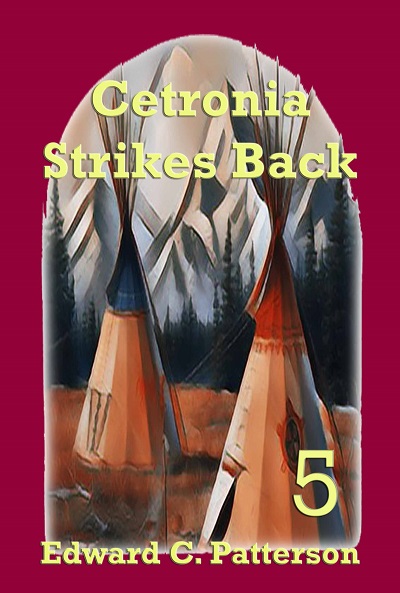
Cetronia Strikes Back is the fifth book in the fifteen book series, The Adventures of Lord Belmundus, a remarkable tale of others worlds, strange customs, beauty and warfare; and, in its grips, lands a young celebrity, who has the chaps to play the many parts this great journey requires. In the fifth book, Lord Belmundus rises to lead the Cetrone in their great enterprise — to cross the Forling Desert and liberate their fellow Cetrone from the Kalugu.
Lord Belmundus, now a full member of the Cetrone, assumes a new leadership role — Commander in Chief, while the exiled nation prepares to invade across the Forling to liberate the Kalugu. New weapons are mastered. New strategies are devised; and Harris Cartwright brings all his knowledge to the great enterprise as Cetronia strikes back against their Yunocker oppressors.
Cetronia Strikes Back is the fifth book in the fifteen book series, The Adventures of Lord Belmundus, a remarkable tale of others worlds, strange customs, beauty and warfare; and, in its grips, lands a young celebrity, who has the chaps to play the many parts this great journey requires. In the fifth book, Lord Belmundus rises to lead the Cetrone in their great enterprise — to cross the Forling Desert and liberate their fellow Cetrone from the Kalugu. With the aid of new technology from the Culpeeper brothers, they learn to drive Seecoys and fire Blunderboomers and master communications using Sillifoons. Come join the surprises on this dangerous invasion. Come penetrate the phitron walls with a generous blast of wadi-wadi.
Excerpt
Episode One
Where Lord Belmundus grows accustomered to the life of husgi and asgay; and where an old acquaintance arrives in Cetronia to much delight
1
Change is a thing to embrace or avoid depending on your perspective. Embrace it if you find your mind slipping into boredom. Avoid it if you are content with tradition and stability. But in the worlds thing change slowly, unless some musty-fusser meddles with the order of things; then things burst on the scene without evolution — no Darwinian rules these golden bombs as they fall from places beyond he horizon to claim their place in the middle of the garden or the edge of the privy. Then those who doubt embrace avoidance and shun the legion of musty-fussers musty-fussing up their world.
2
Lord Belmundus enjoyed his new suite of rooms in the seegoniga clan house, especially since they contained his heart’s joy. The clan house, a maze of halls and chambers, sprawled through a forest clearing, each court crowned by a high kaleezo roof. Harris had little time to explore, torn between preparations for the impending invasion and the attentions from his wife. As exciting as the former could be, the latter pinned him like a butterfly. He would rush about business — weapons training, invasion planning and the supply line, only to break off and disappear through the winding corridors of the clan house and into his asgay’s arms. Here he forgot all promise and prophecy — all flash and pother. He would have clung to Littafulchee’s breasts, engaging her with kisses and more, without interruption or disturbance, but for her urging him that there was much to do.
“Much to do?” he asked. “And I do it, freely and often.”
Littafulchee laughed, her breasts heaving for more of that doing. However, as unsated as Lord and Lady were, they knew time was not theirs to bid. She grasped him for one last embrace, and then gently pushed him aside. He rolled, his hand still seeking hers — their fingers entwined as only lovers can know.
“I shall stay here forever; and nothing you can do will force me from your side,” he declared.
“You might think it, my lord,” she replied. “But the plan will not do its own bidding. You lead us now.”
This was true. Cosawta was departing for the Kalugu, the Gananadana outfitted for the long haul across the Forling. Two hurdles delayed the invasion. The continuance of yichiyusti and the completion of the new sillifoons and the branchy-wanchee system. The green sky was regarded as an ill omen and, as Enitachopco stated, I shall not take advantage of Kuriakis while he stirs. So it was decreed, the military mission would wait until the sky turned fair. There was still much to do — training, strategizing, amassing supplies, but also a need to reconnoiter Montjoy and, in particular, the Kalugu.
“I have been absent too long,” Cosawta had announced at a planning meeting. “The Yunockers of the mordanka are accustomed to my contraband runs and will grow suspicious if I delay further. I fear their fucking curiosity might be piqued already, so long I have been gone.”
Harris was not prepared for this. He assumed the invasion would be led by the Seneschal — Cetronia’s natural leader, after the Elector. But Cosawta tinkered with the new vehicles and weaponry, ignoring Harris’ entreaty to stay and lead.
“You are capable of the task, great Sisterfucker. You and your Taleenay.”
Yustichisqua had been embraced by the seegoniga clan and had been counseled in new responsibilities. Little Bird threw caution to the wind and agreed to every task and mission bestowed on him. But he also complained, wanting to spend more time with Wanona. He also missed his constant commiseration with Lord Belmundus. Harris missed his companion, but this was the plan for Yustichisqua. Maturity. Reliance. Self-confidence and a married life — a different and more pleasant form of servitude. Still, Little Bird complained to his former overlord often.
“Oginali,” he said. “I fear my squadrons will not follow me.”
Harris scanned the Taleenay, who wore a new asano, a royal blue cape and a breastplate of conontoroy — a true martial figure. Who wouldn’t follow this uniform?
“You were born to it, old man,” Harris said.
“Maybe so, but I am more at ease fetching dinner from the Scullery Dorgan.”
“Who wouldn’t be?” Harris placed his arm around Yustichisqua’s shoulder. “You’re just untethered, that’s all. You’re not used to married life and having a household.”
“I suppose you are correct, Dinatli.” He grinned at the new term. “I am not a warrior, but I am true to my new clan. They say I must wield gasohisgi and lead the Cetrone into battle.” He chuckled. “I wear two gollywi and must now have the bravery for two clans. Yet, I am just learning the ways of blundaboomers and wadi-wadi. I am unsure when I steer a Seecoy.”
Everyone had a learning curve when it came to Culpeeper inventions. Harris took to it like a duck to minnows, but Yustichisqua preferred a close-in fight. Artillery and tricky stratagems were hard for him to embrace. Still, he had more skill than the average Cetrone digger, weaver or baker, who needed to apply themselves to weaponry they scarcely could have imagined.
“You’re doing fine,” Harris said. “Besides, let the Fumarca do their jobs. We pay them enough.”
True. As the hardware was delivered and assembled in Echota and, after the initial gawking and exploration of the new-fangled material by the citizenry, a contingent of Fumarca streamed in from the Dodingdaten and Comastee, their assignment to train byudra diggers and adanadasga workers to drive Seecoys and Loribringus — to fire blundaboomers and i-nu wadi and to operate the sillifoons, when on line. The Fumarca were a rowdy bunch amidst more settled folk; and many Cetrone had to grow accustomed to discipline. Cosawta set the tone, moving amongst them, shouting orders and attending to their uniforms — drilling the squad leaders until they dropped and teaching them gruff orders dotted with colorful adjectives meant to shock new troops. By the time Cosawta neared departure, a cadre of cursing, barking, sneering sergeants and corporals littered the Cetronia training grounds.
As Harris wandered the halls of the seegoniga clan house, having left his wife’s bed reluctantly, he mused on the one controversy this mobilization brought and, upon thinking about it, reached into his asano and pulled one out — the sillifoon.
3
Harris saw no point in Cosawta’s journey to the Kalugu to spy unless he had a ready means of reporting his findings to Cetronia. Messages in a bottle were out. So, a delaying point was the completion of useable, long-distance sillifoons. A working model had been presented to Harris within two weeks of his return from Comastee.
“Better range,” Moe Culpeeper stated emphatically, popping a hood-like extension from the back of the device. “And when the branchy-wanchee is up, you can speak to the Queen ‘neath London Bridge.”
“You know . . .” Harris said, taking the device. He meant to say that London Bridge was in Arizona, but decided a discussion of its sale and removal would be a wasted tangent on an early twentieth-century Australian. So he weighed the sillifoon in his palm, and then grinned. “This might be the ticket.”
It would have been the ticket, except for the branchy-wanchee. A Fumarca team of ten arrived from the Dodingdaten. They had been contracted to drape Echota in cable and antennae. The work began without problems, drawing only curiosity from every clan, and expected amusement from the children until Nayowee saw the work.
“Do not mar these sacred trees,” Nayowee barked, waving her cane, and then beating ladders and hoists. “Never shall our city be marred by such damnation.”
Although the workers continued, they found spectator’s curiosity growing hostile, bands of detractors chanting beneath the project. Harris marched to the site, dispersing the crowd, but he was scant deterrent for Nayowee.
“You may conduct your aggression as you will, Lord Belmundus,” Nayowee snapped. “But remember who healed you and who has the power to bring you down.”
Harris bowed to the ranting woman, but drew Hierarchus and touched his Columbincus.
“This is not the business of the asi-asa, Nayowee. This is a necessary step to the Elector’s plans and the Seneschal’s mission.”
Nayowee raised her cane as if to duel with her former patient. Yustichisqua arrived with a squad of newly minted chisqua and tlugu soldiers. He positioned them between Nayowee and Harris.
“Ah,” Nayowee cackled. “The Little Bird has a new beak and will attempt to peck at his betters.”
She laughed, but continued to threaten.
“Old woman,” Yustichisqua said, his sternness never daunting. “You and I know each other, so do not try my anger. It is real when unsheathed.”
“I suggest you unsheathe your gugubasgi and rejoin your asgay in the nest,” she snapped. “I am too much woman for you.”
Yustichisqua drew gasohisgi. Harris came between Little Bird and the old healer — between brashun blade and power cane. The soldiers fidgeted, the extent of their training to date.
“Please,” Harris said, touching the point of gasohisgi and the tip of the cane. “We prepare for the liberation. Don’t either of you forget it.”
Yustichisqua sheathed his dagger, and then bowed.
“I am sorry, Dinatli.”
“I am not,” Nayowee snapped, but lowered her cane.
“Is there . . .” Harris cocked his head, staring at the old woman. “Is there a way we can proceed and still preserve the sanctity of these groves?”
Nayowee snorted, but did not howl. She turned about, looking upward at the workers, who were frozen to their hoists and ladders.
“What need do you have of these bastards from the black shores?” She came close to Harris. “Their conontoroy and yustinalla will make the trees cry to the spirits and bring us dread and disaster. How can you succeed if you poison these groves?”
“Perhaps we could protect the boughs with . . . with one of your concoctions.”
“I have no such thing.”
“I do,” came a voice in the crowd.
A swarthy Cetrone stepped forward, dressed in the Zecronesian robes of the Wudayleegu. Yustichisqua balked. Harris raised his arms in welcome.
“Garan,” he stammered.
Garan the Gucheeda bowed, first to Harris, and then to Nayowee.
“I can procure barrels of jupsim,” he said. “It is made from the blood of these trees and will fare happily with their kin.”
This was a lie. Even Harris knew it. Even so, Nayowee pondered it.
“It might be so,” she mused. She turned away, shaking her head, but retreating. “It might be so,” she repeated until she was far from sight.
Garan bowed again to Harris.
“Lord Belmundus,” he said. “You have become a great power in the land.” He then acknowledged Yustichisqua. “And Captain, you cut a fine figure before your squadrons. If I were a Yunocker devil, I would crap my asano at your sight.”
Yustichisqua chuckled nervously.
“You do me honor, sir.”
“I am only the Gucheeda, come to make deals with these.” He pointed into the trees at the Fumarca, who had resumed their work. “I am always ready with my hand extended for a fistful of yedalas.”
“You wouldn’t happen to have some wisgi, would you?” Harris asked.
“I might have a bottle or three at my disposal.”
“Well, I can afford your price.”
“Are you sure?”
4
Garan had come to the Dodingdaten by sea, in his grand caravel, Ponsetossit, moored in Brega Bay. When he heard the Fumarca gossip about a great Ayelli lord who carried two brashun blades and a double Columbincus, he knew without doubt who had prospered in Cetronia. So, he traveled inland to the border, and then to Comastee, where he witnessed the great stir of industry — weapons and vehicles on the move. He hitched a ride with his old trading partners, the Culpeeper brothers and had just arrived in Echota when Nayowee’s diatribe reached its height.
“Good timing,” Garan said, raising a wisgi flask, toasting Harris.
They had retreated with Yustichisqua to Harris’ suite, where Littafulchee called for selu gadu and segasti cakes. However, she wasn’t very hospitable. Harris wasn’t sure if Garan presented a thorn in the clan’s side. He was Cetrone and belonged nominally to the alisoqua clan. Still, he was as Fumarca as could be. All Echota knew Garan, but few spoke well of him. Perhaps it was his ostentatious dress and his rugged manners.
“Tell me, friend,” Harris asked. “How is Elypticus?”
“He is on Borsa-pu, the fifth island in the Makronican Archipelago.”
“He’s settled then?”
“Hardly,” Garan sighed. “He longs for Montjoy. He misses his companions and . . . and I believe he misses you, my lord.”
“Me?”
“He is faithful.”
“That he was.”
“Is faithful, my lord.” Garan poured more wisgi, even for Littafulchee, who had extended a clean cup forward. “If Elypticus could, he would have journeyed with me to the Dodingdaten, but he has a good head for business.”
“That would have suited him then,” Harris noted.
“It would, but . . .” Garan downed his liquor. “But the temptations of the port are more than he could resist. He is handy as my agent on Borsa-pu. I have tried to keep practicality alive in my enterprise.”
“And what enterprise may that be, Gucheeda,” Littafulchee snapped. “Any Thirdling would welcome the chance to romp in the bordellos of the outlanders.”
“Just so, my lady.”
Harris stared at his wife, puzzled by her aggression. Was it the wisgi? Could be.
“Forgive my asgay,” he said to Garan. “She is not accustomed to . . .”
“To what, my lord?” Littafulchee asked, her eyes widening. “To men assessing a woman’s disposition?”
Harris looked to Yustichisqua, who quickly drank up, and then glanced away.
“Perhaps, that’s it,” Harris said. “My lady is a treasure beyond all accounting, but like all models of perfection, is no such thing.”
Littafulchee slammed the cup down, and leaned into the conversation.
“Forgive me, Gucheeda. My rudeness is perfect for my mood. My lord has been everything to me and is only now the source of annoyance, but . . .” She stood, turning away. Grief overcame her. “We must soon be parted,” she stammered.
Harris stood, panic gripping him. What did she mean?
“We will never be parted.”
He grasped her shoulders.
“Then you shall not go to war?”
“Of course, I go. But . . .”
“But I shall not.”
“You can fight,” he said. “I’ve seen you.”
But did Harris want his treasure placed in harm’s way? Of course, he didn’t, but he knew better than to restrain her.
“I will not be at your side, husgi. I am forbidden.”
“By whose command? Not the old woman?”
“She is not warm to it, but has no say in the matter. It is my father who decrees it.”
Harris was aghast. The company departed quickly, with promises to meet again. Littafulchee drifted toward her bed, her anger waning to sorrow. Harris pondered the impending separation. He had assumed she would be beside him in his Seecoy, her own arsenal at the ready — sillifoon in hand, contradicting his commands and throwing her share of wadi-wadi.
“Why has your father commanded this?” he asked, sitting gently bedside. “I shall see him. Surely he can be persuaded. Surely I can persuade him.”
“Why he has done so is . . . is for a mysterious purpose known to few.”
“Tell me.”
“I am not sure of it myself; and so speculation would only divert you from your course.”
Harris embraced her.
“Divert me, my love? I’ve been diverted since the first time I set eyes on you. How can I be expected to operate with you far from my side?”
“You must bear it, as I must.”
“You’re not bearing it well.”
“I am sorry to have been rude to the Gucheeda, but he is not a person of favor in our midst.”
“But he’s been a great help. He planned my escape from the Katorias.”
“Cosawta planned that, my love. The Gucheeda was but a means. He was paid well.”
Harris rubbed her shoulders.
“Still, I regard him as oginali.”
“I cannot steer you from your true feelings, and will not. But we will be parted for a time, and . . .”
“Don’t think of it further. Don’t take it to the next level.” He kissed her, and then drank in her eyes. “If time’s not on our side now, then . . .”
She smiled for the first time. He was out of his asano in a flash and between her breasts even faster.
Episode Two
Where Lord Belmundus goes to the proving grounds, where more than sillifoon training occurs.
1
Once learned, never forgotten, be it how to fire a weapon or how to pee in a pot. That is the power of learning. It cannot be unlearnt, unless the mind grows feeble and the heart turns sour. But beneath the fingernail’s quick harbors more natural talent than in a rock’s silent vigil. So, practicing to prance or dance or whirling at entrenchments are merely a matter of repeating the learning until it is never forgotten until the feet no longer dance or prance and the learning dissipates in the wind
2
Lord Belmundus could have sailed in the perfumed sheets forever, but there was much to do. Reluctantly, he joined Yustichisqua and Garan beneath the branchy-wanchee, overseeing buckets of jupsim for coating the sacred boughs. The cost in brantsgi for the extra work would come dear, but the Fumarca did not work free. The citizens of the Dodingdaten were not mercenaries and would not be racing across the Forling to fight in bloody battles. Although the defeat of Montjoy, whose leadership did not particularly favor the Fumarca and the other outland denizens, would benefit from the business. There would always be shady deals and back-alley barters among the various Farn constituencies. With that in mind, Harris headed to a selu field — one fallow by design — one designated for weapons training.
“Proving grounds,” he told Yustichisqua.
“I am astonished, oginali.”
“At what?”
“I am astonished the old woman has not complained about this place, which will most likely never sprout another stalk. Instead she raves over a few sacred boughs near the plaza.”
“It is the difference between past and future,” Garan explained. “The trees have stood unblemished since the Cetrone arrival here. A fallow field beckons a future crop. The old healer does not look forward. She relies on the past for her power. The future can defend itself when and if it arrives.”
“I had not thought of that,” Yustichisqua said.
The Culpeeper brothers stood at the edge of the firing range, their field glasses peering at the results of the morning training initiative. A line of twelve chisqua clansmen stood, legs spread and anchored to a trench line. At the far end of the field, a cluster of geetli clansmen stood draped in conontoroy armor. Harris held his right hand high, Hierarchus sending up a beam.
“Hold your fire,” he shouted, and then turned to Moe Culpeeper. “How’s it going?”
“Their aim is a bit flippant, but with gingergust, it makes no never mind.”
“And what’s the rate down at the plate?” Harris asked Larry.
“They’re shy still and might need an arse reamer.”
“Can I assist in that?”
“You’ll be the ticket, Lord Belmundus,” Moe replied.
Both brothers shook their heads, encouraging Harris to take a stance. He looked to Garan.
“Warriors aren’t born, my friend,” Harris said. “I never expected farmers and basket weavers to master the art of war.”
“Like actors do?” Garan quipped.
“Some acting is in order,” he replied. “Yustichisqua.”
“Yes, oginali.”
“Let’s give them a demonstration.”
Harris approached a young chisqua soldier and snapped his blundaboomer from his hands.
“Easy now,” Harris said. “You don’t need precision in this game. You just need to discharge the stuff and be ready to fire again in eighty seconds. Can you do that?”
“I think I can, sir,” the young man replied.
“Good. Yustichisqua! Run it down.”
Yustichisqua ran toward the target — a wall of phitron thirty yards away. The geetli cleared aside. Harris shouldered the blundaboomer, and then turned as Yustichisqua approached the wall at a full gallop. Harris raised the weapon, locked his eye into the sights and pulled the trigger. A red powdery puff — gingergust, or as the Cetrone called it, gigoo susti, the red smoke, raced across the field, striking the wall, just as Yustichisqua reached it. Little Bird penetrated it when the phitron transformed into kaybar.
“Count it out,” Moe shouted, and the geetli began to count.
When they reached eighty, Yustichisqua reemerged through the wall, turned and banged his fists on it.
“Phitron again,” he shouted, and a great cheer went up.
Adadooski.
Arkmo.
Harris returned the blundaboomer to the young chisqua.
“Now that’s the way we go at it. Eighty is the count for the gigoo susti. If you blast it or throw it in wadi-wadi, an eighty count is all you have. Do you fucking understand me . . . son?”
The young man shook his head eagerly.
“So do it.”
Harris jumped aside quickly, as the dozen chisqua took aim and fired their blundaboomers, a thunderous wave of gingergust whipped across the field, striking the wall. The geetli hopped through it, their counting still heard, but muffled by preoccupation. At seventy-five, a few reemerged. At seventy-eight, the rest, except three, who popped through at the eighty mark, not quite clearing the transformation.
“Fry me arse,” Larry shouted. “There’s always one or two that need bleedin’ extrication.”
Yustichisqua was berating the stuckees, while Larry and Moe rushed toward the targets, yelling if this were a bloody battle, you’d be as dead as me Aunt Tilde’s brassier.
Harris shook his head, and then glanced at Garan.
“You should see them drive Seecoys. It’s like bumper cars at Coney Island.”
“I suppose that means they are inexpert at it?” Garan said.
“Suppose it not.” Harris was suddenly demure. “But they have heart. They want to liberate their countrymen. They will die for it.”
“At any rate,” Garan noted, “I am not the Cetrone to speak to that. I will be on my ship braving sea serpents instead.” Harris frowned. “Be not amazed, Lord Belmundus. There is a reason they call me the Gucheeda. I am no hero and have been shunned for my inaction.”
“Yet you’re here.”
“I came to see you, my lord.” Garan bowed. “I might be a Tludachi turd for all Cetronia to spurn, but I care — even at a distance, I care.”
Harris supposed Garan could keep his own counsel in all things. Lord Belmundus, newly indoctrinated, was not a proselytizer. Garan had done well by him. There was no need for him to go further. There were enough Cetrone patriots to die on the red sands of the Forling.
Within a day, the branchy-wanchee were functional. Harris inspected crates of sillifoons and set about distributing this first shipment to each clan. Cosawta held classes on the device’s operation, code names and authentication. Soon the Cetrone were strutting about the streets talking to each other — walking into ditches and falling over drain covers. Infectious. Harris was amused, but knew the squadron leaders would need a strategy to communicate between the ranks. The casual glow of eased communication had to be reined and refined before the green sky mellowed — if it mellowed. However, with the sillifoon issue settled, Cosawta prepared the Gananadana to depart for Montjoy.
“I go to see what there is to see,” Cosawta shouted in a grand speech from the gondola, Tomatly on the ropes.
“To see! To see!”
All Echota assembled to send the Seneschal off upon the great mission, including Enitachopco and his brothers. Only Littafulchee did not come; and Harris wondered why. She had prepared to come, but was unusually saddened by her brother’s departure. Nayowee showed up, standing near the gondola, scowling.
“I go to see what there is to see,” Cosawta announced, waving his sillifoon high. “And I will tell you of it using my sillifoon — God-speaker.”
“God-speaker?” Nayowee shouted, and then turned to the crowd. “Believe it not,” she croaked. “He will be speaking to the sacred trees and they will be speaking to you. But be on your best behavior, because if you anger the trees, they will swallow the words and be mute.” She laughed. “The trees hold your destiny.”
“The trees! The trees!”
“So be it,” Cosawta said. “I can think of worse intercessors than these trees.”
“So can I,” Enitachopco said, raising his pipe.
His brothers did the same.
“The trees are friendly,” Elejoy noted.
“The news will be favorable,” Coweeshee added.
“Who cares about the trees?” Tucharechee snapped. He gazed down at Nayowee, who cowered. “I care more for the sky and Kuriakis’ mood. Nephew,” he shouted. “Knock on the Elector of Montjoy’s silver door and tell him to wipe his ass and be about his normal business so we may blast away his walls and liberate our people.”
A great cheer arose, drums beating and horns bleating.
Adadooski.
Arkmo.
“I shall do it,” Cosawta shouted.
“Do it! Do it!”
Enitachopco blew three perfect smoke rings toward his son, and then raised his pipe again. The singing and the dancing commenced. The Gananadana started its journey to the Kalugu.
3
Littafulchee had taken to her quarters. She ate little and spoke less. Harris assumed she was still upset by her father’s refusal to let her join the impending campaign. But there was no reason which Harris could fathom that would keep her from bidding her brother farewell. Still, Harris was cautious, not wishing to brook an argument. As dour as Littafulchee had turned, she was still kind to her husgi and treated him with respect. He wanted more than respect, but chalked her mood up to the anomaly of womankind — an ignorant scapegoat of a reason handy for ignorant men — a convenience of an excuse — women!
Harris continued his inspection tours, supervising supply wagons — spacious Loribringus stacked high with armaments and foodstuffs. Other Loribringus were filled with precious metals (Aniniya in particular), woven goods, sacks of selu and . . . women. Yes, women, because this, along with korinkle upon korinkle of yedalas, was payment for goods delivered and services rendered by the Fumarca. Their work completed, they formed convoys to cross Mount Tallassee and return to the Dodingdaten and Comastee.
Harris was loathed to see them go. He enjoyed sitting in their circles, hearing various stories and histories — how they fell through this hole or that into Farn. Some came through mountains, while others dropped in during sea tempests. A few came through the Bermuda Triangle, or at least that’s how Harris deduced it. They all came on one-way journeys with no a guarantee they would find places in the Dodingdaten. For every outlander who blew about Aolium or hot-footed it through Volcanium, dozens were lost in the pits of Terrastrium or the mists of Magus.
Mostly Harris would miss Garan.
“I trust we shall meet again,” the Gucheeda said on his parting evening.
“I would hope so, sir,” Harris replied. “Battle might get me.”
“Never you. Life in Farn is long; and you are the consort to a Scepta.”
“Two, perhaps.”
“One,” Garan said. “That other one has no claim on you now.”
“I suppose,” Harris said, thinking of Littafulchee’s mood. “When you see my Danuwa, tell him that he is missed.”
“Elypticus will hear those words. They will go directly to his heart. He is a noble spirit — much beyond my poor efforts. He has a place in Farn’s story yet, if I am any judge of destiny.”
“I sincerely hope you’re right, and . . . I thank you again for the many kindnesses and services you’ve rendered me.”
“I shall require payment someday.”
“No doubt.”
Garan bowed low, and joined the convoy.
Harris returned to the clan house with a heavy heart. He meant to divert his steps to Yustichisqua’s place to discuss strategy and peruse maps. Little Bird had a fondness for cartography and had learned battle planning from Cosawta. It was all classroom stuff, but it might prove useful.
Suddenly, weariness overcame Lord Belmundus.
Much to do, he thought.
He had accomplished much already. Tomorrow would be soon enough for more.
Harris found his way to his apartments — to his bedroom. Littafulchee was asleep. He gazed at her as she slept peacefully beneath cascades of silk sheets. He wanted to wake her and caress her and revel in her beauty, but she slept soundly; and he was weary.
“I’d be too pooped to pop,” he muttered, and then placed Friend Tony aside, unhitched his sash, Hierarchus falling to the floor. The asano and the brassets went next. He nuzzled into the bed with nothing but his Columbincus glowing. He was asleep in a flash, but he dreamed.
The dream — powerful as dreams could be to the weary, brought him back to Charminus’ bed. Such images would stir stone to passion, but he embraced them with ardor. The Scepta was faceless — just a mass of breasts in a cloud of bedding, but he recalled the hours — the weeks imprisoned between her legs. As he trembled before the jade ring, he turned away. He was hanging aloft from the Gananadana’s gondola, overlooking a red sea of kowlinka. The porcorporians snapped, trying their best to reach him, but the Tippagore charged. A battle ensued — a crimson tide with gingergust and explosions — wadi-wadi flying aloft, exploding near black walls. Cabriolins buzzed overhead, as did Seecoys. The air was redolent with war — choking smoke and sweet blood pouring across the Forling. Then the stream turned clear. Harris saw Nayowee standing beneath the Sittoquo trees, her cane pointing at him. She cackled about something, but he couldn’t hear her, so he popped open his sillifoon. So did she — remarkable that she had one. Lord Belmundus, she croaked. Listen to the trees, because they have a tale. Your tale. His lips quivered, meaning to ask her to tell him his tale quickly, but no need. She did. The walls shall fall, but so shall many and you will see the hill of the Ayelli in a different light.
Harris listened hard, but static clutched the message and distorted it. He shouted into the sillifoon.
Old woman, tell me now.
But he heard the trees — a chorus of branchy-wanchee, shaking their razor leaves and shouting Adadooski. Arkmo. Hail Lord Belmundus, Boots of Montjoy.
“Boots of Montjoy,” he murmured in his sleep.
Then he awoke, reaching for Littafulchee. She wasn’t there. He sat bolt upright, feeling the empty spot.
“Boots of Montjoy,” he stammered. “What a dream. Where are you? Where are you, my love? I need you.”
Harris glanced toward the light — toward the window. There his wife stood, draped in a starry nightgown. She wept.
“Littafulchee,” he called. “You’re crying. Why?”
She turned.
“We must be parted, husgi.”
“Not yet. Not yet.”
“Yes.”
She stood aside, allowing the light to radiate across her breasts. She lifted her hand toward the window.
“Yes, my love, we must.”
Harris stood, reaching for Friend Tony. He pushed toward the window, and then looked out.
“It’s come,” he said softly.
“Yes,” she murmured. “Kuriakis no longer stirs.”
|