|
|
|  | | Jantuvula Katha (The Story of Animals)-A Translation of Chinese Book
This book was written at the instance of Visaalandhra Publishing House, Hyderabad. It was a translation of a Chinese book 'The Story of Animals' written originally in Chinese and later rendered in to English. I translated it into Telugu. The book contains very interesting story of animals which were unheard of hither to in any of the biology text books being followed at school level. The book is not only meant for students but also for lay people as it was written in simple popular Telugu language. I do not know whether this book is out of print or is being printed again and again.
| | 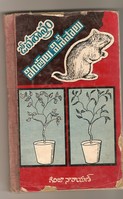 | | Jeevasastram Vintalu-Visheshaalu-(Means-' Wonders of Biology')
It was a collection of a few popular science essays which I published over two decades. I used to write to all the leading Telugu news Papers-Eenadu, Udayam, Andhra Prabha, Andhra Bhoomi, etc. in Andhra Pradesh in those days. They were written in my pen name-Girijanarayan, though I used some other names also as my pen names. Some of them were picked up by the Visalandhra Publishing House, Hyderabad to bring them under one theme. Along with some illustrations I offered the compilation for the publication by the publisher.
It consists of many interesting articles on science in popular Telugu. Most of these articles were based on Scientific American, New Scientist, Science Reporter, The Times (London), The Observer and The Independent. The articles deal with latest research trends in biology and dispel some popular myths of life and its origins too.
| |  | | Malupu-( Means 'Twist' in Telugu, a Dravidian Language)
Malupu means 'twist' in Telugu a Dravidian language spoken by over a hundred million in the southern peninsular part of India. It is an anthology of a dozen stories published by a reputed publishing house, Visalandhra Publishing House, Hyderabad, Andhra Padesh, India. I wrote over hundred short stories in my pen name 'Girijanarayan' in various weeklies and monthly magazines in Telugu. This anthology consists of only a few of them. The publication was funded by Telugu University, a state university of Andhra Pradesh. The uniqueness of the book, apart from the stories it had, was that its cover page was drawn by none other than an eminent artist/film director of the times,Dr.Bapu in multi-color. Further its foreword was given by Madhurantakam Rajaaram, who was an eminent writer and Sahitya Academy award winner. The book thus remained a memoir for ever in my literary works. I plan to translate these stories into English soon.
| | 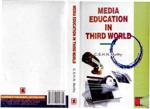 | | Media Education in Third World
The book deals with the strategies of developing media education for the third world countries with special reference to Eritrea-a Sub-Saharan African country. The work is an original work, based on my personal research while working at Ministry of Education, Government of Eritrea, Asmra during 2003-2005. It deals with the media strategies adapted by a number of third world countries besides consolidating their experiences for developing an appropriate technology and strategy for another nation in the making like Eritrea in this case.
| | 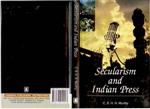 | | Secularism and Indian Press
The book exposes the political fraud all the political parties in India resort to in the name of secularism. All political parties try to appease Muslims for their votes. But, they claim themselves as secular. They try to borrow their secular credentials by supporting Muslims which is an anathema. On the other these political parties try to brand BJP as communal and fundamentalist because it does not indulge in appeasement of Muslims and calls for equality of religions. How this constitutes secularism-is the main theme of the research and as an author I tried to relate this how media exploited this paradox to boost its own circulation in India both before and after Ramajanma bhoomi-Babri Masjid controversy. Is pro-muslim attitude a test for secular character of a political party? Is that all which determines which party is secular in India? These are the basic questions the work veered round in this research.
|
|
|
|