|
|
|  | | Dinosaur Name Poems
Award-winning book of art, poetry and information about dinosaurs for children aged 4-12, but adults love it too!
30 poems that will encourage in any child love of language carefulness as well as language playfulness. The bilingual (English/Spanish) book received rare distinction as a Paleontological Research Institution (PRI)-approved book for its content and illustration accuracy, and received two 2009 Moonbeam Awards in the Children s Poetry and Spanish Language Book categories.
Tackling dinosaurs from A (Allosaurus) to V (Velociraptor), each poem plays on the meaning or etymology of the ancient animal's name. The richly hued watercolor collages delight with whimsy of their own, and the bili | | 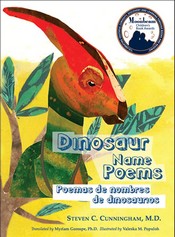 | | Dinosaur Name Poems
Award-winning book of art, poetry, and information about dinosaurs for kids 4-12, but adults love it, too!
30 poems that will encourage in any child love of language carefulness as well as language playfulness. The bilingual (English/Spanish) book received rare distinction as a Paleontological Research Institution (PRI)-approved book for its content and illustration accuracy, and received two 2009 Moonbeam Awards in the Children s Poetry and Spanish Language Book categories.
Tackling dinosaurs from A (Allosaurus) to V (Velociraptor), each poem plays on the meaning or etymology of the ancient animal's name. The richly hued watercolor collages delight with whimsy of their own, and the bili | | 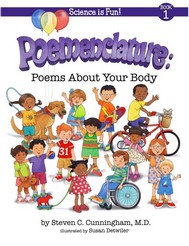 | | Poemenclature: Poems About Your Body
"Dr. Steven Cunningham's new book of poems about the human body, Poemenclature, is loaded with humor, facts, and fancy, along with some whimsical color illustrations by Susan Detwiler. In addition to human anatomy, the poems reference diseases and doctor's tools. Enjoy it!"
- Douglas Florian
In this playful second book by Dr. Steven Clark Cunningham, we are again served up a fun and healthy collection of bite-sized treats that both educate and entertain. Following in the Jurassic footsteps of his award-winning book "Dinosaur Name Poems," the current poems share the motif of using the names of things (nomenclature) to introduce topics that otherwise may be unfamiliar (as in the poem "Sphygmomanometer") or even a little scary (like in "Cancer" or "Anesthesia"). The lyrical nature of the poems and the vibrant warmth of the illust |
|
|
|