|
|
|  | | Homage for Miyamoto Musashi
122 haiku for the great swordsman, Miyamoto Musashi.
p align="JUSTIFY" style="margin-bottom: 0in; line-height: 150%">font size="3">I formatted my work with three sections for each haiku. You will read the English, notice the Japanese calligraphy, and finally, the actual Romanization of the translation. The translation I use is from Google Translate and is to the best of my knowledge, the proper rendition. As well, you can copy the Japanese and put it into Google Translate and listen to it being spoken. A further note: the 5,7,5 format in English is not to be confused with the same syllabic order in | | 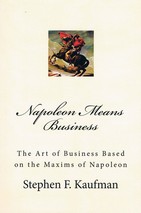 | | Napoleon Means Business
The art of business based on the maxims of Napoleon.
p style="margin-bottom: 0in">font face="Arial, sans-serif">font size="2">The maxims of Napoleon is a project undertaken by the author to present one of the most illustrious generals in history as a proponent of success in any area of endeavor. Restructuring the words of Napoleon empowers the reader to take advantage of strong military ideals and transform them into business models that have been utilized by other great leaders throughout history. In this book the Western mentality for venture and success is adroitly used and eliminates the Eastern mindset used as the standard | | 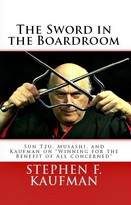 | | The Sword in the Boardroom
Business strategy based on the concepts brought forth by Miyamoto Musashi, Sun Tzu, and Stephen F. Kaufman.
In a synthesis of their teachings and based on the author's two major works, Musashi's Book of Five Rings and Sun Tzu's Art of War, the author expresses the views of the masters to address realistic strategies for tghe development of business negotiation skills for today's world, without ambiguous metaphor and academic phraseology. A martial thinking approach stresses "winning for the benefit of all concerned," with the negotiator as the main recipient of good and and as the only correct and intelligent way to do something effectively and efficiently. The masters readily d |
|
|
|