|
|
| 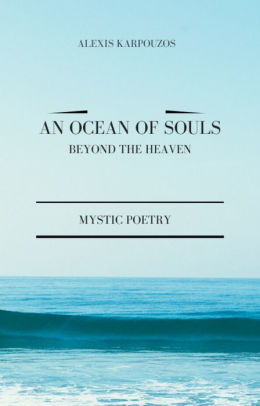 | | AN OCEAN OF SOULS
The poetic thought of Alexis karpouzos is a expressions of soul's inner experiences, expression of universality.
The poetic thought of Alexis karpouzos is a expressions of soul's inner experiences, expression of universality. The inspiring visual images and the symbolic use of language offer a description of elevating experiences of consciousness, a glimpse of higher worlds. The philosophy of alexis karpouzos speak to the human experience from a universal perspective, trancending all religions, cultural and national boundaries. Using vivid images and a direct language that speaks to the heart, his philosophy evokes a sense of deep communication with the collective unconscious, a sense of connection to al | | 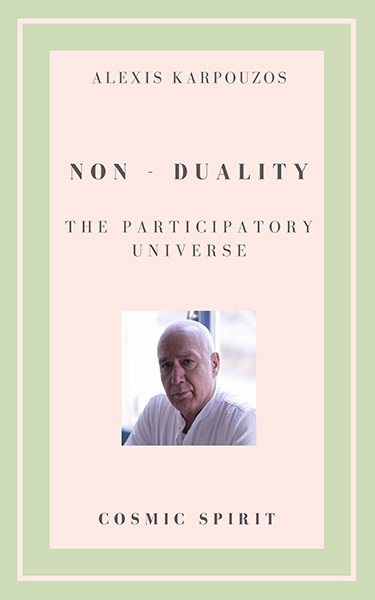 | | NON-DUALITY
The spiritual experience of oneness conduces to the same insight as reasoning through science. Both convey the insight of fundamental interconnection between ourselves, other people, other forms of life, the biosphere and, ultimately, the universe. Science and spirituality, far from being mutually exclusive and conflicting elements, are complementary partners in the search for the path that can enable humanity to recover its oneness with the world. Science demonstrates the urgent and objective need for it; and spirituality testifies to its inherent value and supreme desirability.
The Progress to new physics - quantum mechanics, relativity, the universe of the microparticles, theories for complex and non-linear dynamic systems, invisible worlds, chaos leads to order, give a different dimension to the way of thinking of individuals, scientists, and philosophers. The basic elements of the Eastern world view are also those of the world view emerging from modern physics. The Eastern thought and, more generally, mystical thought provide a consistent and relevant philosophical background to the theories of contemporary science; a conception of the world in which man's scienti | | 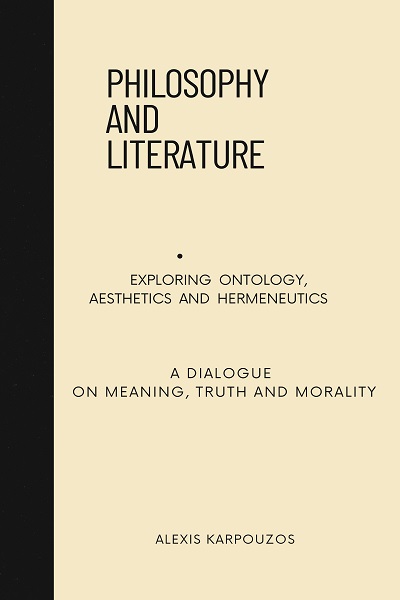 | | PHILOSOPHY AND LITERATURE - ALEXIS KARPOUZOS
Exploring Ontology, Aesthetics and Hermeneutics
In Philosophy and Literature, Alexis Karpouzos embarks on a sweeping intellectual and poetic journey that bridges the timeless questions of philosophy with the evocative power of literature. This work is a profound meditation on being, beauty, interpretation, and ethics—an invitation to explore the depths of human consciousness through the twin lenses of reason and imagination.
Drawing inspiration from the great minds of the 19th and 20th centuries, Karpouzos engages in a vibrant dialogue with thinkers and writers who shaped modern thought. From the existential inquiries of Søren Kier | | 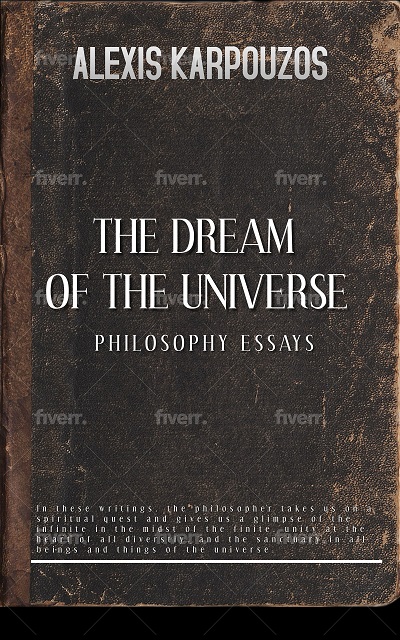 | | THE DREAM OF THE UNIVERSE
My family and my community are just as much “me” as the organs of my body. My body and mind, my family and my community, are interacting and interpenetrating, variously prevalent elements in the network of relations that encompasses all things in nature and the human world. The whole gamut of concepts and ideas that separates my identity, or the identity of any person or community, from the identity of other persons and communities are manifestations of this convenient but arbitrary convention.
I am part of nature, and nature is part of me. I am what I am in my communication and communion with all living things. I am an irreducible and coherent whole with the web of life on the planet. Nature, the human community and the universe is connected with the Cosmos. We recognize the deep truth that I am the other. This expresses the concept from contemporary physics of “entanglement”, which is a quantum phenomenon. All atoms, all cells are connected, deeply.” The friendship is the connection we feel for each other, wherever he is, other people, animals, plants, stars. I am part of society, | | 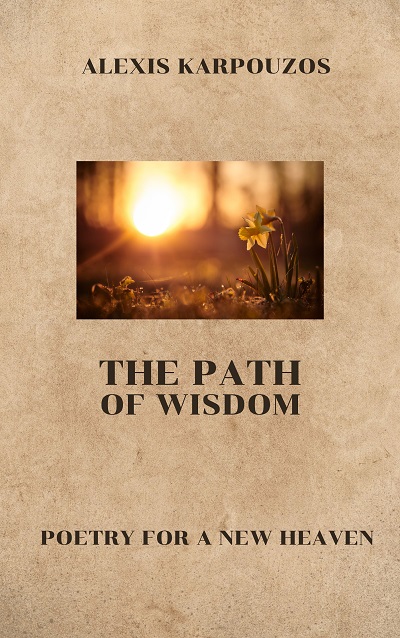 | | THE PATH OF WISDOM - ALEXIS KARPOUZOS
The book “The path of wisdom - Poetry for a new heaven” is a celebration of our linguistic diversity and a reminder of our commonalities and the fundamental role verbal art plays in human life around the world. A poetic journey to the realm of emotions, of sensibilities and imagination.
The book “The path of wisdom” is a celebration of our linguistic diversity and a reminder of our commonalities and the fundamental role verbal art plays in human life around the world. A poetic journey to the realm of emotions, of sensibilities and imagination.
The global language of poetry of Alexis Karpouzos, by following the paths of wisdom, is a vehicle for transmitting human knowledge and values, history, ancient traditions, and links with nature. It transmits the human values and worldly knowledge that are essential for opening ourselves to the Other. Poetic creation, therefore, | |  | | THE VOICE OF HEART - ALEXIS KARPOUZOS
Alexis karpouzos is a visioner in the development of post-history sense of cosmic unity and the integral consciousness.
Alexis karpouzos is a visioner in the development of post-history sense of cosmic unity and the integral consciousness. For him, spirituality is not just about personal enlightenment but is deeply connected to moral action. He view ethical living as a natural outgrowth of spiritual awareness. In his worldview, the divine is not something distant or abstract but is present in every human being, and this awareness should lead to moral behavior that reflects love, justice, and equality. In many of his writings, Alexis karpouzos calls for the realization of a moral society, one that is based on mu | | 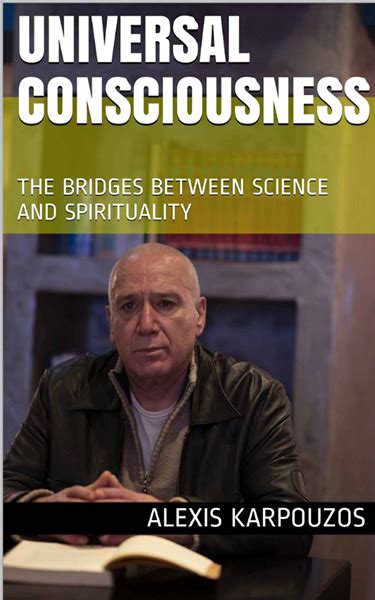 | | UNIVERSAL CONSCIOUSNESS
Presents a revolutionary new paradigm of Cosmic Thought that bridges the divide between science and spirituality. Discloses the ramifications of non-localized consciousness and how the physical world and spiritual experience are two aspects of the same Cosmos.
The central teaching of mysticism is that Everything is One, whereas from the side of rationalism the universe is Multiple. The essence of the mystical tradition is not a particular philosophical system, but the simple realization that the soul of any individual/existence is identified with the Absolute. A special feature of the mysticism is the elimination of discriminations, i.e. the One and the Multiple are identical.On the other hand, in rationalism the One and the Multiple differ substantially. Mysticism aims at the Emptiness of Zero, whereas rationalism aims at the identification with th |
|
|
|