|
|
| 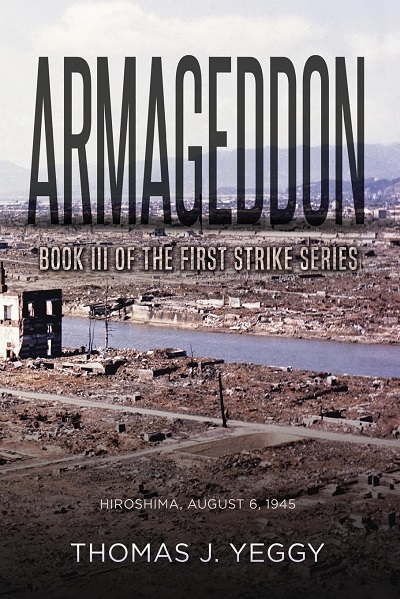 | | Armageddon: Book III of the First Strike Series
Armageddon, a fact-based historical novel, is the third book of The First Strike Trilogy: A high-stakes race against time and politics unfolds in this gripping historical account of SIOP-62, revisit the tension of a pending nuclear attack, at a time when the safety of the entire world is in peril.
JCS-NSC Joint Meeting, Situation Room, October 16,
Caleb continues his criticism of SIOP-62
"On March 1, 1954, off Namu Island in Bikini Atoll, we conducted a thermonuclear test called Castle Bravo," Caleb began. "We exploded a 15-megaton surface burst bomb called the Shrimp. The resulting fireball was approximately 4.5 miles in diameter. It created a crater more than 6,500 feet in diameter and 250 feet deep. The mushroom cloud reached 47,000 feet with a diameter of 7 miles all in one minute. Nine minutes later, the cloud was 130,000 feet and 62 miles in diameter. It expanded | | 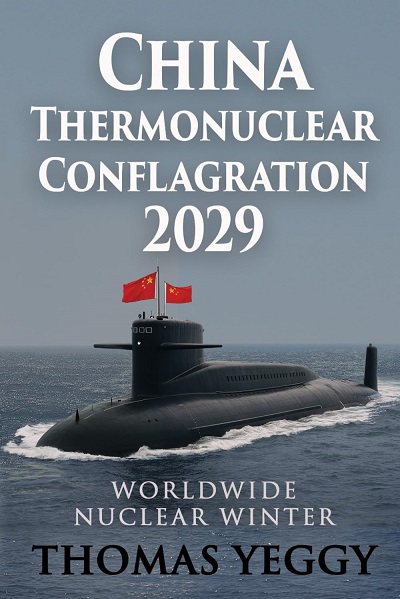 | | China Thermonuclear Conflagration 2029: Worldwide Nuclear Winter
We stood by once and watched the world burn. Will we do it again?
After a targeted U.S. strike on Iran fails to destroy 900 pounds of enriched uranium, global tensions ignite. China makes its move, arming North Korea with a decommissioned nuclear submarine and rushing high-speed centrifuges to a covert Iranian site. What follows is a deadly escalation that ends with the unthinkable: nuclear war in 2029.
Blending fact with chilling foresight, this story exposes how modern missteps, political vanity, and old grudges light the fuse of global extinction.
What happens after the bombs fall?
Outside the bunkers, survival is savage. Inside | | 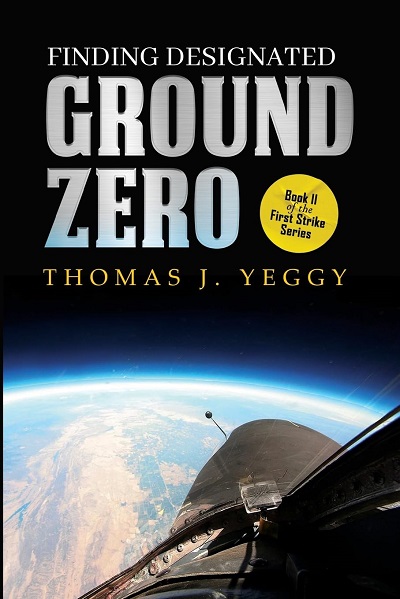 | | Finding Designated Ground Zero: Book II of the First Strike Series
Finding Designated Ground Zero, a fact-based historical novel, is the second book of The First Strike Trilogy: the U-2 spy plane soaring 70,000 feet above the earth well out of the reach of Soviet SAMs until May 1, 1960, when Francis Gary Powers was shot down near Sverdlovsk shaking the Eisenhower administration's plans for detente and moving the two superpowers ever closer to a nuclear confrontation.
CIA Headquarters, Langley, Virginia Office of Director Allen W. Dulles
April 21, 1960
Richard Bissell, deep in thought, paced back and forth in front of Director Dulles's desk as he read the Post. "The Soviets cannot have hundreds of ICBMs that Air Force intelligence is claiming," Bissell stated. "The question is, how can I convince you of this? If I don't, LeMay and Power will manufacture a situation that gives Ike no option but to launch a nuclear war. Allen, you and I both know that Soviet ICBMS have to be liquid-fueled with millions of gallons of RP-1 kerosene and LOX. The onl | | 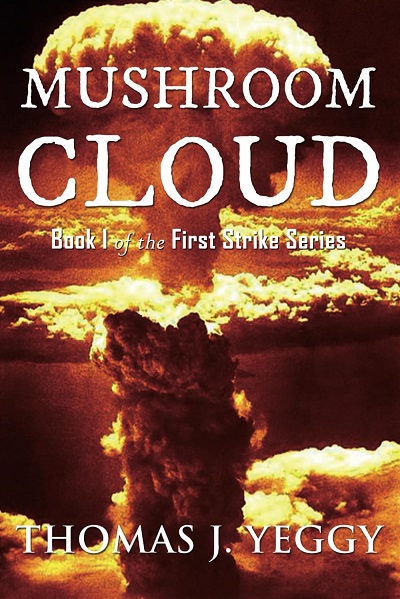 | | Mushroom Cloud: Book I of the First Strike Series
Mushroom Cloud, a fact-based historical novel, is the first book of The First Strike Trilogy: USA and the Soviet Union are building nuclear arms for a face off in a potential nuclear war in the late 1950's and early 1960's.
For a decade, Dr. Caleb Young, a gifted physicist and chief science officer for the CIA, had shaded National Intelligence Estimates and Rand reports on war gaming. He wanted to thwart the US military's push for a nuclear first strike. Soviet GRU Colonel Oleg Penkovsky had passed information to Young at more than one Pugwash Peace Conference, revealing how inept Soviet capabilities were. A US preemptive strike would destroy the earth's ozone layer.
Dr. Young, secretly an Einstein schooled pacifist, felt a personal obligation to prevent a globally destructive nuclear war. However, the r | | 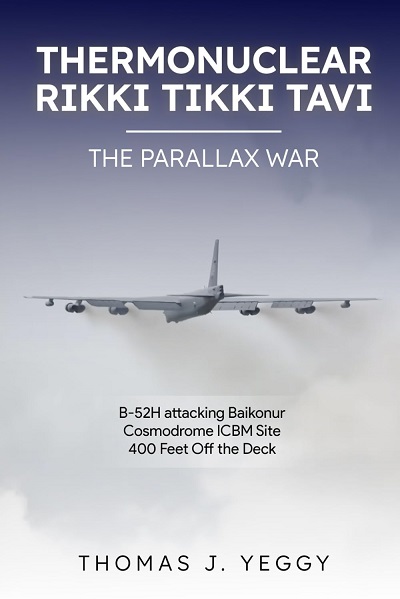 | | Thermonuclear Rikki-Tikki-Tavi: The Parallax War
This book explores how U.S. presidents Dwight D. Eisenhower and John F. Kennedy failed to stand up to Soviet aggression during the early Cold War—despite America's overwhelming nuclear advantage.
In 1953 and 1956, anti-Soviet uprisings in East Germany and Hungary, inspired by U.S.-backed broadcasts (RIAS and Radio Free Europe), were brutally crushed while Eisenhower chose not to intervene. Instead, he prioritized stability in the Middle East and avoided confrontation—even refusing to threaten nuclear retaliation despite having overwhelming strategic superiority. Kennedy’s failures were arguably worse.
By 1961, satellite intelligence had confirmed the Soviet Union’s minimal nuclear capability. Yet Kennedy appeared weak in Vienna and made numerous concessions during the Berlin C |
|
|
|