|
|
|  | | A Cry in a Dark Mirror (Work title: The Dark)
"The Dark" tells the story of Haya/Nour, a Palestinian girl adopted by the Israeli agent Daliah Tal who coordinated the operation in which the infant's parents were killed and who brought her up in ignorance of her true indenity.
During a stay in Turkey where Daliah is stationed under the cover of being a staff member of the Israeli embassy, a friend of Haya/Nour's invites her to a wedding in a Kurdish village near the Iraqi border where she encounters an exile from the Palestinian resistance and witnesses the massacre of the village people by the hands of invading Turkish forces. These experiences bring a suppressed knowledge back to life and lead her to question the very foundations of her world, a painful process that culminates in her suicide and in the mental destruction of Daliah Tal whose universe disintegrates with the death of the girl whom she -herself unable to give birth in the course of an accident during military training- has come to regard as the centre of her inner world and who -in a perverted sense- provided a justification of her actions.
The play contains a number of parallel-running stories such as that of Hayat/Jiyan, herself a victim of the repression of identity as Kurdish language, culture and self-awareness are suppressed by the Turkish regime, a girl of about the same age whose courage and positive resistance to this oppression contrasts Nur/Haya's self-destructive patterns. This story, in turn, is paralleled by that of Zahavi, a double agent who in the end becomes the victim of his own dealings.
This, again, is a play that centres on the interchangeability of images containing monologues of a documentary quality and calling for border-crossing solidarity and interaction in search of solutions to the great historic conflicts proceeding from an analysis of their roots.
(Copyright with the author.)
em>From:/em>
strong>Third Scene./strong>
p align="LEFT" style="margin-bottom: 0in; line-height: 100%;">font face="Times New Roman, serif">i>.../i>/font>
p align="LEFT" style="margin-bottom: 0in; line-height: 100%;">i style="font-family: "Times New Roman", serif;">Haya: /i>span style="font-family: "Times New Roman", serif;">In my dream I saw the earth opening its womb to devour me. I was a child, new-born, and in my cradle there was blood. I saw a woman give birth, instead of a child, to a gun. The earth erupted with fire and | |  | | Cairene Delights
Surrealistic road novel.
p style="margin-bottom: 0in; line-height: 100%">Excerpt from Chapter 2
p style="margin-bottom: 0in; line-height: 100%">
p style="margin-bottom: 0in; line-height: 100%">font style="font-size: 14pt">i>It happens during one of Mentuhopti's legendary performances. Spurred by the peculiarity of her condition, she dances on pieces of coloured glass that are arranged like rosebuds on the ground. Al Majhoul beats the drum till it draws blood and his heart turns into a heavy red cloud above Cairo. The thrusts of his rhythms open it and the crowd, in ecstasy, drinks from the wate | |  | | Death of the Birds
"Death of the Birds" describes a spiritual journey seeking to penetrate to the roots of spiritual, intellectual and political stagnation centred on the teachings of the great Sufi master Hallaj whose execution with its devastating, mutening effect on his disciples and on the social movement whose symbol he had become, provides the frame of the story.
Mansur and Najaf, each an emanation and condition of the other, flee from province to province in order to escape persecution only to find themselves face to face with the Sultan who is the cause of their flight on the island that constitutes their last resort.
The Sultan, too, is on the run from his persecutors whom he perceives to be embodied in Mansur and Najaf after having been overthrown during an incognito-excursion.
The result of this encounter is thorough resignation on both sides but soon it becomes clear that a solution to the conflict is an inevitable neccessity.
This motif provides the frame for a number of mutually interwoven stories such as that of the Sultan's encounter with Maimuna which in itself is the frame for the story of Hadra who is an expression of Maimuna's inner identity following a story-line in the style of Arabian Nights plus One: The Sultan (always spelled in capitals), caught in his own net, becomes unable to lift his disguise and needs to seek shelter with Maimuna, a woman unknown to him before who lives in a wooden shack and who relates to him the story of Hadra, the slave girl who refused to surrender herself to the malice of the mighty and thereby breaks their power. While listening to the story, the Sultan is overthrown and asks Maimuna to arrange his flight. In response to his request, she hands him over to an old ferryman who is none other than Iblis called to ferry him "over to the other shore" where he encounters his victims.
Between the episodes Mansur and Najaf take on a number of incarnations by means of which they establish a link to contemporary, day-to-day reality.
(Copyright with the author)
BR>STRONG>Maimuna hands her lover, the Sultan, over to Iblis who appears in the guise of an old ferryman./STRONG>BR>BR>STRONG>The second crossing of River Tigris./STRONG>BR>BR>EM>This sequence illustrates the different levels of language employed in the play and gives an idea of its atmosphere./EM>BR>BR>EM>(The verses used in the conversation betweeen Maimuna and the Sultan, as will be obvious, are quotations from the Rub'ayat of 'Omar Khayyam and the initial part of the monologue of Iblis bases on texts by Hussain Ibn Mansour Al Hallaj [r.a.])./EM>BR>BR>STRONG>Sultan: /STRO | |  | | Discorsi
The literary body of DISCORSI consists of paragraphs arranged in two parts: Al Jawhar al Akhdar and Al Jawhar al Ahmar in which a mystical philosophy is formulated.
br />
br />
em>(New excerpts from Al Jawhar Al Ahmar are being added in the form of continuous updates.)/em>br />
br />
br />
strong>em>Excerpts from Book A (Al Jawhar Al Akhdar)/em>/strong>br />
br />
strong>em>(1992-1993):/em>/strong>br />
br />
strong>The word: Darkness. The meaning: Light./strong>br />
br />
strong>The word is light enveloped in darkness./strong>br />
br />
strong>Darkness is the light's guise in the world of senses./strong>br />
br />
br />
br />
strong>There are three essential forces superior to any other force | |  | | Diwan
"Diwan" contains Mahdi's collected poems between 1997 and 2004.
Excerpts from the book can be read in the poetry section.
(Copyright is with the author.)
P>STRONG>EM>It's the time when the mangoes fall/EM>/STRONG>/P>
P>STRONG>EM>Overripe and forsaken/EM>/STRONG>/P>
P>STRONG>EM>Like the fruit of a pregnant womb/EM>/STRONG>/P>
P>STRONG>EM>Having nowhere to go/EM>/STRONG>/P>
P>STRONG>EM>The juicy nectar of troubles/EM>/STRONG>/P>
P>STRONG>EM>Thickly drips down on my heart/EM>/STRONG>/P>
P>STRONG>EM>In the grievances of the season/EM>/STRONG>/P>
P>STRONG>EM>I won't die anymore/EM>/STRONG>/P>
P>STRONG>EM>It's the time when my load turns sweet/EM>/STRONG>/P>
P> | |  | | Late Summer
Ostensibly the story of a teacher's love for her young student, "Late Summer" challenges established concepts and is a passionate plea for the authenticity of love's creative power.
| | | | Letters on the Depth Psychology of Human Thought
"FUNDAMENTALISM" IS INSTRUMENTALISM BUT SEARCH AND RESEARCH OF THE FUNDAMENTALS IS SOCIAL AND HISTORICAL ANALYSIS.
No aya (line) and no single phrase within the Quran and in the traditions that relate and outline the Quranic concept (Sunnah and Ahadith) can therefore be interpreted outside of its specific context. The Quran, like the body of human knowledge as a whole, is not the sum total of the phrases contained in it but that of the dialectical concept exemplified in the specific contexts within which they are presented. A mechanistic reading would be prone to divorce statements from contexts, corrupting the core meaning underlying them and thus void them of their actual contents. Such an approach is not only misleading but also extremely manipulative in that it underlays implications which are not intended and thereby serves purposes alien to the objectives of the message communicated, leaving intact only the superstructure of its literal skeleton. Religion and religious knowledge then become archaeological. Their traces are ruins found at excavation sites. The detachment of hukm (law\legislation\measure = effect) from 'illa (occasion\motive = cause) is a betrayal of the Quranic concept and of Islamic thought as a whole, as it destroys its (structure of) coherence and paves the way for its abuse and corruption, for its affiliation with the concepts and interests of political powers who would turn it into its opposite. This is the danger of what is -wrongly- referred to as "fundamentalism", not only in Islam.
"FUNDAMENTALISM" IS INSTRUMENTALISM BUT SEARCH AND RESEARCH OF THE FUNDAMENTALS IS SOCIAL AND HISTORICAL ANALYSIS.
"Letters on the Depth-Psychology of Human Thought (Sexual and Gender Identity as a Key Component of Social Reality: On the Historical Role of the Patriarchal Intellect and the Prospect of a Revolutionised Matriarchal Consciousness in the Advancement of Society to the Third Stage of Human Civilisation)" is an expose written in 1999/2000 which elaborates on the organic interrelation between the capitalist mode of production and the patriarchal mode of thinking elevated to a social doctrine. It looks into the historical process of the subjugation and suppression of matriarchal modes of thought and consciousness, linking the stages which the collective psyche of human society and culture undergoes with those effective in the psyche of the individual, where corresponding processes occur.
br />
| | | | Light Shadow And Wall
A literary account of the German Democratic Republic in the late 1980's.
Documentary Fiction. ©Muhammad.A Al Mahdi 2020
div> /div>
div>The GDR seen through the eyes of Tamar and Shoukri, one the daughter of a Judeo-Algerian officer of French Intelligence during the Algerian War of Independence, whom she holds responsible for the death of her mother in detention, the other a Palestinian exile grown up in Lebanon. /div>
div>Tamar and Shoukri are students of Education who meet during their internship at a Polytechnic High School in the late 1980's. While Shoukri lives an austere life focused solely on his studies and the prospect of teaching children in Palestinian refugee camps whi | | | | Meine Seele duerstet nach dem Duft der Rosen
The book contains 26 poems written between 1993 and 1995 in German translations by the author.
br />
strong>em>Jerusalem/Al Quds/em>/strong>br />
br />
strong>em>(English and German version)/em>/strong>br />
br />
br />
br />
strong>em>Jerusalem/em>/strong>br />
br />
strong>em>Accursed/em>/strong>br />
br />
strong>em>Beloved/em>/strong>br />
br />
strong>em>Across the infinite distance/em>/strong>br />
br />
strong>em>The light of your gold kindles/em>/strong>br />
br />
strong>em>My eyes/em>/strong>br />
br />
br />
br />
strong>em>Ya'l Quds/em>/strong>br />
br />
strong>em>You my blood | |  | | Nurit Shahari's Loneliness
The stage play "Nurit Shahari's Loneliness", examining the Oslo Peace Process, its implications and failure in the frame of the love that develops between the Jewish Isreali girl Nurit and Gamal, a Palestinian from Haifa, does by mistake appear in the short stories section. Further excerpts from the play can be seen there.
span style="display: none" id="1236944507894E"> /span>
Prologue/b>
-----------------------------
span style="display: none" id="1236944508221S">em> /em>/span>em>The closed curtain is illuminated by a kaleidoscope of lights in shrill colours from behind the stage. As the scene progresses, these form increasingly complex patterns in ever new combinations, from the explosive to the harmonic, in accordance to the patterns of the spoken text./em>
em>When Nurit appears, these patterns will have become very dense and | | 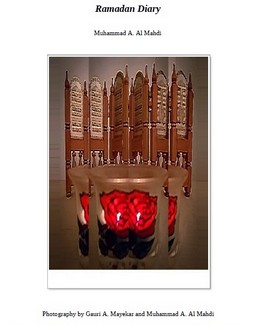 | | Ramadan Diary
Ramadan Diary (2017) - Mystical Poetry by Muhammad A. Al Mahdi
Photography by Gauri A. Mayekar and Muhammad A. Al Mahdi
21
div> /div>
div>The deepest voice,/div>
div>the lightest,/div>
div>which seas and mountains melts/div>
div>softly it calls the sweet soul/div>
div>which in the sanctum dwells/div>
div>The union of all lovers/div>
div>is but one day to wait/div>
div>Its price is but endurance/div>
div>at butterfly-winged gates/div>
div>So light is fate, my darling/div>
div>and morning's light so clear/div>
div>Both sound and chord are present/div>
div>and are forever near/div>
div>I call you not a stranger/div>
div>for you, of all, have heard/d | | 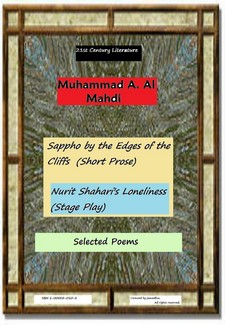 | | Sappho by the Edges of the Cliffs (Collected Works I)
Part 1 of my collected works. Contains: Sappho by the Edges of the Cliffs (Collected Short Prose), Selected Poetry, Nurit Shahari's Loneliness (Stage Play)
| |  | | The Legend of the Fire Monkey
"The Legend of the Fire Monkey" tells the story of Sulaimani, an armed robber, his wife Maimuna and their daughter Saadiya analysing the social conditions that make them what they are.
The story is set in Ghana where Sulaimani's and Maimuna's lives revolve round the Accra suburbs Shukura (Sukula) and Town Council Line in a tight net of deprivation, survival, revenge, self-justification and loss.
The absurdity of a law that stands in no relation with the population's living consitions and real circumstances of life and of an economy helplessly undermined by neo-colonial penetration makes Police Prosecutor Djefe Sulaimani's most reliable ally in preventing his conviction on a proven charge of armed robbery (as long as this safeguards his economic interests) and turns the "upright" and law-abiding Malam Haruna (who has a slightly hypocritic quality about him, though) into his comrade-in-arms in the face of the police-assisted brutal violation of Maimuna's family when their wooden shacks are being demolished by extended relatives in the course of a land feud.
The costs arising to the family in protecting their rights before a corrupted law court force Sulaimani to resort to intensified armed raids.
Sulaimani's love for his daughter and devotion to his family are contrasted with his brutal dealings with rivals and informers, which his survival as head of an armed gang requires, in a sequence in which his 3-years-old daughter accidentally enters the room at the moment when he is chopping off the finger of a traitor and gets traumatised by the scene she had to witness.
A robbery sequence in Dansoman Estate offers a perspective that belies Sulaimani's companion Ali's respectful and pleasant manners when showing a no less brutal, if only verbal, irreverence for a lady's old age expressed in meciless contempt and a vulgar language which are the product of an attitude neccessitated by his way of life.
The scene between Nii Nkpei(Akwei) and Nii Aryee shows the wisdom, status and social experience of these elders helpless in confrontation with a rapidly disintegrating society the conditions of which they are incapable of coping with.
The songs accompanied by cinema poetique sequences are celebrations of Africa's vital and irrepressible power of life embodied in Maimuna and committed, sometimes bitter comments on the hardships of the contemporary situation while proclaiming her greatness and ancient wisdom in a mode that portrays Islamic thought and African spirituality as expressed in the talking drum sequence as organically interrealated refections of a transcendental truth.
Sulaimani's death in the sequence in which he is shot by police forces during an armed raid which forms the frame of the film with all the ensuing scenes being retrospectives leaves Maimuna and Saadiya orphaned and is followed by the burning of the foundations of the family's newly developed house and their expulsion from their land. It thereby exposes Sulaimani's resorting to armed robberies as an inadequate response incapable of effecting any true change to their socially inferior status which is expressed in the words: "You be poor, you go lose. That is the end of your case." implying the neccessety of and organised thorough-going initiative with the potential of creating new and constructive social realities in a truly independent, reborn Africa.
Copyright with the author.
br />
br />
em>"A monkey leaping from branch to branch above the fire having turned into a predatory animal that hunts at night. This is what I see and I understand it. The gun is my master and I am the master of the gun."/em>br />
br />
br />
III.br />
br />
2.br />
br />
Interior. Nii Aryee and Maimuna.br />
br />
strong>Nii Aryee/strong>: ...And I don't have it. Though I had to promise him, I don't know from where to take it.br />
br />
3.br />
br />
strong>Sulaimani/strong>: That's why we are armed robbers.br />
br />
strong>Ali/ | | 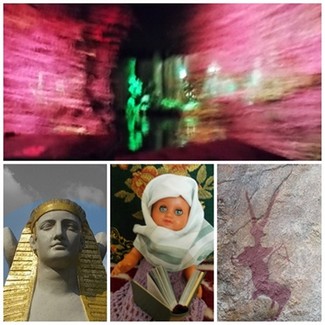 | | The Peacock Angel or: The Song of Solomon
An astronaut's journey through the abyss of human civilisation in flight from death.
Led by a mephitic guide, an astronaut stranded in space searches human history for redemption.
A philosophical and often cynical journey through key epochs and events in the evolution of human civilisation (the symbols of the Kynics are ever present), from East to West and back East, during which questions are asked that are as crucial as they are universal.
The screenplay unites vision, sound, dance, poetry and photographic art in an avantgarde style that owns its language to classical aesthetics.
/p | |  | | The Phantom of Rania Parveen
A few weeks before exams the nightmare takes over. The world falls to pieces and its skeletal frame is revealed.
Rania Parveen is an Indian girl from the Cape who studies at a vocational school for girls. Under Mrs. Winters' directorship, the school undergoes reforms and modernisations that are to mould it into a model institution. Having embraced apartheid thought in the first half of her teaching career, Mrs. Winters now embraces the rainbow nation and the neo-liberal values of post-apartheid South Africa with the same matter-of-fact readiness, being committed to achieving excellence within the school's new multi-ethnic framework. A few weeks prior to final exams, which coincide with a crucial |
|
|
|
Gallows Field
by Brendan O'Brien
|
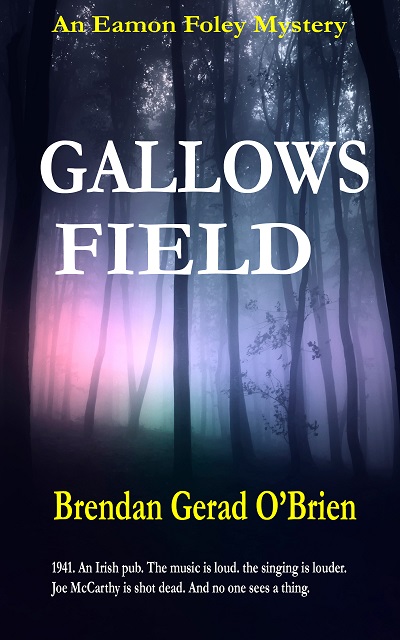 Dublin 1941. A brutal murder. Mistaken identity. And barman Eamon Foley is running for his life.
Nine months later Foley is in a crowded pub, and his brother-in-law is shot dead. Dublin 1941. A brutal murder. Mistaken identity. And barman Eamon Foley is running for his life.
Nine months later Foley is in a crowded pub, and his brother-in-law is shot dead. |
Member BookAds
|
|
|
|
Galveston, 1900 Indignities, The Arrival
by N Brown
|
 Compelling historical fiction that traces the life of a young English immigrant woman who travels to America at the turn of the century to start a new life for herself. Encountering danger, romance, heartache and tragedy, she strives to fit into a Compelling historical fiction that traces the life of a young English immigrant woman who travels to America at the turn of the century to start a new life for herself. Encountering danger, romance, heartache and tragedy, she strives to fit into a |
Member BookAds
|
|
|
|


