|
|
| 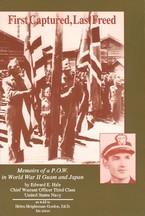 | | First Captured, Last Freed: Memoirs of a P.O.W. in World War II Guam and Japan
Captured on Guam December 8, 1941, eighty US servicemen endured nearly 4 years of captivity as P.O.W.s, but only one died in Japan. Navy vet Ed Hale tells vividly what they experienced and how they survived. Authentic, inspiring memoirs.
Some men would never break though they starved to death, Ed Hale observed, but others would gamble with a starving companion for his food. Hale was one of 80 US fighting men captured in the first battle of World War II following Pearl Harbor, and not freed until September 2, 1945, when Japan officially surrendered. These men endured forced labor, bitter cold, miserable living conditions, malnutrition, diseases, and deprivation of news from home. They kept their sanity with bargaining, sustained hope with Red Cross boxes, and restored their ravaged health with soybeans.
Along wi | |  | | The Secret Love Story in Shakespeare's Sonnets
What if the Rumors were true -- that the first Queen Elizabeth had a love affair with her favorite playwright Edward De Vere, the 17th Earl of Oxford, and they had a love-child? The Earl took the pen name William Shakespeare to keep the royal secrets, but he left clues in the sonnets, which he dedicated to his natural son, Henry Wriothesley.
We now have enough information to decipher the clues left by the author "William Shakespeare" as to his real identity -- Edward De Vere, the 17th Earl of Oxford. We can identify the "Fair Youth" as Henry Wriothesley, the Third Earl of Southampton, to whom Shakespeare's published poems were dedicated. We can identify several rival poets, who were competing for Queen Elizabeth's favor, not for the favors of a young earl or a patron. We can identify a dark lady who bore a son to De Vere out of wedlock -- Ann Vavasor. But other sonnets were written to a lady with dark eyes, probably Queen Elizab | |  | | Voice of the Vanquished: The Story of the Slave Marina and Hernan Cortes
Sold into slavery by a wicked stepfather, Marina wins the admiration of her master, conquistador Hernan Cortes, and rises to become the most powerful woman in 16th century Mexico.
They triumphed over youthful hardships (hers in Aztec-ruled Mexico, his in rural Spain), to become a team that changed two continents forever. Without his loyal slave and interpreter Marina, the conquistador Hernan Cortes could not have toppled the empire of Moctezuma II. Without Cortes, Marina would have been crushed by the treachery of her ruthlessly ambitious stepfather. Together, they rebuilt a devastated nation, shaped its Christian destiny, and created their son from a love greater than a master and a slave are ever supposed to know.
These authentic, fully human historica |
|
|
|