|
|
|  | | Hamburger: A Global History
McDonald’s founder Ray Kroc once said, “It requires a certain kind of mind to see beauty in a hamburger bun.” The hamburger has been a staple of American culture for the last century, both a source of gluttonous joy and a recurrent obstacle to healthy eating. Now the full beauty of the burger in all its forms is explored in Hamburger, a debut title in Reaktion Books’ new Edible series.
Andrew F. Smith traces the trajectory of hamburger history, from its humble beginnings as a nineteenth-century street food sold by American vendors, from which it soon spread to the menus of diners and restaurants. The sandwich came into its own with the 1921 opening of the first hamburger chain, White Castle, and subsequent successful food chains such as McDonald’s and Wendy’s ensured the burger’s success in the United States and around the world. The hamburger irrevocably changed American life, Smith argues, as the sandwich propelled the rise of fast food over home-cooked meals in Americans’ eating habits. At the same time, burgers were making inroads in American culture, as well as becoming a rich symbol in paintings, television, and movies. Smith also discusses the darker nutritional, economic, and cultural conflicts raised by the hamburger, such as the “McDonaldization” of international cultures.
A juicy and richly illustrated read, Hamburger will stimulate the taste buds of carnivores the world over.
| |  | | Popped Culture: A Social History of Popcorn in America
The history, legends, and cookery of America's favorite snack food. Whether in movie theaters or sports arenas, at fairs or theme parks, around campfires or family hearths, Americans consume more popcorn by volume than any other snack. Within American food lore, popcorn holds a special place, for it was purportedly shared by Native Americans at the first Thanksgiving. In Popped Culture, Andrew F. Smith tests such legends against archaeological, agricultural, culinary, and social findings. While debunking many myths, he discovers a flavorful story of the curious kernel's introduction and ever-increasing consumption in North America. Contains more than 160 recipes that typify popcorn cookery prior to 1924.
Whether in movie theaters or sports arenas, at fairs or theme parks, around campfires or family hearths, Americans consume more popcorn by volume than any other snack. To the world, popcorn seems as American as baseball and apple pie. Within American food lore, popcorn holds a special place, for it was purportedly shared by Native Americans at the first Thanksgiving. In Popped Culture, Andrew F. Smith tests such legends against archaeological, agricultural, culinary, and social findings. While debunking many myths, he discovers a flavorful story of the curious kernel's introduction and ever-in | |  | | Pure Ketchup: A History of America's National Condiment - with Recipes.
This "is the only serious work I know on this ancient condiment, how it started, how it came to America, above all how it came to be Americanized, so much so that it is almost a national symbol of our food." –Karen Hess.
| |  | | The Encyclopedia of Junk Food and Fast Food
Eating junk food and fast food is a great all-American passion. American kids and grownups love their candy bars, Big Macs and supersized fries, Doritos, Twinkies, and Good Humor ice cream bars. The disastrous health effects from the enormous appetite for these processed fat- and sugar-loaded foods are well publicized now. This was particularly dramatically evidenced by Super Size Me (2004), filmmaker Morgan Spurlock's 30-day all-McDonald's diet in which his liver suffered the same poisoning as if he had been on an extended alcohol binge. Through increased globalization, American popular food culture is being increasingly emulated elsewhere in the world, such as China, with the potential for similar disastrous consequences. This A-to-Z reference is the first to focus on the junk food and fast food phenomena from a multitude of angles in addition to health and diet concerns. More than 250 essay entries objectively explore the scope of the topics to illuminate the American way through products, corporations and entrepreneurs, social history, popular culture, organizations, issues, politics, commercialism and consumerism, and much more.
| | 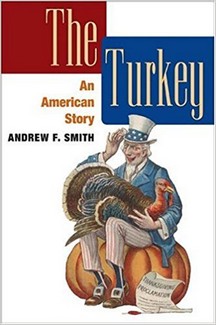 | | The Turkey: A Social History
Fondly remembered as the centerpiece of family Thanksgiving reunions, the turkey is a cultural symbol as well as a multi-billion dollar industry. As a bird, dinner, commodity, and national icon, the turkey has become as American as the bald eagle (with which it actually competed for supremacy on national insignias).
Food historian Andrew F. Smith's sweeping and multifaceted history of Meleagris gallopavo separates fact from fiction, serving as both a solid historical reference and a fascinating general read. With his characteristic wit and insatiable curiosity, Smith presents the turkey in ten courses, beginning with the bird itself (actually several different species of turkey) flying through the wild. The Turkey subsequently includes discussions of practically every aspect of the iconic bird, including the wild turkey in early America, how it came to be called "turkey," domestication, turkey mating habits, expansion into Europe, stuffing, conditions in modern industrial turkey factories, its surprising commercial history of boom and bust, and its eventual ascension to holiday mainstay.
As one of the easiest of foods to cook, the turkey's culinary possibilities have been widely explored, if little noted. The second half of the book collects an amazing array of over one hundred historical and modern turkey recipes from across America and Europe. From sandwiches to salmagundi, you'll find detailed instructions on nearly every variation on the turkey. Historians will enjoy a look back at the varied appetites of their ancestors and seasoned cooks will have an opportunity to reintroduce a familiar food in forgotten ways.
|
|
|
|