|
|
|  | | Doric Temple Proportions
Vitruvious [De arch. 4.3.3] wrote that he could dictate the proportional formula for construction Doric Temples. He states that these proportions were based on a modular system determined by the spaces between columns. Unfortunately, Vitruvious omitted the actual formula for peripteral “pycnostyle” temples, the main style used in Greek temples. In fact, he may never have possessed this information. Nevertheless, this had not deterred others from exploring the Vitruvian Doric Temple proportional module by simulating solutions for the missing formula.
Unlike these other attempts to establish a proportional framework, however, this paper ignores all prior concepts of Vitruvian proportionality and establishes a Doric Temple proportional formula based on statistical modeling.
The results produced a mathematical model that is better than 99% accurate in predicting Classical-period Doric temple Width:Length proportions. Not only do the statistical results produce a mathematically reliable model for the prediction of temple measurements, but they imply that the progenitor of the formula was Pythagoras. This conclusion is reached since Doric temple proportionality produce a statistical result based on irrational numbers – a mathematical phenomena revealed first within the Pythagorian brotherhood.
A classification that can be applied to statistical testing must “…produce classes that so accurately reflect the nature of the specimens that those classes and criteria that define them can be used to identify additional specimens of the same kind.”
[Rouse 1972]
Vitruvius very clearly describes the various temple styles in his ten books on architecture. He specifically mentions DIASTYLE (intercolumniations three times the column base), and SYSTYLE (intercolumniations two times that of the column base), and PYCNOSTYLE (intercolumnar spaces one and a half times the lower colu | |  | | The Manx Grail Chronicles: Mystery of the Templar Treasure
Mystery of the Templar Treasure is an intellectually intriguing mystery/suspense thriller, based on a true 1868 murder/suicide when James Killey kills three of his five daughters by throwing them down the 25 foot deep farm well, then committing suicide by jumping in after them. It is revisionist history at its most provocative, reinterpreting traditional beliefs in the Knights Templar, King Arthur and the Holy Grail.
The story takes place on the Isle of Man where both ancient and modern lives become intertwined in Druid ceremonies and Celtic myth.
One hundred forty years later, James Killey's body is accidentally exhumed and two small artifacts recovered from his grave. Robert Corkish, the only present day living relative, is given the artifacts, but soon discovers there was a secret James took with him to the grave. Robert soon learns the artifacts contain concealed clues leading to an ancient Knights Templar treasure and the possible resting place of the Holy Grail. Investigating the puzzling relics proves more than he bargains for when he inadvertently draws the attention of the Dragon's Court, a secret religious society that will stop at nothing to find the Grail.
Robert, and the others he recruits to his aid, must spin a web of red herrings for the dangerous agent of the Dragon's Court in a perilous pursuit across the island. Just when things seem to be going right for Robert, some new problem crops up, turning the tables on the small cabal, starting the roller coaster ride again.
Place: Doarlish Ard, Foxdale area, south-central Isle of Man
Date: April 3, 1868
James Killey waited in line with the other workers from the Rushen mine, eager to collect his earnings. The single column stretched back from a bulky wooden table positioned outside a stone blockhouse structure that accommodated the mine’s administrative offices. They were dingy quarters with a crudely made door centered between two small half-pane windows. The window openings were coarsely laid and looked as if they had been hastily hollowed out from the building’s front wall.
A thick-looking ma |
|
|
|
The Tower of Bones
by Frank Ryan
|
 This is the second novel in Frank P Ryan's acclaimed fantasy series, The Three Powers. The first in the series, The Snowmelt River, is a top ten epic fantasy bestseller on amazon. This is the second novel in Frank P Ryan's acclaimed fantasy series, The Three Powers. The first in the series, The Snowmelt River, is a top ten epic fantasy bestseller on amazon. |
Member BookAds
|
|
|
|
Killer With Three Heads
by James Hill
|
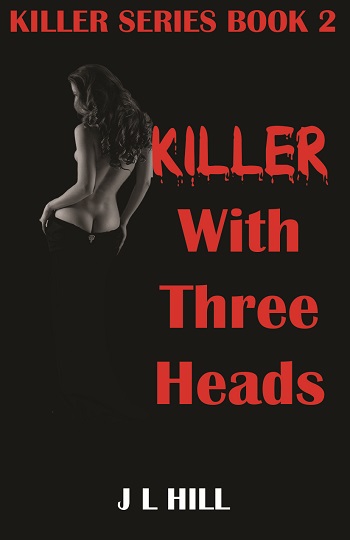 Killer With Three Heads is the second book in the Killer series. Bulletproof Morris ‘Mojo’ Johnson returns to New York as John Morrison after a 10 years’ absence to find the people responsible for kidnapping his daughter, Maria. Killer With Three Heads is the second book in the Killer series. Bulletproof Morris ‘Mojo’ Johnson returns to New York as John Morrison after a 10 years’ absence to find the people responsible for kidnapping his daughter, Maria. |
Member BookAds
|
|
|
|


