|
|
|  | | Beyond the Summertime: The Mungo Jerry story
The story of Mungo Jerry, the British rock group who shot to fame with their major worldwide hit 'In The Summertime' in 1970
Mungo Jerry became an overnight success after their appearance at the Hollywood Music Festival, England, in May 1970, and their subsequent debut single 'In The Summertime', which topped charts around the world and achieved global sales of around 23 million. Led by singer, songwriter and multi-instrumentalist Ray Dorset, their early style fused skiffle, good-time blues, and rock'n'roll. Notwithstanding frequent line-up changes which soon left Dorset as the only remaining member, they enjoyed consistent chart success in their native Britain for the next four years, notably with a second No. 1 | |  | | Childhood at Court 1819-1914
Childhood for princes and princesses at the British court, from the childhood of Queen Victoria to the outbreak of the Great War
What was childhood like for royalty in the Victorian and Edwardian period? This book examines in lively detail their education, recreation and general upbringing. We read of Queen Victoria's isolated childhood, dominated largely by an unscrupulous comptroller who shamelessly tried to manipulate her as he did her widowed mother, the Duchess of Kent; the formative years of her children at Windsor, Osborne and Balmoral, under the supervision of Prince Albert and his mentor Baron Stockmar, and a procession of tutors and governesses; the more indulgent family life of the Prince and Princess of Wa | |  | | Crowns in a Changing World: The British and European Monarchies 1901-36
An examination of the personal and diplomatic relationships between King Edward VII, King George V and the European imperial and royal families, many of whom were closely related by blood or marriage
At Queen Victoria's death in 1901, almost every European nation was a monarchy, most linked by close family ties to her and her son and successor Edward VII, the 'uncle of Europe'. Before the outbreak of the First World War, the personal relationships of Edward, and of his successor and son George V, with the other royal families of Europe flourished: with his second cousin, Albert I of the Belgians; with his nephews, the German Emperor William II and the Tsar of Russia Nicholas II; with the Danish royal family through hs wife Queen Alexandra; and with the Norwegians through the marriage of h | |  | | Dearest Affie: Alfred, Duke of Edinburgh, Queen Victoria's Second Son
A biography of Queen Victoria's second son, who was Duke of Edinburgh, Admiral of the Fleet, and later Duke of Saxe-Coburg Gotha. [Note - first published 1984 in hardback; reissued 1995 in paperback, plus a hardback limited edition of 100 copies by Royalty Digest/Piccadilly Rare Books, with different illustrations]
Queen Victoria's second son 'Affie' (1844-1900) was a gifted and capable officer in the Royal Navy, whose years of service culminated in promotion to the rank of Admiral of the Fleet, whose interest in stamps led to the foundation of the Royal Philatelic Collection, and who was noted for his love and patronage of music. He also led a life of adventure rivalled by few other European princes of his time.
At the age of 18 he was elected King of Greece, though unable to accept the crown for political reasons. Five years later, during a voyage round the world and tour of Australia, he | |  | | Dearest Vicky, Darling Fritz: Queen Victoria's eldest daughter and the German Emperor
A biography of 'Vicky', Princess Royal of England, Queen Victoria's eldest child, and 'Fritz', Frederick III, German Emperor and King of Prussia. The great hope of German liberalism, he ascended the throne in March 1888 when stricken by cancer of the larynx and died three months later.
With the wedding in 1858 of Vicky, Princess Royal and Fritz, second in line to the throne of Prussia, hopes were high for a peaceful united Germany. However, four years later Bismarck was appointed Minister-President of Prussia and inaugurated an era of 'blood and iron'. The united Germany he brought about in 1871 was a very different proposition.
Vicky and Fritz's family life saw several tragedies. They lost the guidance of her father the Prince Consort at an unexpectedly early age, their eldest son William was born with a deformed left arm (he and his mother almost died in the | |  | | Edward VII's Children
A collective biography of the children of King Edward VII and Queen Alexandra, who included King George V, and Queen Maud of Norway
King Edward VII and Queen Alexandra had six children. The youngest only lived for 24 hours, but the other five all reached maturity. Of these, only George V has received much attention from biographers. A conservatively-minded man, his reign was to span the Great War, the first Labour government, the advent of sound broadcasting, and the dawn of the age of the dictators.
The eldest, Albert Victor, Duke of Clarence and Avondale, was a chronically backward youth whose early death was a tragedy for the family but in retrospect fortunate for the monarchy. (Though his private life was s | |  | | Frederick III: German Emperor 1888
A biography of Frederick III, German Emperor and King of Prussia from March to June 1888
Frederick III, German Emperor and King of Prussia from March to June 1888, was the husband of Victoria, Princess Royal of Britain, eldest child of Queen Victoria. Born in 1831, Prince Frederick William took less after his arch-conservative father William (later Emperor William I) and more after his liberal mother Augusta. His views were later encouraged by his father-in-law Albert, Prince Consort, and staunchly supported by his wife, whom he married in 1858.
The appointment of Otto von Bismarck as Prussia's Minister-President in 1862 was a blow to Frederick, widely recognized as the | |  | | George III's Children
A collective biography of the fifteen children of King George III and Queen Charlotte
King George III and Queen Charlotte had fifteen children, born between 1762 and 1783, and all but two survived to maturity. The eldest, who became Prince Regent and later King George IV, is today less remembered for his patronage of the arts than for his extravagance and the harsh treatment of his notorious wife Caroline, who was refused admission to his (and 'her') coronation. The administrative qualities of the second son Frederick, Duke of York, as a conscientious Commander-in-Chief of the British army, are likewise almost forgotten, while King William IV, usually dismissed as a figure of | |  | | George V's Children
A collective biography of King George V's six children, who included Edward VIII, George VI, and George, Duke of Kent
King George V and Queen Mary had six children. All except the youngest, John, lived to maturity and contributed to British public life in peace and war.
The eldest, Prince of Wales and heir to the throne for over quarter of a century, reigned as King Edward VIII for eleven months, his determination to marry the twice-divorced Wallis Simpson leading to the abdication crisis and a long period of often bitter exile for both. The Duke of York, who reluctantly and unexpectedly succeeded to the throne as King George VI, was a shy, diffident man handicapped by a speech impediment | |  | | Gilbert & Sullivan's Christmas
A selection of Sir W.S. Gilbert's Christmas articles and stories on pantomime and his comic verse; carols set to music by Sir Arthur Sullivan; short stories, poems and extracts from memoirs by their contemporaries; plus an introduction by the compiler on the background of the Savoy Operas and their place as part of the festive tradition. Illustrated throughout with contemporary pictures, portraits and Gilbert's drawings.
Sir W.S. Gilbert and Sir Arthur Sullivan dominated English culture for much of the Victorian age, the former as journalist, dramatist and comic poet, the latter as composer of everything from symphonies and oratorios to songs, cantatas and ballet suites. Between them they wrote some of the most-loved light operas of all time, characterised by Gilbert's own brand of topsy-turvydom.
This anthology includes a selection from their Christmas creations: Gilbert's articles and stories on the pantomime, and some of his festive 'Bab Ballads'; plus several carols and seasonal songs which Su | |  | | Kaiser Wilhelm II: Germany's last Emperor
A biography of Wilhelm II (1859-1941), the last German Emperor, who abdicated at the end of the Great War
'It is not by his will that he will unleash a war, but by his weakness,' King Edward VII wrote of his nephew, Kaiser Wilhelm II, in 1905. Born in 1859, the eldest grandchild of Queen Victoria, Prince Wilhelm of Prussia was torn between two conflicting cultures - that of the Prussian Junker, and that of the English Liberal gentleman.
Ascending the throne in 1888 after the early death of his father, Friedrich III, from cancer, he alternately revered and reviled England, while personifying German military power and embodying his empire's ambition to become the world's foremost naval | |  | | King George II and Queen Caroline
A biography of King George II and Queen Caroline of England
Though he reigned for over thirty years (1727-60), King George II and his consort Queen Caroline have received little attention from biographers. Yet he ruled during a period when the foundations of British constitutional monarchy were laid, and he was the last King to lead his troops into battle, at Dettingen, in 1743.
Often derided as the buffoon who 'hated all boets and bainters', King George was fortunate to be served by his Prime Minister Sir Robert Walpole, and was wise enough to leave the business of government to others at a time when the English constitution was evolving. | |  | | Kings of the Hellenes: The Greek Kings 1863-1974
A survey of the Kings of modern Greece, from George I (reigned 1863-1913) to Constantine II (reigned 1964-67)
When the volatile Greeks deposed their unpopular, childless German-born ruler Otho in 1862, they chose a new King. Their first choice of Queen Victoria's second son Alfred was politically impracticable, and instead they chose the 17-year-old Prince William of Schleswig-Holstein. Despite the instability of Greece, William - who took the regnal name George - was a popular and effective monarch, coping with tensions in the Balkans and defeat by Turkey in the war of 1897. His family became well-connected with the major European dynasties; his father Christian became King of Denmark, two of his | |  | | Northern Crowns: The Kings of Modern Scandinavia
A collective biography-cum-history of the Kings of Denmark, Norway and Sweden, and their consorts, from the mid-19th century onwards
How did Prince Christian of Schleswig-Holstein, born in 1818 the fourth son of a little-known German prince, come to succeed to the throne of Denmark in 1863? What part did the Kings and their consorts of modern Scandinavia play in their countries' efforts to remain neutral throughout two world wars? How did they adapt to an increasingly democratic world during the turbulent years of the 20th century, and yet retain the respect and affection of their subjects?
In this study, the lives of the Kings of Denmark, Norway and Sweden are recounted, from the birth of the prince destined t | |  | | Once a Grand Duchess: Xenia, sister of Nicholas II
A biography of the sister of the last Tsar of Russia, who escaped during the Revolution to spend the rest of her life in exile in Britain
Born in 1875 into the wealth and splendour of the Russian imperial family as the fourth child of the Tsarevich, Xenia might have expected to play only a minor role in the Romanov story. Yet when she was only five years old, the assassination of her grandfather, Alexander II, moved her father and his family into the centre. She became a key witness to the events of the years that followed, seeing the coronation of her brother Nicholas in 1894; the murder of Rasputin, in which her son-in-law Felix Youssoupov was implicated; the Revolution; and the 'terrible horror' as the first rumours of the | |  | | Princess Victoria Melita, Grand Duchess Cyril of Russia
A life of 'Ducky', the twice-married granddaughter of Queen Victoria. [A slightly revised paperback edition was published in 1994]
Princess Victoria Melita, or 'Ducky' (1876-1936), was the second daughter of Alfred, Duke of Edinburgh and his wife Grand Duchess Marie of Russia, and therefore a granddaughter of Queen Victoria. Her second name was bestowed on er as she was the first (and so far only) princess born on the island of Malta.
Married at 17 to her cousin Ernest, Grand Duke of Hesse, she braved strong family opposition when the marriage failed and she wanted to divorce him. Her second marriage to another cousin, Grand Duke Cyril of Russia, led to three years' exile for both. They were later allowed to r | |  | | Queen Victoria's Children
A collective biography of the nine children of Queen Victoria and Prince Albert, who included King Edward VII; Victoria, Princess Royal, later Empress Frederick; and Alfred, Duke of Edinburgh
Queen Victoria and Albert, Prince Consort, had nine children. Despite different characters and temperaments, they always remained a closely-knit, mutually supportive family group. Some married into European royal families and experienced the painful division of loyalties inevitable in the ever-changing world of 19th-century political and nationalist feeling. The life of Victoria, Princess Royal, later consort of the German Emperor Frederick III, was soured by the merciless opposition of Chancellor Bismarck and later her son, Emperor William II ('Kaiser Bill'). Similarly the marriage of Alf | |  | | Queen Victoria's Family: a Select Bibliography
A bibliographical guide to the important biographies, memoirs and published correspondence of the Queen and her family down to her grandchildren
This book lists over 200 works - biographies, memoirs, published correspondence and journals - relating to Queen Victoria, the Prince Consort and their immediate family, as far as their grand children. Most are annotated to identify important primary sources, or explain any historical significance or controversy. As well as standard bibliographical detail, dates of major reviews (The Times, TLS) are given where possible. There is also an author/editor index.
The book started life as a course-assessed module undertaken by the compiler at library college, and only covers published | |  | | Roxeventies: popular music in Britain 1970-79
A short overview of the rock scene throughout the seventies, from glam rock and the disco era to the heyday of punk and new wave
The seventies saw the dawn of a new era in rock music in Britain. The Beatles disbanded, ushering in an era of competition to find 'the new Beatles'. It was the heyday of the singer-songwriter, the long-lasting success of Rid Stewart, and briefly the zenith of glam rock. By 1974 a sea-change in favour of disco and soul was the order of the day, though rock was spearheaded by inventive acts like 10cc, Queen and Roxy Music. Then in 1976 pub rock, the Sex Pistols, the Damned et al changed everything - but the success of such varied names as Gerry Rafferty, Kate Bush and Dave Edmunds ensured t | | 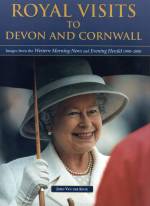 | | Royal visits to Devon and Cornwall
Images from the Western Morning News and Evening Herald, supplemented with photographs from other collections
This pictorial celebration of royal visits to Devon and Cornwall is a timely memento of royal connections with the westcountry in England, in the year of Queen Elizabeth II's Golden Jubilee. The 200 photographs selected include royal visits from 1865 to 1999, as well as of celebrations for Queen Victoria's Golden Jubilee and King George VI's Coronation.
The late Queen Elizabeth the Queen Mother and the Prince of Wales (whose other titles include Duke of Cornwall) were regular visitors and are seen in many of the pictures. Other members of the royal family in these pages include not | | 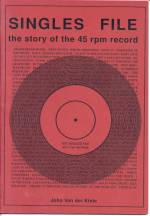 | | Singles file: the story of the 45 rpm record
Some interesting aspects of the career of the 45 rpm single and its 78 rpm predecessor throughout most of the 20th century
A selection of noteworthy singles, from Enrico Caruso's 'Vesti La Giubba' ('On With The Motley'), generally recognised as the first million-seller, to Chris De Burgh's breakthrough hit 'The Lady In Red'; a brief survey of the history of the single, with particular reference to the rock era from 1954 onwards; and a look at different sizes, speeds and shapes. | |  | | The Georgian Princesses
The Queens and princesses of the Hanoverian dynasty in England, from Electress Sophia, mother of King George I, to Queen Adelaide, consort of King William IV, and King George III's last surviving daughter Mary, Duchess of Gloucester
This biography looks at the women of the Hanoverian dynasty over a period of 200 years, whose lives spanned an era from the Civil War to the first twenty years of Queen Victoria's reign.
They include Electress Sophia, who would have become Queen of England at the age of 83 had she lived just six weeks longer, but whose son George (I) founded the Hanoverian dynasty; the accomplished Queen Caroline, consort of George II; her notorious namesake, consort of George IV; the tragic Caroline Matilda, Queen of Denmark, who married an incipient schizophrenic King, saw her lover put to death, | | 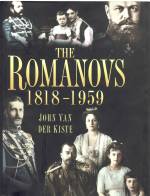 | | The Romanovs 1818-1959: Alexander II of Russia and his Family
A family chronicle of the imperial dynasty, from Tsar Alexander's birth in 1818 to the death of his youngest daughter in 1959
The lives of Tsars Alexander II and Alexander III have hitherto received little attention. Yet their reigns set in train the events which would culminate in the destruction of the Romanov dynasty and the tragic fate of the last Tsar, Nicholas II, and his family.
Alexander II, who reigned from 1855 to 1881, was an enlightened ruler who presided over and actively encouraged measures such as the emancipation of the serfs, and local government reform, while his sympathy with the Slavonic races under Turkish rule lef to a victorious war with Turkey. However his last years were overshad | |  | | The Roy Wood story
The life and music of Roy Wood, rock musician, successively member of The Move, the Electric Light Orchestra, and Wizzard
Born in Birmingham in 1946, Roy Wood was one of the mainstays of the city's thriving music scene. He first came to prominence in 1967 as the guitarist and main writer in The Move, whose hits included 'Night Of Fear', 'Flowers In The Rain' and 'Blackberry Way', and after the departure of vocalist Carl Wayne, their lead vocalist as well.
Frustrated with the limitations of a conventional rock group, he worked with Jeff Lynne to form the Electric Light Orchestra, but left them in 1972 shortly after the release of their first album to form the more rock/jazz-orientated Wizzard, fondly rem | | 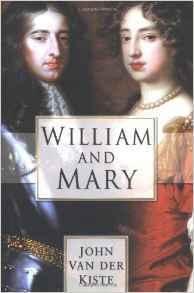 | | William and Mary
William III and Mary II are the only joint reigning sovereigns in English history. Brought to power as a result of the revolution of 1688-9 which deposed Mary's father, the Catholic James II, their reign was a crucial period during which new restrictions on royal power helped to lay the foundations of modern constitutional British monarchy. This is the first full biography of them both for thirty years.
| | 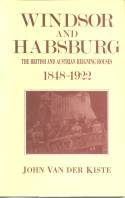 | | Windsor and Habsburg: The British and Austrian reigning houses 1848-1922
A study of relations between Britain and Austria as seen through personal connections between their royal and imperial families
This is a study of relations between Britain and Austria as seen through personal and political connections between the families of Queen Victoria and Emperor Francis Joseph, from the year of revolutions in 1848 (when the latter ascended the throne as a youth of 18), to the post-Great War era and death of Francis Joseph's great-nephew Emperor Charles.
Though this relationship was never cemented by family ties (the Habsburgs were Catholics), both empires were on friendly terms throughout the 19th century, surviving such obstacles as Lord Palmerston's unashamed support of anti-Austria |
|
|
|
7 point 7 (On the Richter Scale)
by Miller Caldwell
|
 A book for every Muslim and everyone wishing to know about their way of life. The Diary of the Camp Manager at Mundihar following the South Asian Earthquake - October 2005. An account of life after the Earthquake in one of the largest of the 161 camp A book for every Muslim and everyone wishing to know about their way of life. The Diary of the Camp Manager at Mundihar following the South Asian Earthquake - October 2005. An account of life after the Earthquake in one of the largest of the 161 camp |
Member BookAds
|
|
|
|