|
|
| 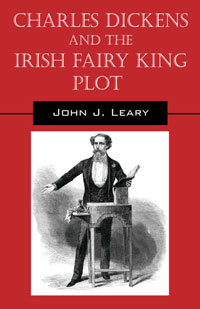 | | Charles Dickens and the Irish Fairy King Plot
A 3,000-year-old Irish Fairy King conspires to kidnap the noted author Charles Dickens when he comes to Dublin for a series of readings.
A veteran of the American Civil War is recruited by Irish nationalists to train soldiers for another rebellion against English rule. Dylan O'Clery, with his marriage in ruins, accepts the assignment and goes the Ireland, the land of his birth.
In Ireland's rural west, O'Clery discovers that almost everyone still believes in the Fairy World. His best friend becomes involved with a beautiful girl who claims she is a princess. O'Clery meets the girl's father, the Fairy King Bodhb Derg, who lives in a palace below one of Ireland's majestic lakes. He is seven-feet tall and 3,000 years old.
| | 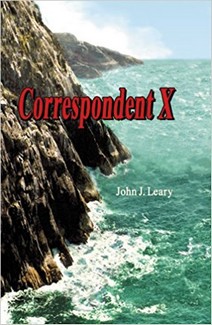 | | Correspondent X
A young wounded American war hero, fresh from the trenches of the Western Front, narrates this story of Ireland's War of Independence (1919-21).
Conn O'Farrell journeys to the land of his birth to uncover the circumstances of his older brother's death. He learns that both his brother and his father in America had been engaged in running guns and ammunition for the Republican cause. O'Farrell, a journalist, meets Michael Collins, leader of the insurgency against the British occupation, and under the pseudonym, Correspondent X, covers the guerrilla war for Ireland's freedom. | | 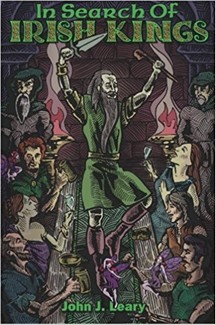 | | In Search of Irish Kings
An American reporter travels to his native land to track down a family legend that he is heir to the riches left by Ireland's High King Laoghaire (Leary).
A Tinker storyteller confirms that the American newsman is a direct descendant of Ireland's fifth century ruler. Tim Leary embarks on a search for the king's treasure but finds himself trapped in a time-traveling series of adventures. Finally, he is at the court of High King Laoghaire when the monarch summons all his Druids to prevent Saint Patrick from converting the pagan Irish to Christianity. | | 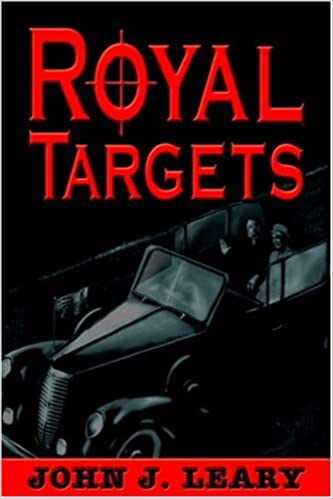 | | Royal Targets
An Irish-American newspaper editor investigates a conspiracy to assassinate Britain's royal couple.
On the eve of World War II, England's George VI and Queen Elizabeth tour the Canadian provinces and then, at the invitation of President Franklin D. Roosevelt, cross the U. S. border at Niagara Falls. The F. B. I. receives intelligence that an assassination attempt will be made on the lives of the royal couple. Suspicion falls on two Irish brothers who have just arrived in New York City. A third brother, a journalist, works with the F. B. I. to uncover the true conspirators. The story reaches its climax when the royal couple motors to Hyde Park, N.Y., where they will be weekend guests of Presi | | 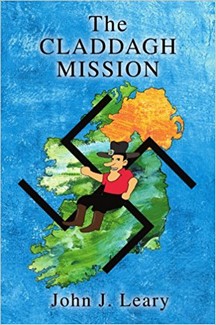 | | The Claddagh Mission
During World War II, a young American is recruited by the U. S. Office of Strategic Services (OSS)to go to southern Ireland. His mission: thwart any attempt by the Nazis to capture one of the country's ports.
Army Lt. Tommy O'Shaughnessy knows that if he fails in his mission, Hitler's forces will sever Britain's lifeline with America and Canada.
In a briefing before heading overseas, Tommy is warned to keep his eyes open for two potential adversaries: the Irish Blue Shirts, a Fascist organization, and the Danann Brotherhood and Auxiliary. The DB&A is believed to be the political wing of the Faerie World.
Tommy travels to Galway, on Ireland's west coast, where he experiences an extraordinary series of adventures in which he combats Nazi spies, is pursued by a Faerie princess, meets a | | 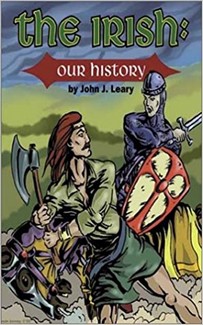 | | The Irish: Our History
A history of the Irish people from earliest times to the mid-nineteenth century Great Famine, when hundreds of thousands left their distressed homeland and emigrated to America and other havens around the world.
This book about the Irish begins on the European Continent because it was there that the Celtic people who later entered Ireland, giving the island its culture and character, made their mark in history. The Celts first emerged as a people hundreds of years before the birth of Christ. Led by an aristocratic warrior class, they dominated most of temperate Europe for nearly seven centuries.
Before the arrival of the Celts in Ireland, the island had been settled by an earlier people who probably migrated over a land bridge that connected Ireland and Scotland. These settlers became the islan |
|
|
|