|
|
|  | | Evelyn Waugh Revisited: An Exploration of His Comic Vision and Art
This book appraises Waugh as a major literary voice of his time, speaking for sanity and preservation of eternal values of life, as enshrined according to him in the Roman Catholic Church. The book argues that the emphasis on Roman Catholicism does not take away the universality of his artistic appeal for the readers in different parts of the globe. It extolls Waugh for effecting a sublime transmutation in the comic art.
Contents
Foreword i
Acknowledgements ii
1. Introduction 1
2. The Lesser Comedies 32
Decline and Fall 33
Vile Bodies 56
Black Mischief 76
A Handful of Dust 94
Scoop 111
Put Out More Flags 130
The Loved One 145
The Ordeal of Gilbert Pinfold 167
3. The Greater Comedies 185
Brideshead Revisited 186
Helena 213
The Sword of Honour Trilogy 232
4. | |  | | Orphans of the Storm
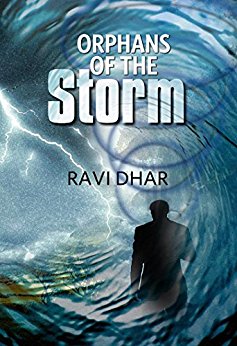
Orphans of the Storm is a novel about Siddhartha and his family, who are uprooted from their land of nativity Kashmir, by Islamist Terrorists, out to cleanse the valley ethnically of all traces of non-Muslim religious communities.
It is a novel about a boy who finds his family completely devastated by the outbreak of militancy in Kashmir valley. It is about his efforts to support his fathers efforts to eke out a living in the migrant camps of Jammu and to educate himself. In the inhospitable environment of Jammu, though he succeeds in earning a Masters degree in English, he sees no hope of settlement. He gets selected as a Lecturer in English in Nagaland University, where he falls in love in the midst of an overwhelming environment of political intrigue and racial conflict. The abrupt end of this love affair hits him ha | | 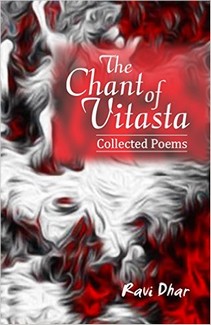 | | The Chant of Vitasta
It is a collection of poems written over a period of last three decades.
The Chant of Vitasta is a collection of poems composed in different moods at different points of time. Symbolic of the poet, the Vitasta has been flowing down the length of the Kashmir valley for ages, terminating its journey only when it finds an easeful repose in the mighty waters of the Sindhu. Like the poet, it has witnessed many a summer of peace and prosperity and winter of strife and destruction. It has seen kingdoms rise and kingdoms fall. It has seen cultures prosper and decay. In each season and through different and at times difficult terrains, it has flowed on, humming its tunes of |
|
|
|