|
|
| 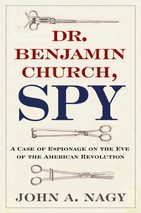 | | Dr/ Benjamin Church Spy; A Case of Espionage on the Eve of the American Rev
The biography of "the least known and most dangerous spy in American History' Thomas Fleming
Dr. Benjamin Church, Jr. (1734–1778) was a respected medical man and civic leader in colonial Boston who was accused of being an agent for the British in the 1770s, providing compromising intelligence about the plans of the provincial leadership in Massachusetts as well as important information from the meetings of the First Continental Congress in Philadelphia.
br />
In i>Dr. Benjamin Church, Spy: A Case of Espionage on the Eve of the American Revolution,/i> noted authority John A. Nagy has scoured original documents to establish the best case against Church, identifying | | 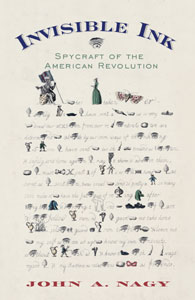 | | Invisible Ink Spycraft of the American Revolution
The spycraft used in the Intelligence War during the American Revolution. What codes, ciphers, etc and who used them.
font size="2" face="Arial, Helvetica, sans-serif">During the American Revolution, espionage was critical to the successes and failures of both Continental and British efforts, and those employed in cloakand- dagger operations always risked death. While the most notorious episode of spying during the war—the Benedict Arnold affair—was a failure, most intelligence operations succeeded. Spycraft was no more wholly embraced than by the American commander-in-chief, George Washington. Washington relied on a vast spy network and personally designed sophisticated battle plan deceptions | | 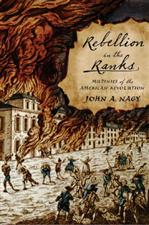 | | Rebellion in the Ranks Mutinies of the American Revolution
Relates American officers' constant struggle to keep up the morale of their troops, while highlighting British efforts to exploit this potentially fatal flaw.
Identifies 30 spies some for the first time identified anywhere.
Mutiny has always been a threat to the integrity of armies, particularly under trying circumstances, and since Concord and Lexington, mutiny had been the Continental Army's constant traveling companion. It was not because the soldiers lacked resolve to overturn British rule or had a lack of faith in their commanders. It was the scarcity of food—during winter months it was not uncommon for soldiers to subsist on a soup of melted snow, a few peas, and a scrap of fat—money, clothing, and proper shelter, that forced soldiers to desert or organize resistance. | | 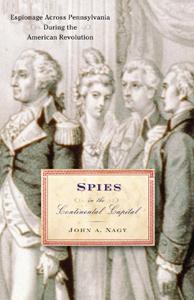 | | Spies in the Continental Capital Espionage Across Pennsylvania During the A
The book studies the use of spies in the intelligence war in the American Revolution with a Pennsylvania connection. It covers Pennsylvanian who were spies and spies that operated in Pennsylvania.
font size="2" face="Arial, Helvetica, sans-serif">It did not take long after the Seven Years’ War—the French and Indian War in North America—for France to return spies to America in order to determine the likelihood of regaining the territory they lost to Britain. One of the key places of French espionage was the colony of Pennsylvania since its frontier had been an important crossroads of French influence in North America. The French recognized then that there was a real possibility that the colonies would seek their independence from Britain. Against this backdrop, awar |
|
|
|