|
|
| 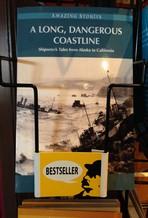 | | A Long, Dangerous Coastline
Tales about shipwrecks along the west coast of North America from Alaska to California.
On September 8, 1923, seven US navy destroyers rammed into jagged rocks on the Califiornia coast. Twenty-three sailors died that night. Five years earlier, the Canadian Pacific passenger ship i>Princess Sophia /i>steamed onto Vanderbilt Reef in Alaska's Lynn Canal. When she sank, she took 353 people to their deaths. From San Francico's fog-bound Golden Gate to the stormy Inside Passage of British Columbia and Alaska, the magnificent west coast of North America has taken a deadly toll. Here are the dramatic tales of ships that met their end on this treacherous coastline -- including | |  | | Adventures with Camera and Pen
A collection of 21 adventure travel stories, many from the author's expeditions and worldwide magazine assignments.
Twenty-one tales of adventure from a life-long adventurer and expedition leader. These stories range from Canada's far north to the mountains of Afghanistan and from the remote Falkland Islands to Scotland's Orkney Islands. Track Royal Bengal tigers in the wild, sail on tall-ships, trek across the Sahara with a camel caravan, argue with a troop of baboons, buy camels in a remote part of Saudi Arabia and climb some of Canada's challenging mountain peaks.
| | 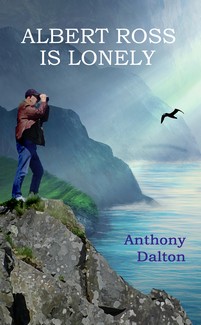 | | Albert Ross is Lonely
The eternal triangle with a twist.
A man, a woman and an albatross. Set on the rugged north-west coast of Scotland, this novella tells of the passion two people hold for a giant wild bird. Tripp, Amanda and Albert, bound together by loneliness and curiosity. A love story with a surprise ending on a far-away island. | |  | | Alone Against the Arctic
The story of the author's near-fatal voyage in Arctic waters.
In the summer of 1984, Anthony Dalton embarked on a near-fatal voyge in a small boat along the wild northwest coast of Alaska. Dalton's gripping description of his encounter with wild storms north of the Arctic Circle explores the irresistible lure of risk and challenge that draws adventurers to the Arctic. | |  | | Arctic Naturalist, The Life of J. Dewey Soper
Dewey Soper was the last of the great pioneer naturalists in Canada. He was also a skilled and meticulous explorer, particularly in the Arctic and sub-Arctic.
Dewey Soper first travelled to the Arctic in 1923. During the next seven years he accepted three research postings on Baffin Island, each of which lasted between one and two years. In 1929 he discovered the breeding grounds of the blue goose in the southwest corner of Baffin Island. He also charted the final unknown regions of Baffin Island's coastline. Later in life he worked in the western Arctic. Outside the Far North, Soper studied bison in Wood Buffalo National Park, documented birdlife on the Prairies, and made a detailed study of small mammals in Alberta.
| |  | | Baychimo, Arctic Ghost Ship
No vessel that sailed the Arctic seas has raised so much speculation or triggered imaginations as has the legendary Hudson's Bay Company steamer 'Baychimo.'
In the 1920s the crews of S.S. i>Baychimo /i>set up trading posts in eastern Canada, sailed on fur-trading expeditions to Siberia during the turbulent years of the Russian civil war and made dangerous annual voyages around Alaska to Canada's western Arctic coasts. On each voyage i>Baychimo /i>had to force her way through heavy ice conditions to re-supply the HBC's remote outposts.
This ship's story had a remarkable twist. Caught in a huge ice floe in 1931 and in danger of being crushed, she had to be abandoned by her crew. Instead of sinking as expected, the gallan | |  | | Fire Canoes
Tales of steamboats on great Canadian rivers, from the earliest sternwheeler to the giant ocean liners of the 20th century.
i>Anson Northup/i>, the first steamboat on the Canadian prairies, arrived in Fort Garry in 1859. Belching hot sparks and growling in fury, it was called "Fire Canoe" by the local Cree. For 150 years, steamboats carried passengers and freight on the greatest -- and most dangerous -- Canadian rivers, leaving behind tales of flamboyance and daring that coloured the history of this country. Travel back in time aboard gold-rush paddle-steamers on the Yukon River, rugged sternwheelers on the Saskatchewan and Red Rivers and luxurious liners on the St. Lawrence to the decades | |  | | Henry Hudson
The story of Henry Hudson's four Arctic voyages in search of the Northwest Passage.
Courageous, determined, ambitious: seventeenth century British naval explorer Henry Hudson was all of these. But he was reckless, too, and his obsessive zeal to find a sea route across the top of the world to the riches of the East clouded his judgement and led him to make some disastrous choices. Though his goal eluded him and he eventually fell victim to mutiny, his four Arctic voyages opened new worlds. With a great bay, a major river, and other prominent landmarks named for him, Hudson's legacy lives on. | | 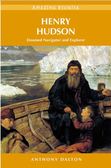 | | Henry Hudson, Doomed Navigator and Explorer
Captain Henry Hudson's four Arctic voyages are recounted here, along with tales of survival, Arctic winters and mutiny at sea.
From the era of wooden sailing ships and Europe's golden age of exploration, the story of famed British navigator Herny Hudson tells a classic tale of courage, ambition, and treachery on the high seas. As the leader of four Arctic voyages in the early 17th century, Hudson searched in vain for a navigable route through the polar ice that would open the way to the riches of Asia. In his obsession to succeed, he made reckless decisions that pushed his crew to the brink, with disastrous results. | | 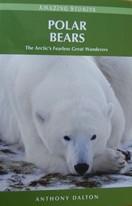 | | Polar Bears
Tales of polar bears, in the wild and in zoos and circuses.
Considered wise and powerful by the Inuit and other native cultures, and celebrated in legend and literature, polar bears have become a charismatic symbol of animals threatened by climate change in the Arctic ecosystem. Yest for centuries, polar bears were demonized and slaughtered by adventurers who sailed the icy seas seeking wealth and glory. These fascinating stories from norhern lands, including Canada, Alaska, Greenland and the Norwegian islands of Spitsbergen, draw from the annals of Arctic exploreation and more recent polar bear research to capture the ingenuity, power and maj | | 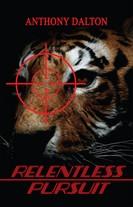 | | Relentless Pursuit
A Canadian zoologist in a head-on clash with a man-eating Royal Bengal tiger in the jungles of Bangladesh. This book is a land-based Jaws!
Canadian zoologist Gray Pendennis is pushing his limits. desperate to find and protect a man-eating Royal Bengal tiger in a Bangladesh jungle, he is in a race against time as two bereaved fathers, whose daughters were killed by the striped predator, team up to hunt the menace. Working far from civilization, the three men are on a collision course beyond the boundaries of conscience. The rogue tiger's kills escalate and the zoologist's work is complicated by his fascination for a beautiful woman and her underwater archaeologist husband as they too join the hunters and the hunted where | | 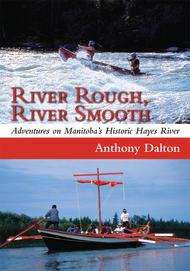 | | River Rough, River Smooth
This is the story of the author's two adventures on Manitoba's historic Hayes River by York boat and by canoe, combined with elements of Hudson's Bay Company history.
Manitoba's Hayes River runs over 600 kilometres from near Norway House to Hudson Bay. On its rush to the sea, the Hayes races over 45 rapids and waterfalls as it drops from the Precambrian Shield to the Hudson Bay Lowlands. This great waterway, the largest naturally flowing river in Manitoba, served as the highway for settlers bound for the Red River colony, ferrying their worldly goods in York boats and canoes, struggling against the mighty currents.
Traditionally used for transport and hunting by the indigenous Cree, the Hayes became a major fur-trade route in the 17th to 19 | |  | | Sir John Franklin
A biography of the legendary English naval officer, diplomat and Arctic explorer who disappeared in the Arctic in 1845.
In 1845, Royal Navy Captain Sir John Franklin left England on a quest to fulfill his lifelong dream -- the discovery of the Northwest Passage. Along with his ships i>Erebus /i>and i>Terror, /i>Franklin and his men vanished into the unforgiving Arctic and passed into legend. This compelling biography follows Franklin through his early sea voyages and arduous overland expeditions In Canada's north to postings in Malta and Tasmania and his tragic final Arctic voyage, retracing the route of the lost ships and recounting the expedition's agonizing fate. A determined, fearless leader an | | 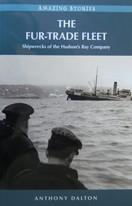 | | The Fur-Trade Fleet
Shipwreck tales from the huge fleet of the Hudson's Bay Company.
Since the 17th century, hundreds of ships have sailed in the Hudson's Bay Company's fur-trade fleet, servicing far-flung and ice-choked northern posts, braving the wild rapids of mighty rivers and even battling their way around the tip of South America to open up trade on the west coast of North America. During these arduous voyages into treacherous and often uncharted waters, many of these ships and their courageous crews came to grief. Here are the dramatic stories of the legendary ships i>Nascopie, Bayeskimo, Bayrupert, Baychimo/i> and many more that proudly flew the flag of Cana | | 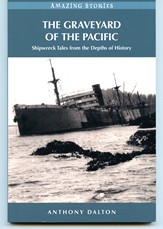 | | The Graveyard of the Pacific
A collection of stories about shipwrecks along the west coast of Vancouver Island and Juan de Fuca Strait.
On January 22, 1906, the passenger ship i>Valencia /i>lost her way in heavy fog and rain and rammed into the rocks at Pachena Point. Few survived the frigid and turbulent waters. A year earlier, the i>King David /i>had been wrecked on Bajo Reef near Nootka Sound. The fate of nine of her sailors is still a mystery. Today, the magnificent west coast of Vancouver Island draws hikers and surfers to experience its natural splendour, but the rugged coastline known as the Graveyard of the Pacific is haunted by the ghosts of doomed ships and long-dead mariners. These are some of their sto | |  | | The Mathematician's Journey
The icy world of Captain Henry Hudson, doomed 17th century Arctic explorer, comes alive through the eyes of a young mathematician - sailor.
Narrated by Thomas Woodhouse, a young mathematician and sailor, we meet his English family and a lady friend. Thomas discusses the important events in early 17th century England; he takes us with him to Oxford University and he shares hs growing passion for the Arctic.
Signed on board Henry Hudson's expedition ship i>Discovery/i> for a voyage to find the North-West Passage, Thomas works with a disparate crew and experiences the erratic mind of their commander. i>Discovery'/i>si> /i>crew mutiny and cast their captain and a few loyal followers adrift, including | |  | | TINKER GO WALKING!
Nineteen-year-old Tinker Taylor explores the Middle East and northern Africa on a 2-year odyssey to learn more about Alexander the Great, Cleopatra, the Pharaohs, and the legendary Timbuktu.
The adventures of Tinker Taylor started in rural Scotland before he was
three years old. They continued throughout his formative years in England
until he set off on a roun-about odyssey for Timbuktu in his late teens, On his long journey he introduces us to Alexander the Great, Marc Antony, a host of ancient Persian kings, a trio of Sahara explorers, and he dallies with lovelies such as Aphrodite, Cleopatra, and Queen Tin Hinan.
Tinker's travels through the ruins of antiquity bring him in contact with an eclectic mix of moder |
|
|
|
Literary Savannah
by Aberjhani
|
 "The statues of Savannah's Monument Square are silent. The statue of the solemn girl in Bonaventure Cemetery—made famous in John Berendt's blockbuster book, Midnight in the Garden of Good and Evil—can't speak. Only Savannah's literary monuments can g "The statues of Savannah's Monument Square are silent. The statue of the solemn girl in Bonaventure Cemetery—made famous in John Berendt's blockbuster book, Midnight in the Garden of Good and Evil—can't speak. Only Savannah's literary monuments can g |
Member BookAds
|
|
|
|
Literary Savannah
by Aberjhani
|
|
"The statues of Savannah's Monument Square are silent. The statue of the solemn girl in Bonaventure Cemetery—made famous in John Berendt's blockbuster book, Midnight in the Garden of Good and Evil—can't speak. Only Savannah's literary monuments can g |
Member BookAds
|
|
|
|


