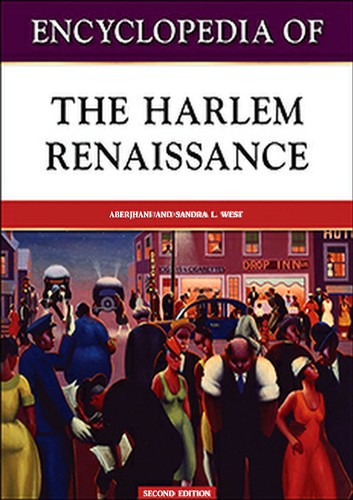
This valuable educational tool for students and teachers not only entertains with engaging stories on the lives and events which comprised the Harlem Renaissance of the 1920s. It also provides important case studies of diversity, multiculturalism, and activism relevant to the 2020s.
The critically acclaimed Encyclopedia of the Harlem Renaissance has long been an important and entertaining resource on African-American and American history of the 1920s-1940s. Just as it became a highly-valued addition to libraries like the Smithsonian Collection and Yale University upon its initial publication, the recent online edition has become an equally important resource for virtual classroom learning during the COVID-19 pandemic.
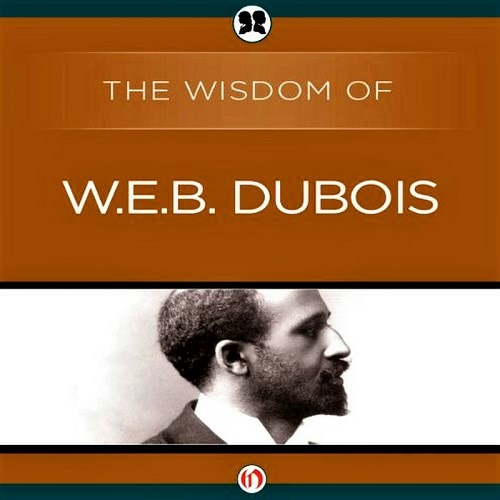
These timeless quotations culled from the celebrated corpus of writings by W.E.B. Du Bois are presented with illuminating introductory essays by Aberjhani. Narration of the Audible book performed by Catherine Byers.
At the heart of the African American struggle for equality and identity in the United States, W.E.B. DuBois stands as an early and eloquent voice, articulating the essential challenges of his own age and illuminating the historical basis for the civil rights movement. In this selection of quotes
Christmas When Music Almost Killed the World is a novel in which nothing is quite what it seems and everything is loaded with shadowy dreams of the past and nightmares set to soul-pounding music of the future.
The revised edition of Christmas When Music Almost Killed the World, originally published in 2008, is now available as Songs from the Black Skylark zPed Music Player.
The novel combines popular music culture, science fiction fantasy, and horror to create a uniquely engaging metaphysical epic. The story takes us inside the world of Danny Blue, a young man struggling
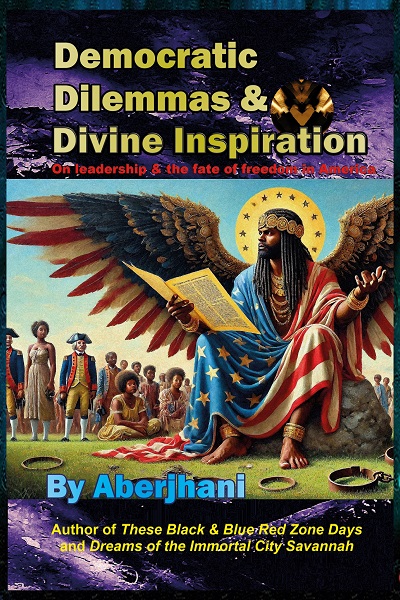
Democratic Dilemmas and Divine Inspiration examines the significance or relevance of the idea that the U.S. Constitution was, as many believe, divinely inspired. How much did that belief matter to founders of the nation and how much does it matter now?
At the heart of the eight compelling nonfiction stories and five-article appendix which make up Dreams of the Immortal City Savannah is this interesting question: What would your life mean if you were living someone else's dream of what it should be? Possible intriguing answers arise from different individual perspectives, historical situations, and contemporary challenges.
The introduction to Dreams of the Immortal City Savannah sets the unusual stage for the texts which follow as the author contemplates Georgia state founder James Oglethorpe's dreams for America's thirteenth colony and his possible reactions to conditions in the city of Savannah today. "What h
The city of Savannah, Georgia, long celebrated by tourists and natives alike for its charm, beauty, and cultural diversity, adds another jewel to its fabled crown. ELEMENTAL: The Power of Illuminated Love is a celebrated gift book by two of the city’s most acclaimed creative artists: painter Luther E. Vann, and multi-genre author Aberjhani, co-author of the award-winning Encyclopedia of the Harlem Renaissance.
A perfect gift for graduations, father’s day, birthdays, and other occasions, ELEMENTAL: The Power of Illuminated Love contains more than 60 brilliant reproductions of Vann’s prize-winning work along with statements by the artist on his unique creative vision. In addition, the book also features introductory essays by Aberjhani and accompanying poetry, much of which has been showcased in ESSENCE Magazine and
The Harlem Renaissance remains exciting, inspiring, and irresistible in the first half of the 21st Century for the same reason that the many people who lived it found it exciting, inspiring, and irresistible in the first half of the 20th Century. Despite the soul-crushing challenges of war, racism, sexism, and political oppression of every kind, poets of the Harlem Renaissance shined a light of hope with the defiant brilliance of their songs, visual artists empowered their communities with the strength of visions that reinforced individual dignity, writers lent the power of their pens in service to the voices and lives of their people, and advocates for democracy stood their ground until justice was duly recognized and properly served. In this, the world’s first Encyclopedia of the Harlem Renaissance, we do something more than witness the triumphs and tragedies of poets such as Langston Hughes and Jean Toomer, novelists like Ralph Ellison and Zora Neale Hurston, musicians like Duke Ellington and Charlie Parker, and performance artists such as Lena Horne and Paul Robeson. Through their challenges and victories, we are encouraged to identify and claim our own challenges and victories. Encyclopedia of the Harlem Renaissance takes us inside the clubs, theatres, and relationships that made Harlem, New York City, the one-time “Party Capital of the World,” and one of the greatest cultural centers of any era. It also places on bold display the genius that gave the world ragtime, Jazz, the blues, gospel, swing, and all night dancing. Whereas previously we thought of the Harlem Renaissance primarily as the literary achievement of a handful of writers, Encyclopedia of the Harlem Renaissance demonstrates that it was a triumphant exultation of creative genius across the cultural board and one that spread both nationally and internationally. Moreover, through leaders such as James Weldon Johnson, A. Philip Randolph, and W. E. B. Du Bois, it laid the foundation for what would grow into the extraordinary Civil Rights Movement of the 1950s and 1960s. This is the kind of book one is happy to share with another but even happier to give as a gift while keeping one’s own.
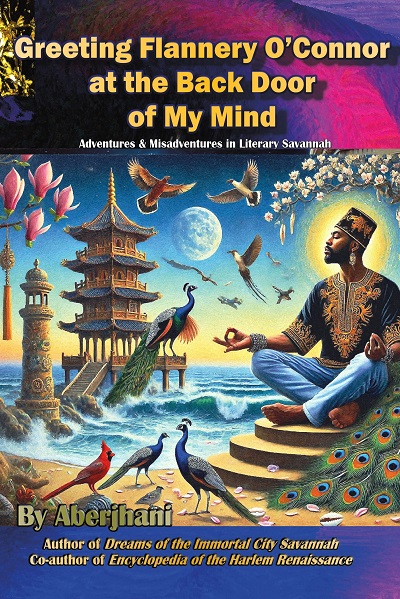
Exploring the impact of literary icon Flannery O'Connor's noted legacy on the cultural realities of modern-day America, the world, and a certain author.
First Kindle eBook edition of the literary memoir Greeting Flannery O'Connor at the Back Door of My Mind. Explores a certain author's "Adventures and Misadventure of Literary Savannah" upon encountering, in one form or another, authors Flannery O'Connor, James Alan McPherson, and John Berendt.
I Made My Boy Out of Poetry is a powerful literary vision of rare scope, beauty and emotional intensity composed of stories and poems that flow in and out of each other like the most lucid and articulate of dreams. These are portraits and studies of individual souls attempting to make peace with an awareness of themselves as beings more spiritual than material in a world given largely to the latter. This book offers an amazing journey through the heart and soul of a modern seeker of visions. (Photo courtesy of John Zeuli Photography)
excerpt from story: Angels and Shakespeare
Before I could consider what was happening, a flurry of words, thoughts and sensations fell upon me like a blizzard of colored ligh
Journey through the Power of the Rainbow: Quotations from a Life Made Out of Poetry demonstrates the ability of social media such as Twitter, Facebook, Tumblr, and Google+ to help make positive and inspiring differences in 21st-century life. It was through social media that the quote which prompted the composition of the book has practically grown into a self-empowerment movement which has helped to stimulate a stronger regard for individual self-worth, and life as a whole, in an era too often defined by mass shootings, ceaseless wars, and chronic depression.
"The statues of Savannah's Monument Square are silent. The statue of the solemn girl in Bonaventure Cemetery—made famous in John Berendt's blockbuster book, Midnight in the Garden of Good and Evil—can't speak. Only Savannah's literary monuments can give voice to the rich and diverse history of one of America's greatest cities; one that has for centuries inspired fascination worldwide.
Many have written about Savannah, but few have captured the true spirit of southern grace most often associated with her history as well as the mysteries and humor that await behind the walled gardens and gated homes."
--Patrick Allen, editor
From back cover:
"An impressive anthology that contributes to a collective view of Savannah that seems to leave few of its fables cobblestones unturned."
--G
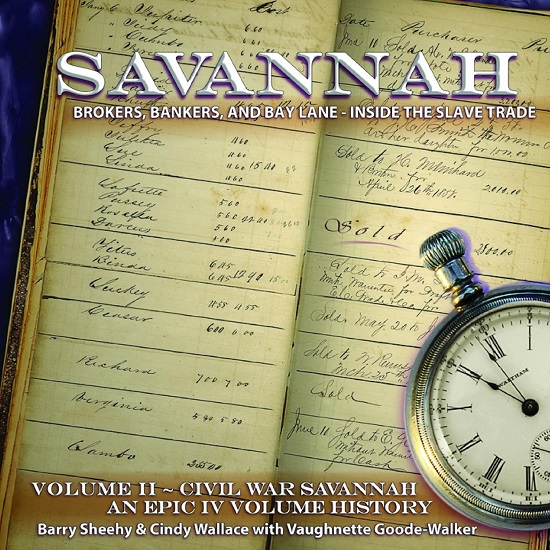
The authors of Savannah: Brokers, Bankers and Bay Lane: Inside the Slave Trade (Civil War Savannah), received the 2012 Award for Excellence in Research from the Georgia Historical Records Advisory Board. The Award was issued by then Georgia Secretary of State, and now Governor of Georgia Brian P. Kemp.
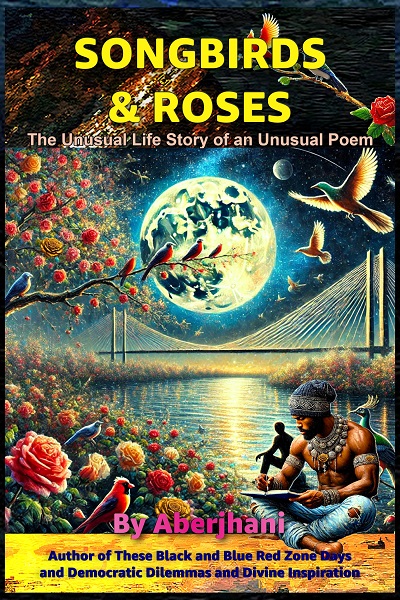
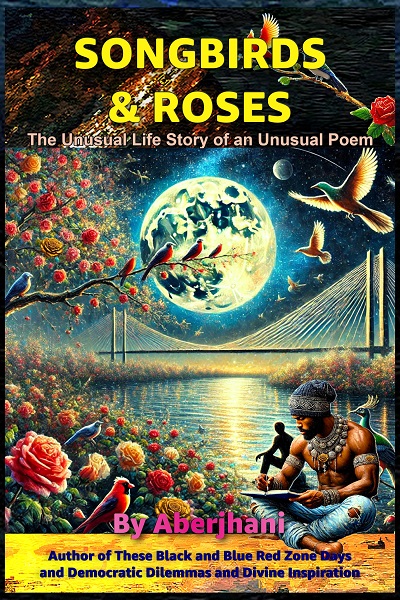
The captivating music of birds and the enchanting beauty of roses have, each in their own right, inspired people around the world for as long as anyone can remember. How the two combine with the challenges faced by a struggling writer in Georgia to create a nonfiction metaphysical mystery makes for compelling reading.
Explore the mystery of how nature makes unexpected gifts of creative wonders to an unsuspecting caregiver one late night and early morning in southeastern Georgia, USA.
This is the trade paperback edition of the mythopoeic paranormal novel recounting the attempts of one Danny Blue and his friends to come to terms with a series of unusual events in his life. A Kindle eBook edition is also available.
Expands beyond the safety of pages bound by predictability to explore and often confirm exciting creative possibilities. A shimmering collage of memoir, creative nonfiction, literary journalism, and dizzying flights into poetic observation, this is the amazing story of one writer’s rediscovery of his family, his hometown, and himself...
Takes readers on epic jaunt across landscapes of “the soul at work.” Whether dealing with the challenges of care giving and racism or coping with the subtleties of art and spirituality, this is one author-poet and one book that sings with the beauty of hope and the persistence of life itself.
Table of Contents
Introduction
PART ONE: RETURN TO SAVANNAH
1. Return to Savannah
2. This Mother’s Son
3. Thorns of Sorrow and Blossoms of Grace
The deep-dive literary meditations presented as stories, poems, and essays in The American Poet Who Went Home Again, A Mosaic of My Soul at Work, have captivated and inspired readers ever since its first paperback publication in 2008.
For the past two years (2006-2008) The Bridge of Silver Wings has earned a name for itself both as a series of poems published in different e-zines and as a book first published in 2007.
What makes this 2009 edition a special one is the inclusion of five new poems: “Angel of Better Days to Come”; “Midnight Flight of the Poetry Angels”; “Photographed Light of My Grandmother’s Soul”; “There upon a Bough of Hope and Audacity”; and, “What Angels Call a Poet.”
FROM THE INTRODUCTION:
“The truth is we do not always know how we go from falling off the edge of one cliff to running with determination beside the ledge of another. The
David Hightower’s lyrically expansive meditation on the whims of fate and the unpredictability of the human condition fill the pages of THE HANGING MAN DREAMS with thrilling music and mesmerizing imagery. Hightower’s richly infused voice echoes the eternal wisdom of classic literature even as it stakes its claim to a bold new vision of poetry as a more than capable vehicle for every experience from the chillingly macabre to the sublimely transcendent.
Long established as one of the American South’s best kept literary secrets, David Hightower is a poet with gifts worthy of a world audience. His works have appeared in such publications as the following: Atlanta Review/Cotton Boll; The Atlanta Quarterly; Georgia on My Mind: An Anthology of Contemporary Writers; Georgia State University Review; Lullwater Review; Old Red Kimono; The Savannah Literary Journal; Share; and Wind Magazine.
(Hanging Man Dreams art by Bill Amos)
What began as Songs of the Angelic Gaze in the summer of 2006 continued the following year as The Bridge of Silver Wings, and developed even further two years after that into The Bridge of Silver Wings 2009. Whether readers describe it as a conversation between one author’s pen and his sense of an angel-populated cosmos, or a modern interpretation of literary voices such as Kahlil Gibran’s and Rainer Maria Rilke’s, this great adventure through dimensions of soul and letters now moves boldly forward as the volume entitled The River of Winged Dreams.
In his many novels, poetry, histories, editorials, plays, and letters, W. E. B. Du Bois poured so much of his blindingly incandescent soul into his writings that no single volume could ever contain all of his words or works. In fact, had not the historian David Levering Lewis taken it upon himself to pen his Pulitzer Prize-winning double-volume biography of Du Bois, it is quite possible (sadly) that the deeper significance and greater scope of Du Bois’ many exemplary contributions to humanity would have eluded modern readers. THE WISDOM OF W. E. D. DU BOIS, part of Citadel Press’ Philosophical Library Series, employs twelve original essays to showcase excerpts from what seemed to be Du Bois’ ceaselessly prolific pen and life. Here, to be savored, in bite-sized nuggets of instant motivation and inspiration is Du Bois at his most brilliant on such subjects as the dynamics of creativity, the healing joy of love, the prophetic vision of democracy, the spiritual perils of war, and much more. These pages throb with uncompromising faith in the truth and beauty of the human spirit. America250
The Wisdom of W. E. B. Du Bois
On Cultural Workers
“The thinkers, dreamers, poets of the world must be its workers. Work is God.”
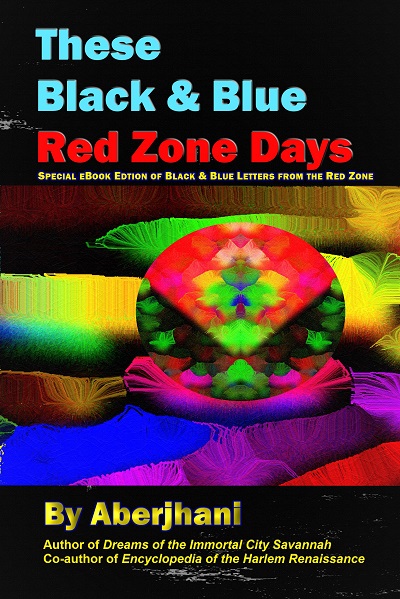
Just as life during the pandemic was color-coded with different hues representing different levels of danger, life in its aftermath has become shaded in similar ways. As a self-styled “Seeker of Beauty with Beauty,” (borrowing from a quote by W.E.B. Du Bois), the author of These Black and Blue Red Zone Days brings to life mesmerizing moments of recognition revealing the startling depths and vulnerabilities of our shared humanity during powerfully challenging times.
“The woman or man who is a poet, or fiction writer, or playwright, or all of these, is engaged constantly in a jazz ballet of vocabularies, passions, genders, histories, perspectives, death, love, and life. The music of revelation announces itself to the reader in somber brooding tones or in melodies light as air and one is invited to dance with the most captivating of partners: poetry. VISIONS OF A SKYLARK DRESSED IN BLACK is therefore presented as a freely styled dance with readers. It is a dance that rocks to the jubilations, blues, testimonies, nightmares, heartbeats and loveshouts of one creative consciousness spinning and hovering to the music of its own extraordinary flight between dimensions of fantastic being.”
--From the Introduction
Visions of a Skylark Dressed in Black made its debut in 2006, courtesy of BPSE-Publishing in Great Britain. For the most part, that was a good thing but the drawback came in the form of limited distributi