Still Living on my Feet is the follow up to Tichaona Chinyelu’s first book, In the Whirlwind, which was rooted in a sense of hard-hitting revolutionary black love. However, in this sophomore effort, Tichaona brings the revolutionary essence from deep
Blue's poetry is refreshingly, honest and true to life. He has captured Harlem living completely and not once did you loose street creditability.
Background
Information
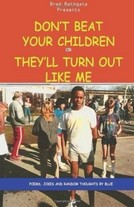
Blue aka Brad Bathgate was born in Harlem, but raised as a military brat between New York, Georgia, Kentucky, Tennessee and Germany. Upon returning to the states from Germany as a teenager, he experienced culture shock and quickly developed a discerning eye, which lends to his writing today.
Growing up during the early stages of Hip Hop, he has always been fascinated with words. However, it wasn’t until 1998, when he attended a poetry reading at the Sugar Shack, in Harlem when he found his calling and began to take writing seriously.
After experiencing the other poet’s manipulation of words, Blue realized that writing was what he wanted to do, concluding there was no limit to what he could say or write, provided it was creative.
Often invited to speak at prisons, group homes and high schools, he shares insight and his life experiences in an effort to uplift and/or inspire others to tap into their own creativity. He believes that every voice should be heard.
Brad Bathgate's books are available on amazon
Birth Place
New York, NY USA
Accomplishments
This review is from: Corner Stores in the Middle of the Block: The Urban Look (Paperback)
Most of the time this kind of poetry has the tendency of being mundane, predictable, and angry, and when you reach the point of utter annoyance insofar as getting bored to tears with this kind of material you end up relegating it into the superfluous junk pile of literature. But this isn't the case with Blue's work. Blue actually holds individuals in the black community culpable for their own actions and his anecdotes paint a cathartic milieu of urban life in the inner city.
In layman's terms Blue demonstrates that everyone is capable of making their own breaks and that passing the blame onto others for misdeeds, shortcomings, and failures does an injustice to ones self and future generations to come.
Also, he successfully romanticizes what I would call Marvin Gaye's "Inner City Blues", while writing about what I believe are his personal experiences with women, love, romance, lust, capitulation, recalcitrancy, and humorous moments.
A case in point: in the first three lines of his poem called "Hope," Blue wrote:
"Hope is the four letter word that was spoon-fed to the hungry.
Done in an effort to sustain their hunger, temporarily
It's similar to welfare"
He then goes on to illustrate tales about the people in his neighborhood, while describing their dysfunctional behavior in a rather comedic style.
He then writes about a girl named Cinnamon, who just can't seem to get a grasp on things and yet even with her short comings Blue still loves and respects her efforts because even though she falters, she does it out of love for him.
What I liked the most was that Blue doesn't take himself too seriously and he doesn't engage in any racism and inasmuch as social justice is concerned. He places personal responsibility upon the shoulders of inner city society when it comes to certain issues that are within their control, which is a refreshing position to adhere too.
All I can say is, "it has been a long wait for poetry that eloquently travels the Straight Talk Express!"




 Share
Share Save
Save [
[