We are given with the body,
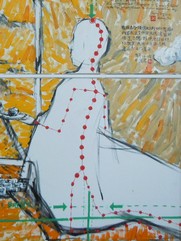
With its hundred parts, nine openings
And twelve internals to be divided
Into two symmetrical parts:
One is for acceptance, but another
Is for releasing all the received.
All bodily parts are complete
In their proper placements,
But which do we love the most?
Do we love them all equally?
Or do we love some more than others?
Do we love most of all the heart
And small intestine or the spleen
And stomach or the kidneys and bladder
Or the liver and gallbladder?
Is it not the case that they all act the part
Of our servants, nurses and, sometimes,
Gentlemen-in-waiting? All of them,
Being such, are they incompetent
To manage properly one another?
Or do they not take it in their turns
To be now masters and now servants?
There must be a true ruler among them,
Whether by searching we can find out
His character or not,
There is neither advantage nor hurt,
So far as the truth
Of the ruler's operation is concerned.
When once we have received
The bodily form complete,
Its parts do not fail to perform
Their functions till the end comes.
In conflict with things
Or in harmony with them,
They pursue their course
To the very end, with the speed
Of a galloping horse which cannot
Be stopped--is it not sad?
To be constantly toiling all lifetime,
Without seeing the fruit of one's labour,
And to be weary and worn out
With hard work, without knowing
Where one is going to--
Is it not a deplorable case?
Someone may say, "But it is not death,
Be happy with what you get"--
Yet, of what advantage is this?
When the body is decomposed,
The mind is the same along with it--
Must not the case be pronounced
Too much shocking?
Is the life of man indeed enveloped
In such a dark cave?
Is it me alone to whom it appears so?
And does it not appear to be so
To all other folks around?. . .


 Share
Share Print
Print Save
Save Follow