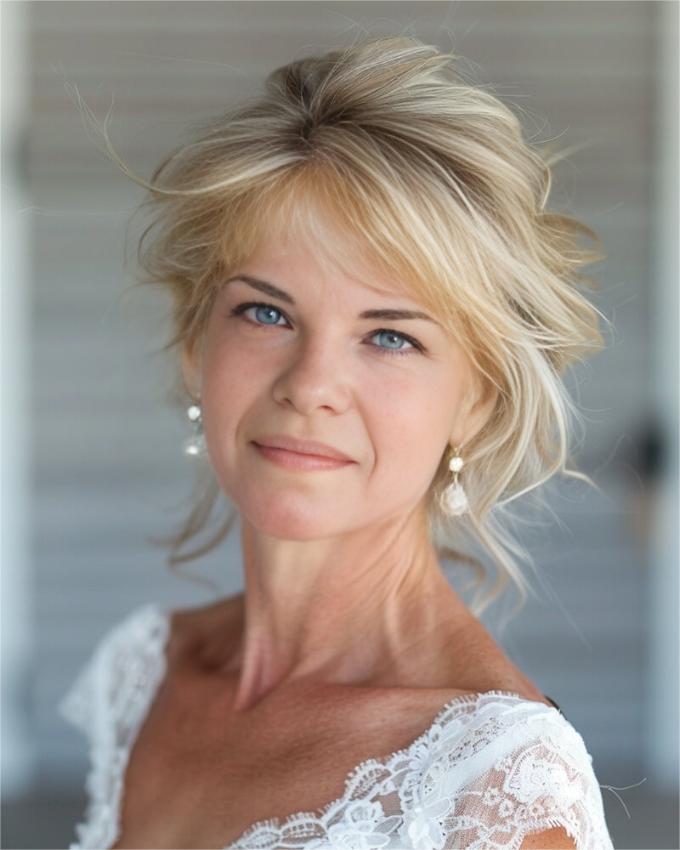
Granny Sandy sat on the front porch gazing wistfully at the distant snow-covered mountains of Utah. Her hair, like spun silver, sprung from under her hat. A heavy, plaid shawl was draped around her though she was heavily layered in other clothes. It was truly freezing outside! Bundled up in jeans, boots and a heavy, worn coat, she happily sat in an old wicker rocking chair humming an odd melody.
"Everybody has one, and it's something we all need.
A little ray of sunshine that grows hope from seed--
a frilly, dilly pickleo--
is mighty strange indeed.
Mix daffodil and iris and then add a touch of dill.
You may never need it but, then again, maybe you will.
A frilly, dilly, pickleo,
your soul is its' window sill.
Living within your hand or thriving near your heart,
Once you find your pickleo, you'll never want to part.
A frilly, dilly, pickleo,
Never know when it might glow."
The fascinated children intensely watched her with their cold noses pressed against the frigid window panes as they listened to her sing. Her song was as different as her garden. She grew plants, pickleos she called them, that pulsated with rays of light. Only the young at heart could see their illuminating glow, but no light shines forever. Granny, having one less pickleo this morning, wanted to be alone. She cried softly at times, gently blowing her nose now and then.
Chance wanted to run outside, give her a big hug and tell her it would be okay, but he didn't. Everybody needs to cry sometime.
Soon she straightened up, removed the glove from her right hand and placed her hand palm up. A thin, yellow light burst forth, shimmered in the cold and then retreated. It wasn't much, but it still glowed. Slipping her glove back on, she rose and slowly made her way inside.
"Children, children," Granny nearly trampled over Whitney, Trevor and Chance. Smiling sweetly she stooped over and showed them her nose. "Did you EVER see such a red nose?"
Lisa and Richard, their parents, busied themselves trying to unwrap the poor, old woman who was dressed in many layers of clothing. The shawl, the coat, and the hooded sweatshirt were just the beginning.
"Oh, dear. Oh, dear." Granny mused as they spun her around like a top, but she had a big, wide grin. "I'm going to get dizzy, Lizzy."
The trio of children laughed. Granny was SO funny.
"Your nose is redder than Rudolphs.’" Chance volunteered.
"Wait until you see my redder than red toes." As Granny pointed to her feet, Chance struggled to get her boots off just to see her icy toes.
Trevor and Whitney laughed tugging at the rest of Granny's clothes. Everything, coming off this way and that, nearly made Granny invisible, but as she spun around the children spied a glow.
"Granny's got a pickleo!" Trevor shouted with glee.
His father, Richard, arched his brow. "Trevor, there's no such thing as a pickleo."
"But there is, Daddy!" Whitney protested. "Granny grows them in her garden."
"Whitney!" Lisa gave her a stern glance. "We know what Granny grows in her garden."
"Uh-huh!" Whitney replied softly. "You can't see them; only kids can."
"Really?" Kids have such imaginations.
Whitney hung her head sadly. "You and Daddy are too old."
The young couple exchanged a wry smile, but Richard spoke for both. "Granny Sandy isn't a kid, Honey. How can Granny grow something she can't see?"
Chance, laying flat on his back but holding one boot, perked up quickly. "She's a kid at heart, Dad."
The parents rolled their eyes. Since this pickleo stuff wasn't bad, perhaps it was best left alone. They busied themselves making Granny thin again.
"How many pair of jeans did you have on, Granny?" Three pair lay at Lisa's feet. "How could you walk?"
With a twinkle in her eyes, Granny replied. "I made like a slinky, but now I must . . . " With that said, Granny ran quickly.
Everybody laughed at the silly old woman as she passed by them in a rush.
In the evening, after dinner, Granny let the children watch her tend her garden in the room she and Grandpa shared. Adults saw just a few plants, but her garden was a jungle to children. Granny collected pickleos that nobody wanted, and they constantly appeared from nowhere.
"Wow!" Chance's eyes widened. "Mom would make us plant those things outside! You've got too many flowers in too little space."
Granny hugged him. "Nonsense, child! We're all that close together, but some people never notice."
"Un-uh!" Trevor shook his head and waved his arms. "I've got room to move."
"Me, too!" Whitney danced all around the room and never bumped into anyone else. She did, however, hit her knee on the end of the bed. "Ouch!"
They all rushed to look at Whitney's knee, but it was just a scratch. They followed Granny back to garden window. The children had grown so quickly that their pickleos barely glowed. Growing up tends to destroy our faith in ourselves and one another. Pickleos are replaced with harsh reality.
Still staring at her flowers, Granny sat in the chair by the window before opening her arms wide. The children eagerly sprang forth. She hugged them--one by one--and then took them all in her lap. "Your pickleos are ready!"
Their faces were flush with excitement. Chance gaped. "I never had one. I can't grow plants." Boys didn't grow frilly flowers! "Trevor is too young to take care of anything." He shook his head protesting. "We're not old enough."
"You've nearly outgrown them. They were sunning themselves on my window sill!" Granny eased out from beneath them. The boys continued to share the chair, but Whitney sat on the floor beside them.
Granny Sandy seemed to float around the room, dancing and swirling in the air as she sang. “Everybody has one, and it's something we all need.
A little ray of sunshine that grows hope from seed--
a frilly, dilly pickleo--
is mighty strange indeed.
Mix daffodil and iris and then add a touch of dill.
You may never need it but, then again, maybe you will.
A frilly, dilly, pickleo,
your soul is its' window sill.
Living within your hand or thriving near your heart,
Once you find your pickleo, you'll never want to part.
A frilly, dilly, pickleo,
Never know when it might glow."
When Granny finished singing, the children felt the palms of their right hands tingling. Within each palm lay a lacy, frilly pulsating yellow orb on a bed of dill. They each held a pickleo!
"It feels funny." Whitney giggled. "It tickles."
Chance liked the pulsating light. "Mine is soft and warm. It doesn't tickle at all."
Both Chance and Whitney looked at Trevor who hadn't moved. He stared quietly at his hand.
"Trevor, are you all right?" Granny Sandy touched his shoulder, but he shrugged until the others started forward.
"Sh-h, listen." Trevor sprang alert. "My pickleo is singing."
They stopped and listened.
"I'm a frilly, dilly, pickleo,
a frilly, dilly, pickleo,
carry me wherever you go.
I'm your frilly, dilly, pickleo."
Startled by Trevor's singing pickleo, Whitney and Chance bent their heads to the palms of their hands. Yes, their pickleos were singing too!
"I'm a frilly, dilly, pickleo,
a frilly, dilly, pickleo,
carry me wherever you go.
I'm your frilly, dilly, pickleo."
When the pickleos stopped singing, the children began chattering all at once.
"How do we take care of them? "What do they eat?"
"Do others have pickleos? What happens if we don't want them anymore?"
"Where do they come from? What are they?" Being the oldest, Chance was more inquisitive.
"Hush, children," Granny put a finger to her lips. "I'll answer your questions."
Glancing at Trevor first, she replied. "If you believe in miracles, your pickleos will thrive. When you no longer believe, they simply fade away."
"Where do they go?" Trevor wasn't sure he wanted one.
"Faith multiplies so fading pickleos go where they are wanted." Granny pointed to her window sill.
Whitney jumped excitedly. "They come here!"
Granny nodded. "Your parents and Grandpa have pickleos although they forgotten about them lately. Sometimes we put things away and forget where they are."
"Like Grandpa's car keys?" Gramps often put his keys in his coat pocket and forgot which coat he'd last worn.
"Yes, Grandpa has faith in his heart, but doesn't always show it. He relies on reason and responsibility."
"Your questions," the old woman turned to Chance, "are the most difficult. I don't know what they are or where they come from; they simply exist."
Pausing, suddenly tired, she sat down on the side of the bed. The children gathered around her. "Your pickleos were in my garden this morning. Did you see them?" The children nodded. "They wanted attention, you see. I simply returned them."
Chance, seeing a tear in Granny's eye, reached up and wiped it away. "Always keep the child within your soul and your pickleos will be safe."
"Can we grow pickleos, too?" Whitney saw many gardens, but no one else had pickleos.
The old woman's head, more silver than before, bobbed up and down. "Everyone can grow pickleos, Sweetheart."
A shadow appeared in the doorway. "Doesn't anyone have a hug for Grandpa?"
They eagerly bounded forth full of love. Grandpa's eyes rolled, as usual, when Granny kissed him. "I was worried about you. What took you so long?"
Grandpa barked softly. "No hunter likes coming home empty-handed."
"I guess not." Now that Grandpa and his sons had returned, all was well.
"Granny Sandy gave us pickleos!" Trevor exclaimed excitedly and thrust his hand out.
Admonishing his wife with a glance, Grandpa bent to examine the extended pulsating palm. For a moment he thought he saw something, but dismissed the possibility. "Sweetheart, you're ruining these children with your silly stories."
Whitney tugged at Grandpa's pants leg. "We like her stories, Grandpa."
"What about you, huh?" Grandpa nudged Chance. "Should Granny Sandy quit telling stories?"
"No, Grandpa." Trevor pecked at the old man's knees. "Don't make her stop." . . . As if Grandpa could!
With the little pickleo vibrating in his hand, Chance quietly covered his heart. When he looked at Gramps, he was blinded by the pulsating orb in Grandpa's hand though the man seemed not to notice it.
It’s okay to have faith and dreams. Everybody does!
"We like her stories Grandpa. She should tell them to everyone."
And she did.
Written for my grandson, Chance Hansen, when he was seven.
|
|
|
|
| Reviewed by w. mansfield |
1/23/2003 |
|
Great writing,I enjoyed reading this.
Keep up the good work Sandy |
|
|
|
|
|